-
E-mail
1025304635@qq.com
-
Phone
13774417047
-
Address
No. 253 Yulu Road, Jiading District, Shanghai
Ankerui E-commerce (Shanghai) Co., Ltd
EMS3.0: Cracking the collaborative problem of source network load storage and charging, and building the cornerstone of zero carbon park smart energy
Date: 2025-12-09Read: 12
Driven by the dual goals of Q-ball climate governance and "dual carbon", China is promoting energy structure transformation and industrial green upgrading through systematic reforms. In 2025, the National Development and Reform Commission officially launched the application for the construction of zero carbon parks, marking the transition of zero carbon parks from policy exploration to large-scale practice.
In this context, Ankerui Electric Co., Ltd. has precisely targeted the pain points of enterprise energy management and industry transformation needs, launched the EMS 3.0 microgrid smart energy platform, with the core architecture of "source grid load storage charging" full chain collaborative control, and tailored an energy solution for enterprises that integrates "efficient energy use, refined control, and low-carbon operation".
01 Energy Transformation Era: Three Major Challenges of Source Grid Load Storage Collaboration
With the increasing proportion of renewable energy, traditional energy systems are facing challenges. The difficulty in predicting fluctuations has become the primary challenge - the unstable output of photovoltaic and wind power, and the lagging response of traditional regulation directly threaten the reliability of power supply.
Secondly, the contradiction of difficult coordination of resources is prominent. The long-term independent operation of source, network, load, and storage has resulted in efficiency losses exceeding 20%, driving up the energy consumption costs of enterprises.
Thirdly, risks are difficult to control. When there is a sudden change in weather or load, the risk of local power grid collapse increases sharply. Ensuring continuous power supply for critical loads has become a core concern for the operation of the park.
The Ankerui EMS 3.0 microgrid smart energy management platform is designed to address these pain points by implementing a closed-loop approach of global perception, intelligent decision-making, and precise execution. It enables volatile resources to "listen" and silent assets to "awaken", building a truly "self consistent" energy ecosystem.
02 Smart Energy Core: Technical Architecture and Innovation Breakthrough of EMS 3.0
Ankerui EMS 3.0 adopts a three-layer architecture of "cloud edge end" to build a full lifecycle management system covering energy production, transmission, and consumption.
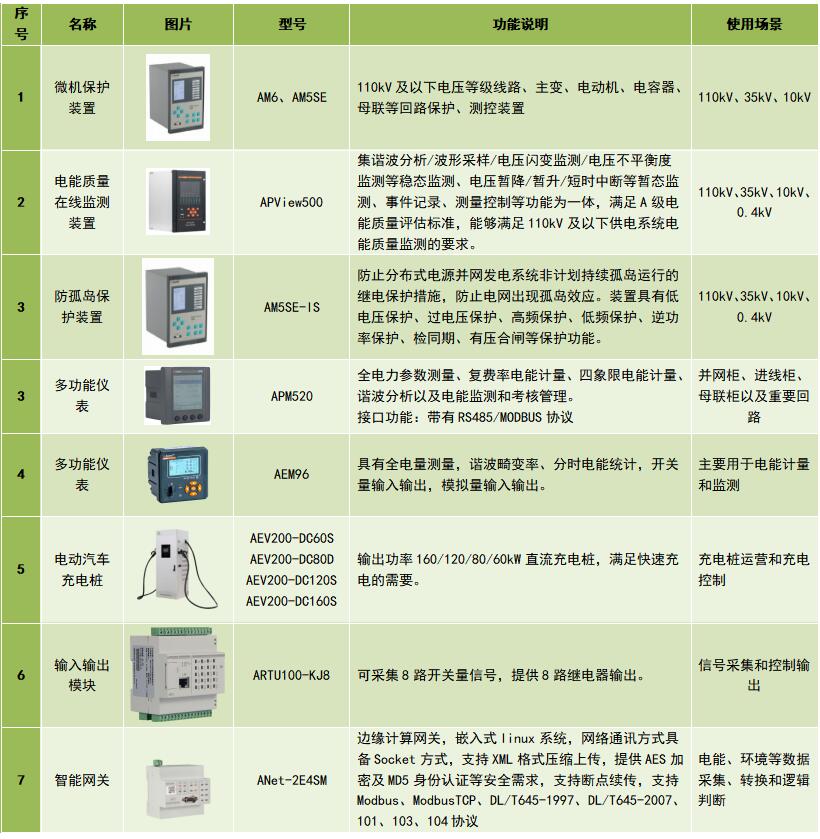
At the equipment level, the system integrates multifunctional instruments, protective devices, energy storage and new energy equipment, charging piles, etc., and achieves real-time collection and transmission of equipment data through diversified communication interfaces and protocols.
The transport layer adopts data fusion terminals, supports multi protocol conversion and data encryption, ensuring stable and secure transmission of data to the cloud platform.
The cloud platform layer centrally stores, processes, and displays data, providing functions such as energy monitoring, historical data analysis, alarm notifications, and opening API interfaces for third-party system integration.
This architecture achieves collaborative operation through three major mechanisms: dynamic balance, multi energy complementarity, and secure fallback.
The system integrates meteorological data and equipment status through intelligent prediction, predicts power generation/load fluctuations in advance, automatically generates scheduling strategies, and achieves second level response.
At the same time, the photovoltaic energy storage linkage mode prioritizes charging and storing energy during lunchtime when there is excess photovoltaic energy, replaces high priced electricity purchases with nighttime peak discharge, and automatically adjusts flexible loads such as charging piles and air conditioning, effectively reducing the risk of transformer overload.
03 System Functions
digital display
By displaying real-time data on mains electricity, photovoltaic, wind power, energy storage, charging piles, and other loads on a large screen, one can quickly understand the energy operation situation.

optimal control
Intuitively display energy production and flow, including the production and consumption processes of various energy sources, improve the consumption of new energy through optimized control, peak shaving and valley filling, smooth system output, and display the comparison of energy curves before and after optimization.

intelligent prediction
Based on meteorological data and historical data, predict the power and load of photovoltaic and wind power generation, compare and analyze them with actual power, and optimize scheduling through energy storage systems and load control to reduce demand and electricity costs.

Energy Consumption Analysis
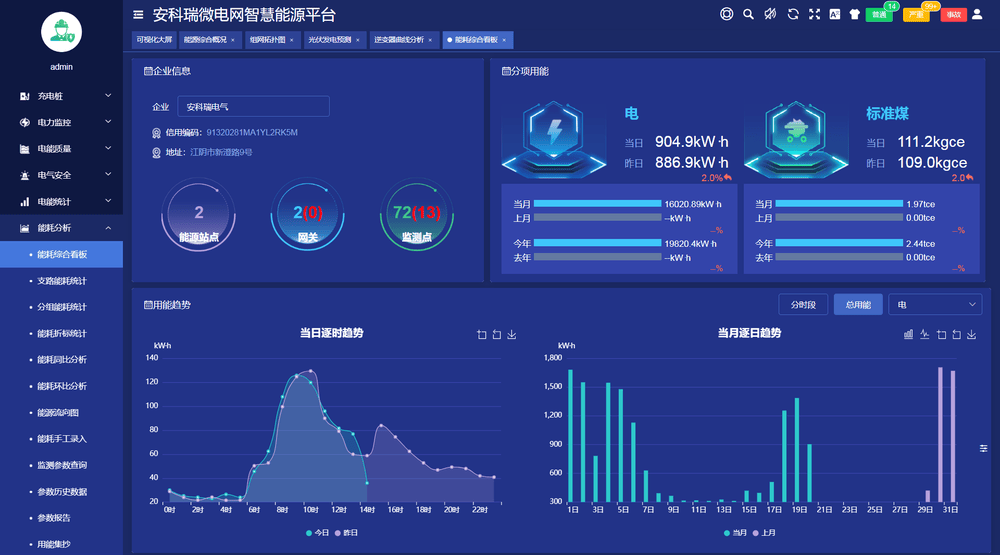
Collect the consumption of various energy media such as electricity, water, natural gas, and cold/heat in enterprises, compare them on a month on month basis, display energy flow, benchmark energy consumption, and convert them into standard coal or carbon emissions.
ordered charging
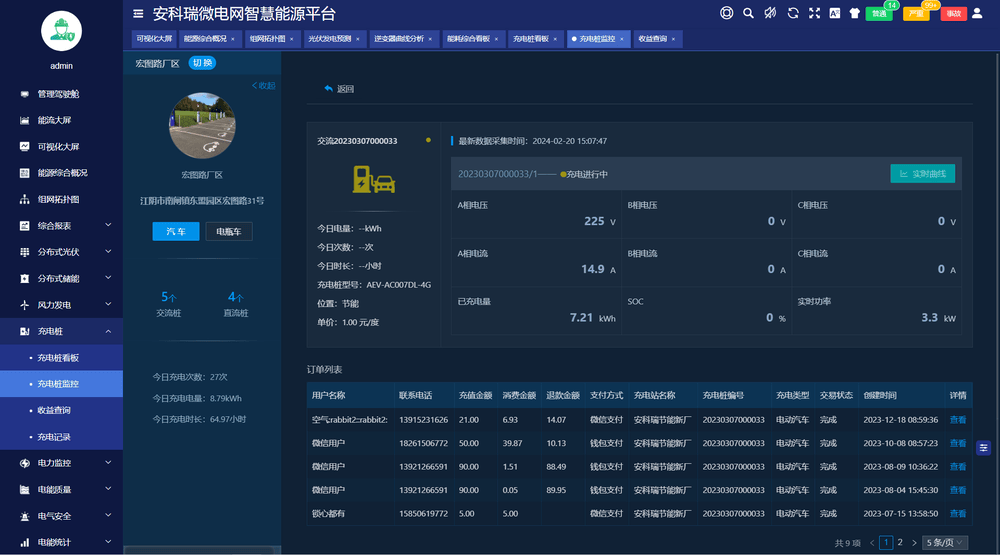
The system supports the connection of AC and DC charging stations, and controls them in conjunction with the enterprise load and transformer capacity, as well as the transformer load rate, to guide users to charge in an orderly manner and ensure the safe operation of the enterprise microgrid.
Operation and Maintenance Inspection
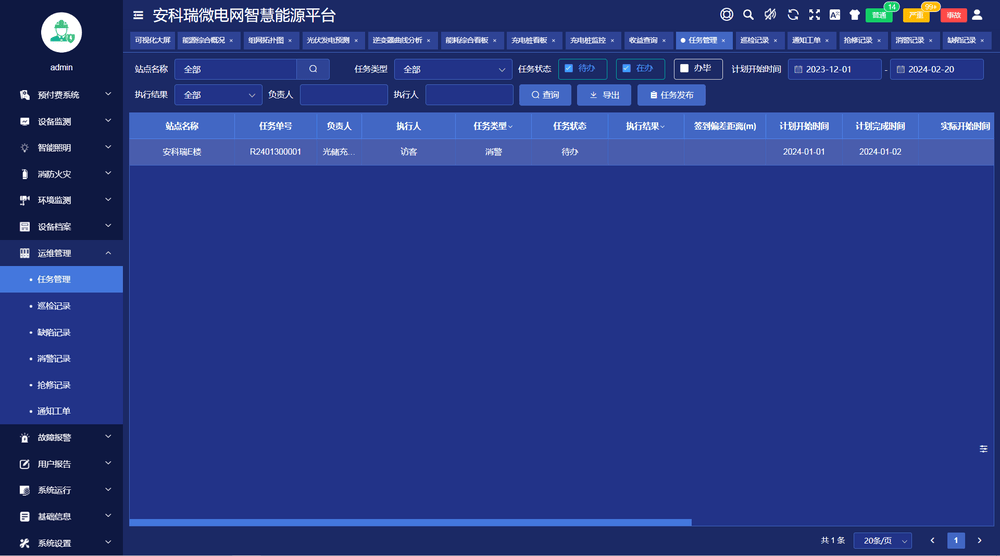
The system supports task management, inspection/defect/alarm/repair records, and notification work order management, and tracks the trajectory of operation and maintenance personnel through Beidou positioning to achieve closed-loop management of the operation and maintenance process.
Equipment selection
04 Future Outlook: From Energy Managers to Energy Producers and Consumers
In response to the deepening needs of the energy revolution, the EMS 3.0 platform will continue to break through from three dimensions: technology, ecology, and Q-ball layout.
Technologically, the platform will further deepen the application of AI algorithms in load forecasting and optimized scheduling, achieving "self-learning and self decision-making" in energy management, while expanding the access capabilities of new energy forms such as hydrogen energy and energy storage.
Ecologically, the platform will promote seamless integration with national electricity market trading platforms and distributed energy management systems, break through the "production storage use sales" energy closed-loop, and help enterprises transform from traditional "energy consumers" to "energy producers and consumers".
In terms of Q global layout, Anchery plans to rely on the "the Belt and Road" initiative to introduce mature Chinese smart energy solutions to the Q global market and provide customized low-carbon energy management services for countries and regions along the line.