Abstract:With the continuous growth of global climate change and energy demand, clean energy has become an important component of energy policies and development strategies in various countries. However, there is a high demand for power quality in the power system. Power quality is divided into voltage quality and frequency quality. Changes in voltage and frequency in the power system can have serious consequences for power plants and related users. To ensure the safety of photovoltaic power generation, it is necessary to adopt a protection plan that can ensure both the safety and quality of power generation.
KeywordsClean energy; Frequency; Power generation safety;
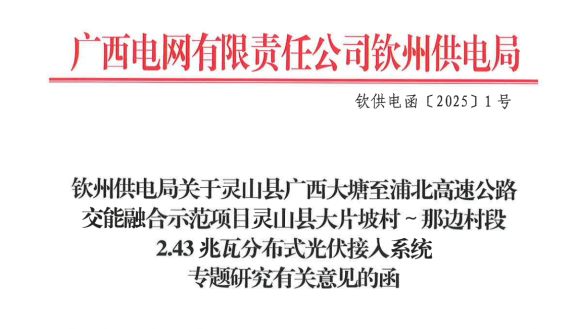
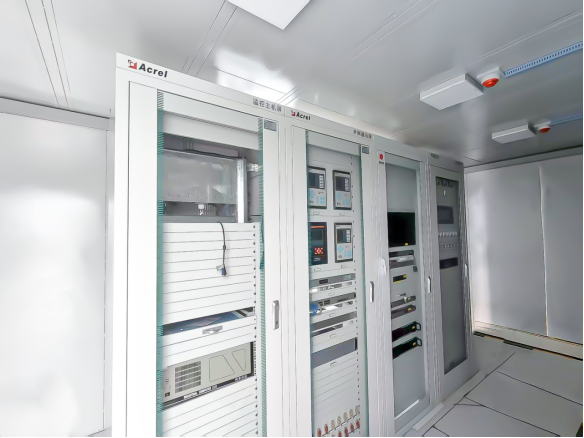
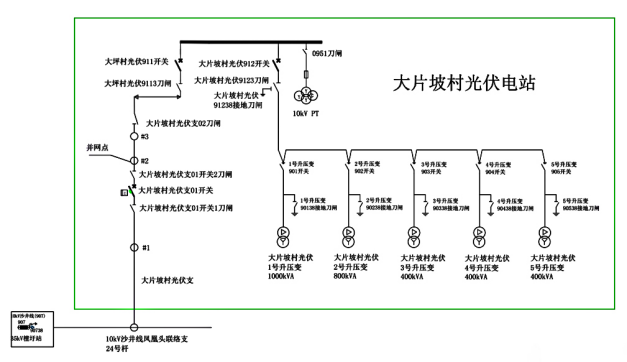
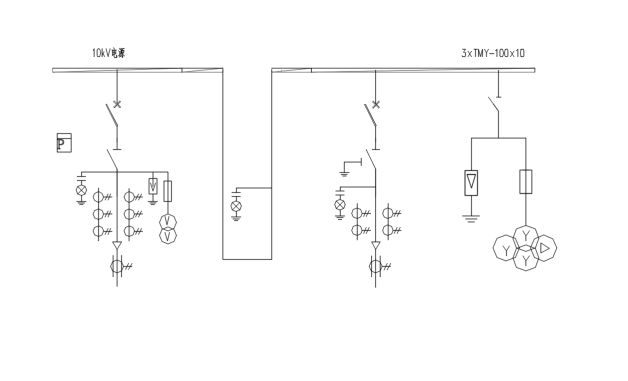
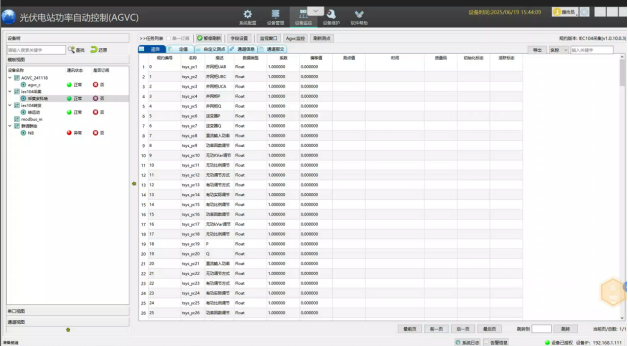
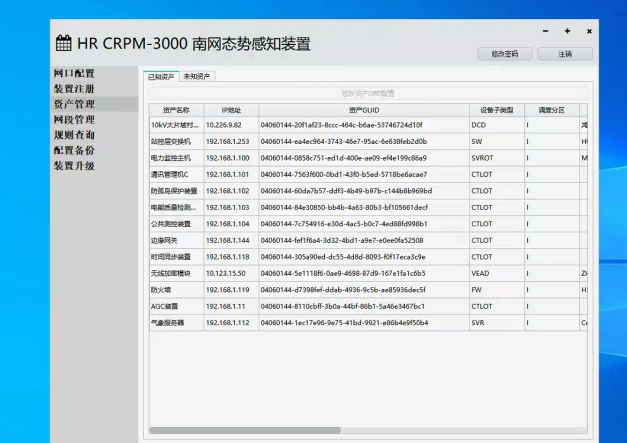
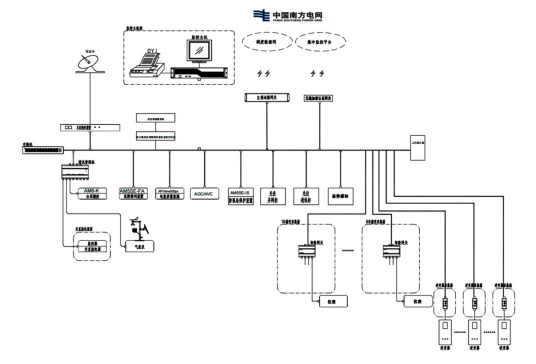
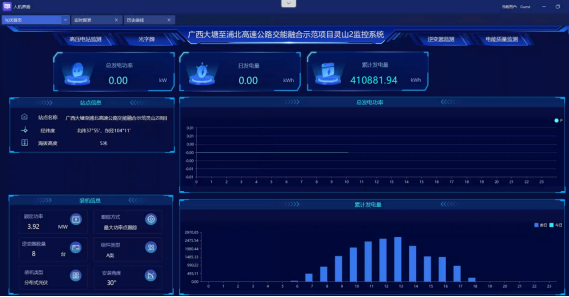
Solar photovoltaic power generation is a clean energy technology that directly converts solar energy into electrical energy, with advantages such as renewability, pollution-free, and sustainability. In recent years, with the global emphasis on environmental protection and sustainable development, solar photovoltaic power generation has been increasingly widely adopted and promoted. [1] In the power system, there is a high demand for power quality, especially frequency quality. In the domestic power system, the rated frequency is 50Hz with a frequency deviation of ± 0.2Hz. According to the capacity of the power system, the frequency deviation is relaxed to ± 0.5Hz; the frequency deviation caused by user impact generally should not exceed ± 0.2Hz. Therefore, it is particularly important to configure a set of protection schemes that can ensure both the safety and quality of power generation.The Datang Pubei Expressway Photovoltaic Power Generation Project (hereinafter referred to as "the Project") is a distributed photovoltaic power generation application demonstration project invested and constructed in response to the national call to "optimize energy structure and provide cleaner and more reliable energy".This project is located in Dabaipo Village, Pubei County, Qinzhou City, along the Datang Pubei Expressway. A distributed photovoltaic power station will be constructed using the slopes along the expressway. The project will adopt a "full grid connection" mode and utilize the slopes along the expressway to build a distributed photovoltaic power project. The total construction scale is approximately 2.43MWp. The access system that connects to the grid through the original 10KV Shajing Line Fenghuangtou Liaison Branch 24th pole belongs to the management scope of Qinzhou Power Supply Company.This project adopts high-efficiency photovoltaic modules with a total capacity of 2.43MW. The principle of electricity settlement for this project is full grid connection. The project is scheduled to be completed and put into operation by the end of April 2025. The secondary design of this project adopts the Acrel-1000DP distributed photovoltaic monitoring system solution from Ankerui. The photovoltaic monitoring platform operates under the supporting operating system, making the local protection and monitoring solutions more stable and reliable. Through the construction and implementation of distributed photovoltaics, clean and renewable electricity has been provided to users, which helps reduce dependence on traditional energy and lower carbon emissions.Figure 1: Approval Document for Guangxi Power Grid ConnectionThis article introduces the demonstration of the photovoltaic power station access system scheme, research on system relay protection and safety automatic devices, system communication, system scheduling automation scheme, etc.Figure 2 Project Site MapThis project is a rooftop distributed photovoltaic project with a capacity of 2.43MW. The project adopts a fully connected consumption method. Add photovoltaic outlet cabinets, metering cabinets, PT cabinets, and photovoltaic inlet cabinets to the grid connection points. The newly added photovoltaic system is equipped with an automation system that collects real-time grid connection information and uploads it to the local control center DMS system. The power supply voltage of the photovoltaic inverter is 800V. After being boosted to 10kV by the box transformer, it is connected to the newly added 10kV photovoltaic incoming cabinet through a high-voltage cable and integrated into the original 10KV manhole line through the grid connection cabinet. The project adopts Acrel-1000DP photovoltaic monitoring platform. The monitoring platform has functions such as real-time observation of the entire station data and accident alarm prompts.Figure 3: Project Power Station Numbering DiagramThe scale of this project is approximately 2.43MWp, and a photovoltaic power generation system will be constructed using vacant land along the highway. Key equipment such as photovoltaic modules, inverters, transformers, etc. will be made of domestic products. The power generation of distributed photovoltaic systems is fully connected to the grid. The DC power output by the photovoltaic power generation system of this project is converted into AC power by a string inverter, and then locally boosted to 10KV. It is connected to the busbar of the primary warehouse 10KV grid connection cabinet through one outgoing line through the switchgear, and the grid connection cabinet transmits the photovoltaic power generation to the column switch for grid connection. The planned installed capacity of this project is 2.9162MWp, with an AC side capacity of 2.43MW. Calculated based on the 25 year service life of the photovoltaic power station, the average annual power generation capacity of this project is 2.8381 million KWh, and the total power generation over 25 years is 70.9531 million KWh. The planned production time is 2025, and the "full grid connection" mode is proposed to be adopted.3.1 Step up transformers and high and low voltage distribution equipmentThis project is equipped with one three-phase AC 1000KVA dry-type transformer, one three-phase AC 800KVA dry-type transformer, and one three-phase AC 400KVA dry-type transformer. The rated voltage is 10.5 ± 2 × 2.5%/0.8kV, and the wiring group is Dy11. The communication frequency is 50Hz, suitable for outdoor use, and the energy efficiency level meets national regulatory requirements.Figure 4: New Photovoltaic Primary Diagram3.2 Relay protection and safety automatic deviceThe main electrical equipment in this photovoltaic power station adopts microcomputer protection to meet the requirements of information transmission. Component protection shall be configured in accordance with the Technical Regulations for Relay Protection and Safety Automatic Equipment (GB14285-2006).1) Anti islanding detectionDistributed power sources should have the ability to quickly monitor islanding and immediately disconnect from the grid. The anti islanding protection action time should not exceed 2 seconds, and its anti islanding protection should be coordinated with the reclosing of the distribution network side lines and the action time of the safety automatic device. Install anti islanding protection devices at the grid connection point of this photovoltaic power station to prevent unplanned islanding.2) Frequency and voltage emergency control deviceThe frequency and voltage emergency control device is a key safety equipment in the power system to ensure frequency and voltage. Mainly used to deal with emergency scenarios where the frequency or voltage exceeds the safe range in the event of severe system disturbances. According to the requirements of the Southern Power Grid dispatch approval document, photovoltaic power plants should have a certain ability to withstand system frequency anomalies. They should be able to operate at the lowest frequency allowed by the photovoltaic power plant inverter or the grid requirements at low voltage 48Hz. The frequency should be able to operate for at least 10 minutes at 48Hz-49.5Hz. The system is required to operate continuously when the frequency is between 49.5Hz-50.2Hz. When the frequency is between 50.2Hz-50.5Hz, it is required that the photovoltaic power station should have the ability to operate continuously for two minutes each time the frequency is higher than 50.2Hz, and also have the ability to stop supplying power to the grid line within 0.2 seconds. The actual operating time is determined by the power dispatch department: photovoltaic power stations that are in a shutdown state are not allowed to be connected to the grid at this time. When the frequency is higher than 50.5Hz, it is required to stop supplying power to the grid line within 0.2 seconds, and photovoltaic power plants that are in a shutdown state are not allowed to be connected to the grid.3) Power quality monitoring deviceDistributed photovoltaic projects have corresponding requirements for the quality of electricity connected to the State Grid. According to national standards, the power quality of photovoltaic power generation projects should comply with relevant standards such as GB/T 15543-2008 Technical Regulations for Photovoltaic Power Generation System Access to the Grid. These standards specify the power quality parameters for photovoltaic power generation systems connected to the grid, including voltage, current, frequency, harmonic content, etc., to ensure the stable operation of photovoltaic power generation systems and the reliability of power quality.According to the design requirements of the Southern Power Grid Dispatch Department, the distributed photovoltaic project needs to meet the "Technical Regulations for Photovoltaic Power Generation System Access to Distribution Network (GB/T 29319-2024)" when connected to the Southern Power Grid. Configuring AGC/AVC devices can regulate the active and reactive power of inverters, meeting the design requirements of "four observables (observable, measurable, controllable, and adjustable)".Figure 5 AGC/AVC configuration diagram5) Situation awareness deviceAccording to the "Southern Power Grid Distributed New Energy Grid Network Security Anti Shooting Plan" (Attachment 1 of Office General Dispatch (2022) No. 7), distributed new energy stations are equipped with distribution network security protection devices, and real-time monitoring and auditing of network security threats are achieved, which are then uploaded to the power monitoring system network security situation awareness system. Configuring situational awareness devices can timely monitor potential risks and issue alerts in the event of a risk attack.Figure 6 Situation Awareness Monitoring ViewThe photovoltaic power station of this project is equipped with a comprehensive automation system, which adopts the Acrel-1000DP distributed photovoltaic power monitoring system provided by Ankerui Electric Co., Ltd. It has functions such as protection, control, communication, and measurement, and can achieve full function comprehensive automation management of photovoltaic power generation systems and switch stations. The status signals of inverters, high and low voltage equipment, etc. in this project are all connected to this monitoring system.The photovoltaic power station monitoring system of this project consists of two parts: the station control layer and the local layer, with an open layered and distributed network structure.The monitoring system is connected to the ground layer through Ethernet. The ground layer is distributed in the inverter area or transformer box in a relatively independent manner according to different functions and system divisions. In the event of station control layer and network failure, the ground layer can still independently complete the monitoring of various electrical equipment on site. The computer monitoring system achieves data communication with Qinzhou Electric Power Company through the remote control workstation GPRS public network.The station control layer consists of servers, operator stations, remote control stations, etc. connected by computer networks, providing a human-machine interface for station operation, realizing the management and control of local equipment, forming a monitoring and management center for the entire station, and having an interface for communication with remote control centers.The geological equipment consists of intelligent measurement and control units, network system communication units, inverter data acquisition units, multifunctional energy meters, etc. The main electrical equipment includes inverters, box transformers, and grid switches. It directly collects and processes raw data from the site, transmits it to the monitoring station of the station control layer through the network, and receives control operation commands from the station control layer. After validity judgment, locking detection, synchronization detection, etc., it controls the equipment operation.The communication network between the station control layer and the local layer adopts GPRS wireless communication network.Each photovoltaic power generation unit is equipped with a data acquisition device with wireless transmission function, which collects data from each group of photovoltaic modules, inverter parameters, measurement and control devices, and intelligent meters. After packaging, the data is transmitted to the monitoring system through a wireless network for monitoring.Figure 7 Monitoring System Network Structure Diagram System Functions4.1. Real time monitoringThe Acrel-1000DP distributed photovoltaic monitoring system has a user-friendly interface. On the main interface, users can view the station information and installation information of the photovoltaic system, as well as the total power generation, daily power generation, and cumulative power generation. It also has a power generation curve interface and a histogram of cumulative power generation, making it easier for users to monitor power generation information more intuitively.Figure 8 Function diagram of real-time monitoring main interface4.2. Power Quality MonitoringIn the power quality monitoring chart, you can directly view the total effective value of current and voltage, voltage fluctuations, total voltage distortion, positive and negative active energy, active and reactive power, and other power quality information. We can monitor the quality of on-site electricity based on this information and make timely response plans.Figure 9 Functional diagram of power quality monitoring interface4.3. Real time report monitoringIn the real-time report monitoring interface, users can directly select the device they want to view data on according to their needs, and can query the real-time operating parameters of each circuit or device. The electrical parameter information displayed in the report should include: phase current, three-phase voltage, total power factor, total active power, total reactive power, electrical energy, remote signaling, etc. Remote measurement includes real-time values (distinguished by different colors when in different states), measurement point states (exceeding limits, insertion, communication abnormalities, etc.), daily maximum values and their occurrence time, daily average values, etc. The remote signal quantity includes real-time values (distinguished by different colors when in different states), measurement point status (insertion, communication abnormalities, etc.), daily displacement times, etc. The report can be exported and printed.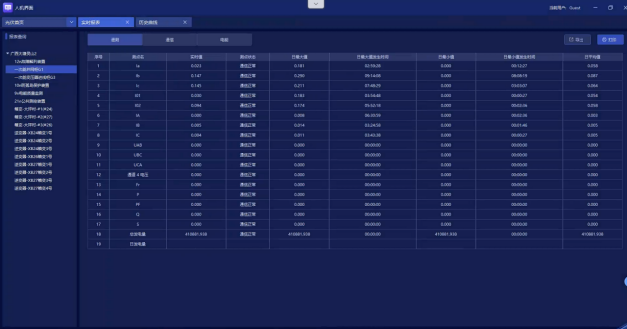 Figure 10 Real time report monitoring function diagram4.4. Historical curve monitoringHistorical curves are visualization tools for time series data, which provide core support for power grid operation, equipment management, fault diagnosis, and optimization decision-making by recording the trajectory of key parameters such as voltage, current, power, frequency, and equipment status over time. After a fault occurs in the power system, the source of the fault can be located and the evolution process can be analyzed through historical curves. The faults of power equipment (such as transformers, circuit breakers, cables) often have a "latent period". Historical curves can identify anomalies in advance and avoid sudden shutdowns by recording the long-term trend changes of equipment operating parameters. The power quality indicators (such as voltage deviation, frequency fluctuation, harmonic distortion rate) directly affect the service life of electrical equipment and the stability of the power grid. The historical curve is the core basis for locating pollution sources and evaluating the effectiveness of treatment. The line loss (energy transmission loss) and reactive power loss of the power system are closely related to the operating mode. Historical curves can help tap into energy-saving potential and reduce operating costs.
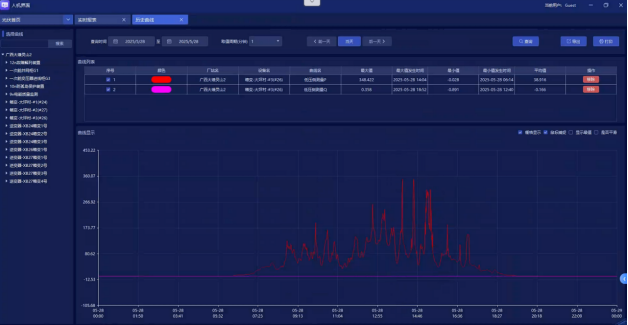 Figure 11 Real time curve monitoring function diagramIn the context of carbon neutrality, photovoltaics and new energy vehicles are inseparable. The overall idea is to build a rich and complete industrial chain through photovoltaic power generation and new energy vehicle electricity consumption, which can not only achieve continuous reduction of carbon consumption, but also broaden the development path of the new energy industry that can continuously empower economic growth. [3] It is necessary to have a system that can ensure power safety at the same time. The power monitoring system solution provided by our company can assist users and the power grid in achieving a high proportion of orderly grid connection for distributed photovoltaics, strengthen the unified control of distributed photovoltaics, promote the coordinated operation of distributed photovoltaics and the power grid, and build a new distributed new energy dispatch and management system with transparent data, convenient regulation, and energy interaction.[1] Wei Kun Analysis of the Current Status and Future Development Trends of Photovoltaic Power Generation [J]. Origin, 2019 (03): 154[2] Zhang Xiaopei Application of Frequency Voltage Emergency Control Device in Substation [J]. Practical Technology, 2012, 21 (08): 25-27[3] Xiaolin Research on the Development Trend of Modern Distributed Photovoltaic in China [J]. Energy and Electricity, 2023, (24): 28-32