-
E-mail
2881392111@qq.com
-
Phone
13611962943
-
Address
No. 253 Yulu Road, Jiading District, Shanghai
Ankerui E-commerce (Shanghai) Co., Ltd
From fragmented energy management to system intelligence: the path to breaking through the zero carbon transformation of enterprise parks
Date: 2025-12-02Read: 9
Introduction
Against the backdrop of the continuous promotion of the "dual carbon" strategy, enterprise parks, as important carriers of energy consumption and industrial emissions, have become key targets for the construction of "zero carbon parks" in various regions. Recently, relevant policies have further clarified the need to accelerate the replacement of new energy, build a safe and reliable new distribution system, and improve the level of green power consumption and digital energy management. This article is based on policy guidance and the actual operational needs of enterprise parks, focusing on the application of microgrid architecture and smart energy management platforms. It explores the implementation path of parks in achieving energy security, operational optimization, and low-carbon transformation, and analyzes the supporting role of comprehensive energy management systems in the construction of zero carbon parks.
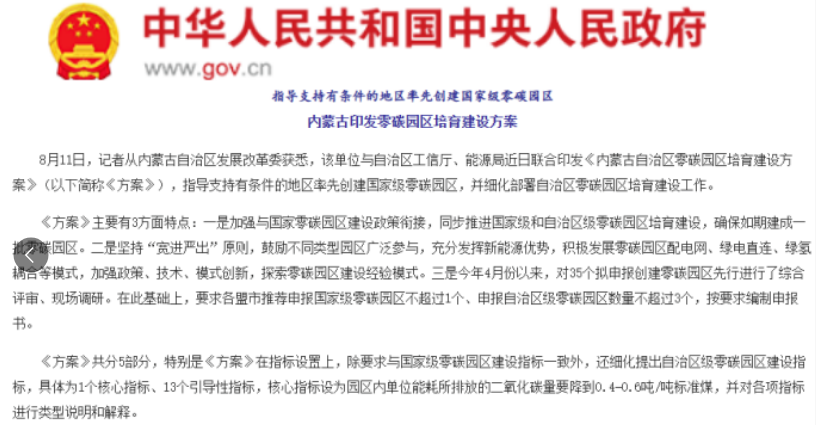
Enterprise parks concentrate a large number of industrial, commercial, and public supporting loads, which belong to typical high energy consumption and high continuity energy consumption scenarios. With the rapid deployment of new energy and new loads such as photovoltaics, energy storage, and charging facilities in the park, the traditional energy consumption model that relies on a single power source and manual management is no longer able to meet the dual needs of safe operation and green development. In recent documents related to the cultivation and construction of zero carbon parks, the government has explicitly stated that new energy allocation, microgrid construction, green power consumption, and digital energy management should be systematically promoted on a park by park basis, in order to build a "safe, low-carbon, and sustainable" park energy system. In this context, enterprise parks urgently need to build an energy management model that can coordinate multiple forms of energy, achieve collaborative operation and intelligent scheduling.
The main challenges faced by the energy system in enterprise parks
·The increase in operational complexity under the background of multiple energy access
In the construction process of zero carbon parks, the coexistence of distributed photovoltaics, energy storage, charging facilities, and diverse loads has become the norm. These facilities not only increase the proportion of green electricity, but also significantly increase the operational complexity of the distribution system. If there is a lack of unified scheduling and coordination mechanisms, it can easily lead to low energy utilization efficiency, large fluctuations in local loads, and blurred boundaries for safe operation.
·Fragmentation of energy management constrains overall energy efficiency improvement
At present, the energy consumption data of many parks is still scattered among different devices or subsystems, and a unified view and comprehensive analysis capability have not been formed. For example, traditional lighting equipment lacks status feedback and operation records, making it difficult to detect faults in real time. Operation and maintenance rely on manual troubleshooting, which is a typical "invisible, undiagnosed, and untraceable" scenario, resulting in extensive energy efficiency management and delayed response. This fragmented management model is not conducive to conducting system energy efficiency analysis, and also limits the potential of the park in peak shaving, optimizing energy consumption structure, and reducing comprehensive energy consumption costs.
·Zero carbon targets demand higher precision in energy management
Zero carbon parks not only focus on the greening of energy structure, but also emphasize the optimization of operational processes. Key indicators such as energy consumption per unit of output value, proportion of green electricity, and load regulation capability all place higher demands on the real-time, accuracy, and synergy of energy management systems. Traditional management methods are no longer able to meet the needs of data-driven refinement and intelligent control.
Ankerui EMS3.0 Microgrid Smart Energy Platform Solution
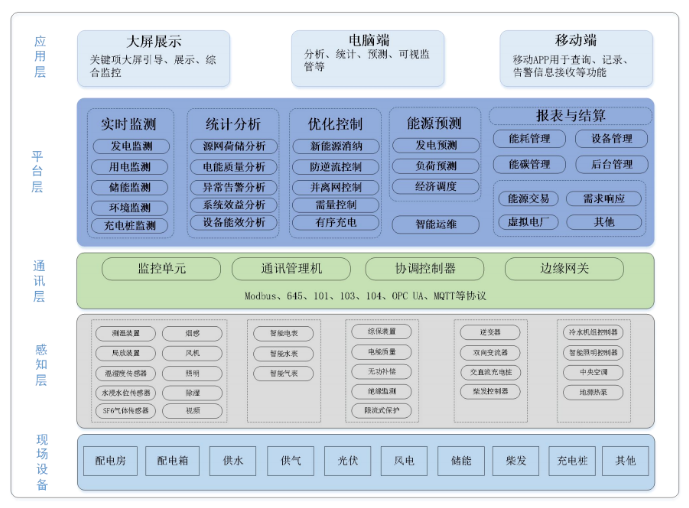
Faced with the above challenges, building a systematic solution based on microgrids and centered on smart energy management platforms has become an inevitable path for enterprise parks to promote energy transformation and achieve zero carbon goals.Ankerui has launched the EMS3.0 energy management system, which is a smart energy management platform for enterprise microgrids (covering park scenarios). It adopts Internet of Things (IoT), big data analysis, and cloud computing technologies to build an open layered architecture of "cloud (platform) - edge (local gateway/controller) - end (on-site device)" collaboration, providing a comprehensive solution for zero carbon park construction.

Platform Features
System Overview
Full operation data such as "source network load storage" is stored, displayed, status detected, and operation alarms are provided. Various data such as microgrid system electricity consumption, carbon emissions, cost, and equipment operation are intuitively displayed. Real time display of microgrid power data flow and equipment safety situation is also provided.

Microgrid operation monitoring
Support functions such as power station topology, equipment monitoring, strategy execution, situational awareness, and operational evaluation.

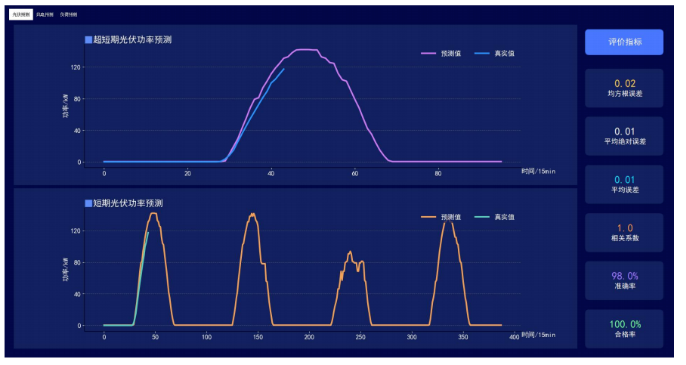
power prediction
Classification prediction of distributed energy, charging stations, air conditioning, conventional loads, etc.: The prediction service covers multiple time scales before and during the day.
optimized scheduling
Economic optimization scheduling based on optimal energy consumption, low cost, and low carbon emissions; Consider safe operation scheduling strategies for smooth power supply and voltage stability in the power grid; Demand side response to grid interaction strategy.

operation control
Photovoltaic - Anti backflow
Energy storage - anti backflow, peak valley arbitrage, demand control, flexible expansion
Light storage - anti backflow, new energy consumption, demand control, dynamic expansion
Light storage charging - anti backflow, new energy consumption, demand control, orderly charging
Source network load storage and charging - anti backflow, new energy consumption, demand control, orderly charging, flexible load control.

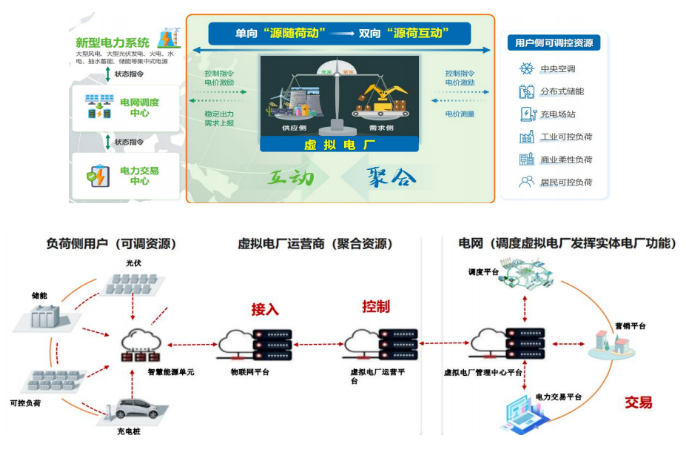
Aggregate resources
Aggregate photovoltaic, energy storage, charging piles, and air conditioning flexible loads within the microgrid; Connect a single virtual power plant substation and an independent power household number to the upper level load aggregator or virtual power plant platform; Fully leverage the flexible resource regulation capability of microgrids to achieve the maximum overall revenue of microgrids.
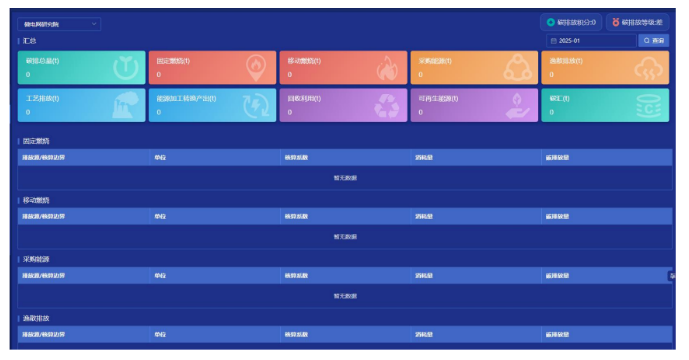
carbon emission management
Monitoring carbon emissions of enterprises, departments, and regions; Carbon emission statistics and month on month analysis; Support monthly and annual carbon emission reports; Carbon inventory report.
Energy Planning
Optimize configuration based on load information, equipment information, market information, geographic information, etc., and provide economical capacity configuration solutions.

System Application Practice
Ankerui EMS3.0 has been successfully applied in multiple types of zero carbon parks/projects, verifying its significant effects:
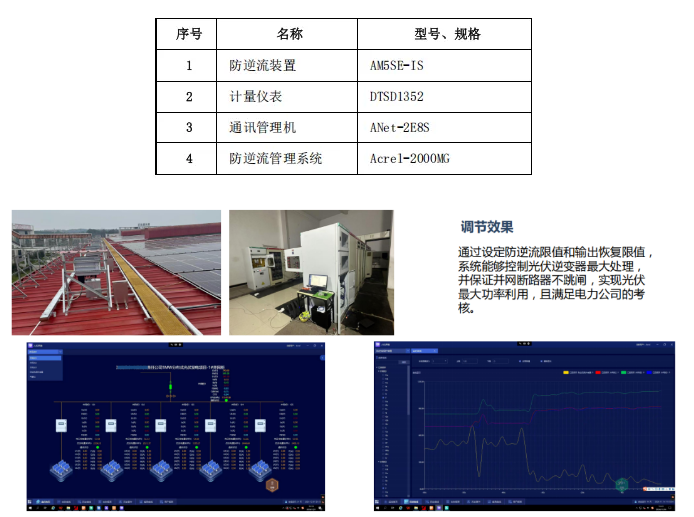
Brewery photovoltaic anti backflow project
A 1MW photovoltaic installation with 3 grid connection points must strictly comply with the policy of "self use and no surplus electricity connected to the grid" to avoid grid assessment. By deploying anti backflow protection devices (rigid control) and anti backflow management systems (flexible regulation, dynamic control of inverter output), the maximum power utilization of photovoltaics can be achieved, while ensuring that grid connected circuit breakers do not trip due to backflow, meeting the assessment requirements of power companies.
Solution: By using anti backflow protection devices, rigid control can be achieved to quickly cut off the grid connected cabinet; Through the anti backflow management system, flexible adjustment is achieved to maximize the utilization of photovoltaics.
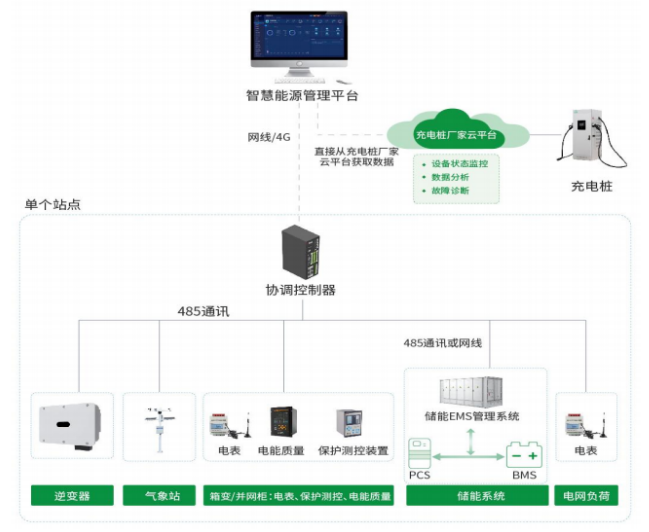
Highway wind solar energy storage integration (a project in Henan)
The service area is far away from the urban power grid, with high requirements for power supply reliability, large fluctuations in new energy, and rapid growth in demand for charging piles. By coordinating rooftop/open space photovoltaics, small wind turbines, energy storage systems, and charging piles in the service area, partial self-sufficiency in energy can be achieved. Peak valley arbitrage can significantly reduce operating costs and improve power supply reliability.
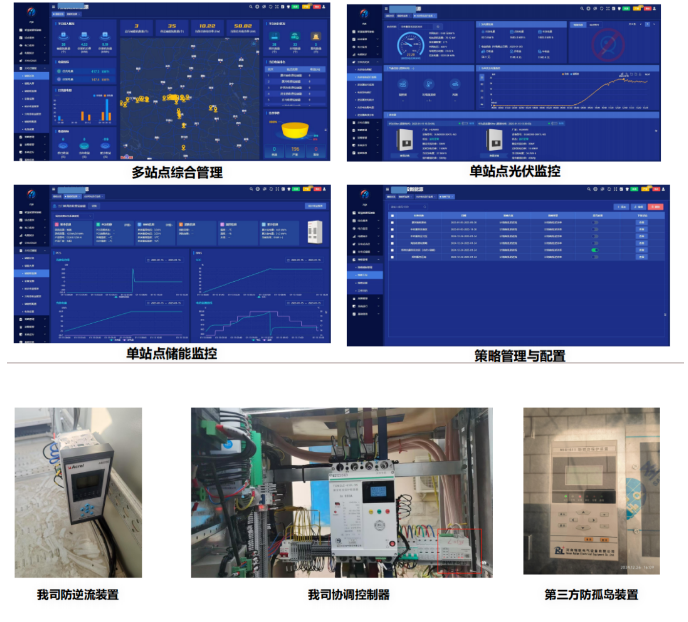
The smart energy management software needs to be compatible with coordination controllers for multiple sites (a total of 266 sites in the first phase), mainly to achieve remote centralized monitoring and control, energy efficiency analysis, energy consumption and revenue, data statistics, strategy issuance, etc. The coordinated controller can formulate and automatically execute control strategies such as anti backflow, peak shaving and valley filling, and new energy consumption, achieving integrated and coordinated operation of source, network, load, and storage internally.
Hardware selection
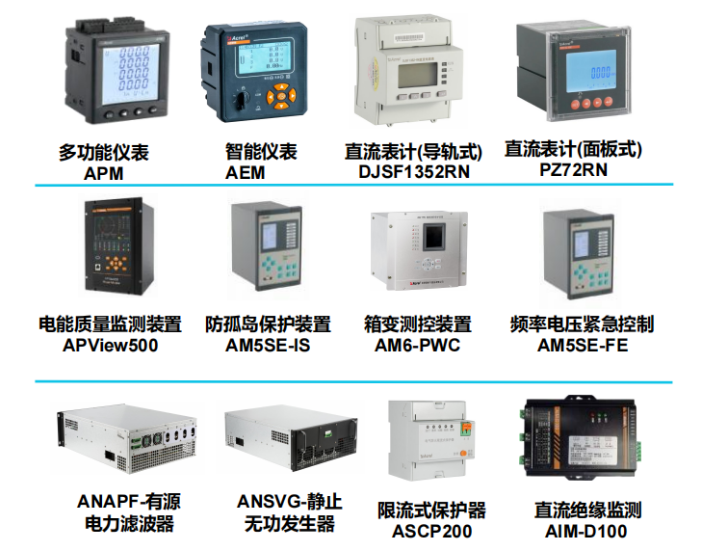
The successful operation of EMS3.0 relies on intelligent hardware that is reliable and compatible at the underlying level. The core hardware includes:
Core control unit: ACCU-100 micro grid coordination controller, as the core edge computing and control unit, is responsible for local equipment data acquisition (supporting multi protocol), local strategy implementation (such as peak shaving and valley filling, standby power switching), and communication with cloud platform. Capable of millisecond level response and adaptable to complex industrial environments such as high temperature and humidity.

Perception monitoring layer equipment: AMC/APM series multifunctional network power meters, installed in the distribution circuit, monitor all electrical parameters such as voltage, current, power, energy, power factor, frequency in real time, and are the cornerstone of energy measurement and analysis; Photovoltaic combiner box monitoring device/communication management machine, collecting power generation data and operating status of string photovoltaic inverters or combiner boxes; APView500 power quality online monitoring device, monitoring voltage sag/sag, harmonics, flicker, etc.
Conclusion
In the stage of zero carbon park construction moving from demonstration exploration to scale promotion, the energy system of enterprise parks is transforming from "single energy supply guarantee" to "comprehensive energy optimization". The application of microgrids and smart energy management platforms has enabled the park to have the ability to coordinate new energy, ensure operational safety, and improve energy efficiency levels. It also provides a practical and feasible technical path for implementing the national zero carbon park policy goals.