-
E-mail
tao.xu.rl@pgeneral.com.cn
-
Phone
18001075583
-
Address
No. 3 Pingsan Road, Pinggu District, Beijing
Beijing Puxi General Instrument Co., Ltd
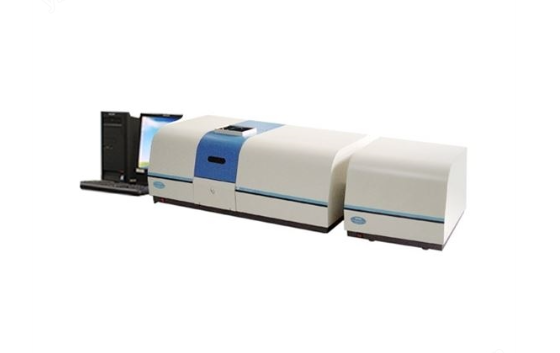
Future development ideas of TAS-986 atomic absorption spectrophotometer
Date: 2025-10-20Read: 107
The following are the future development ideas for TAS-986 atomic absorption spectrophotometer:
1、 Technological innovation and performance improvement
1. Enhance sensitivity and resolution
Optimize optical system design: Further improve the structure and materials of the monochromator, enhance its dispersion ability and transmittance, thereby achieving more accurate wavelength selection and higher spectral resolution. For example, by using new prism or grating materials, as well as finer processing techniques, the influence of stray light can be reduced, enabling the instrument to distinguish closer spectral lines and improve the analytical ability of trace elements in complex samples.
Upgrade detector technology: Develop and apply detectors with higher sensitivity and lower noise, such as advanced photomultiplier tubes or solid-state detectors. These new detectors can more effectively capture weak light signals, improve the signal-to-noise ratio of the instrument, and thereby enhance the detection limit for low content elements, enabling them to detect lower concentrations of target substances.
2. Improve atomization efficiency
Innovative Atomizer Design: Explore new atomization techniques and structures to improve the atomization efficiency and stability of samples. For example, developing more efficient atomization systems to enable sample solutions to be more evenly dispersed into small droplets, increasing the contact area with flames or graphite furnaces; At the same time, optimizing the design of the combustion head, improving the mixing effect of gas and auxiliary gas, ensuring a more uniform temperature distribution of the flame, and enhancing the full degree of atomization.
Research on new matrix modifiers: Find and apply new matrix modifiers suitable for different types of samples to reduce the impact of matrix effects on the measurement results. By adding specific chemical substances, the physical and chemical properties of the sample during atomization can be altered, reducing background interference and improving measurement accuracy and precision.
3. Expand the ability to detect multiple elements simultaneously
Developing a multi-channel detection system: Currently, TAS-986 has a certain capability for multi-element analysis, but in the future, this aspect of functionality can be further strengthened. By increasing the number of detection channels and optimizing data processing algorithms, more elements can be synchronously measured, improving analysis efficiency and shortening testing time. This is particularly important for complex samples that require simultaneous analysis of multiple elements, such as environmental pollutant monitoring, alloy composition analysis, and other fields.
Combining other technologies for integrated analysis: Consider combining atomic absorption spectrophotometry with other analytical techniques such as inductively coupled plasma mass spectrometry (ICP-MS), high-performance liquid chromatography (HPLC), etc. This combined technology can fully leverage the advantages of various methods to achieve selective detection of elements in different forms and price ranges in samples, providing a more comprehensive solution for complex analysis tasks.
2、 Development of Intelligence and Automation of TAS-986 Atomic Absorption Spectrophotometer:
1. Upgrade of intelligent control system
Application of artificial intelligence algorithms: Introducing artificial intelligence and machine learning algorithms to automatically optimize and adjust the operating parameters of instruments. By learning and analyzing a large amount of experimental data, a model is established to predict the optimal working conditions, such as lamp current, slit width, atomization temperature, etc., in order to improve the accuracy and reliability of the analysis results. In addition, artificial intelligence technology can be used to achieve fault diagnosis and warning functions, timely discover and solve potential problems, and reduce downtime.
Voice control and interactive interface optimization: Add voice control function to facilitate users to operate instruments through voice commands and improve work efficiency. Meanwhile, optimize the design of the human-computer interaction interface to make it more intuitive, user-friendly, and easy to operate. For example, using touch screen operation instead of traditional button operation, providing graphical menus and prompt information, reducing users' learning costs and difficulty in use.
2. Automated sample pre-processing integration
Development of online digestion and pre enrichment device: Develop integrated online digestion and pre enrichment equipment to achieve automation of sample pretreatment process. This can save tedious manual operation steps, reduce human errors, and improve the efficiency and repeatability of sample processing. For example, for solid samples, a series of pre-processing steps such as digestion, filtration, and extraction can be directly completed inside the instrument; For liquid samples, automatic dilution, spiked recovery rate determination, and other functions can be achieved.
Robot assisted sampling system: Introducing robot technology to achieve automatic sampling, transfer, and injection of samples. By precisely controlling the robotic arm and pipette, the consistency and accuracy of each injection are ensured, avoiding cross contamination. At the same time, robots can also be responsible for replacing sample cups, cleaning injection needles, and other tasks, further improving the automation level of laboratory work.