-
E-mail
113994515@qq.com
-
Phone
18513498889
-
Address
No. 158, Tongzhou District Science and Technology Park, Beijing
Beijing Xinsheng Zhuorui Technology Co., Ltd
GB5455 Textile Vertical Combustion Tester Testing GB5725 Safety Net Operation Method
Date: 2025-12-11Read: 9
GB5455 Textile Vertical Combustion Tester Testing GB5725 Safety Net Operation Method
To ensure that the vertical combustion performance test results of textiles meet the requirements of GB5725, it is necessary to strictly follow the following standard operating methods to use the GB5455 Textile Vertical Combustion Tester:
Preparation before the experiment
Equipment inspection: Connect the power supply of the equipment, turn on the main switch, and check whether the control system, ignition system, and timing system are operating normally; Adjust the ventilation device inside the combustion chamber to ensure that the ventilation volume meets the standard requirements.
Gas preparation: Connect a gas cylinder that meets the purity requirements, open the pressure reducing valve, and calibrate the flame height of the igniter to 40mm ± 2mm as specified in GB5725 through the flame height adjustment knob of the equipment. After stable combustion for 1 minute, proceed with subsequent operations.
Sample preparation: Cut size samples from the textile to be tested according to GB5725 standard, with at least 5 samples taken from each group; If the textile is a coating, composite or other structure, it is necessary to ensure that the tested surface of the sample is consistent with the actual usage surface.
GB5455 Touch Screen Textile Vertical Combustion Tester (Vertical Flame Retardant Performance Tester) The GB5455 Touch Screen Controlled Textile Vertical Combustion Tester developed and produced by Beijing Xinsheng Zhuorui Technology Co., Ltd. and Xunyu Technology Co., Ltd. is an upgraded product based on the original equipment technology. It adopts touch screen control and has a high degree of test automation. In addition to the original automation functions achieved by various buttons and instruments, the touch screen control model can store past test data and retrieve past data during the test. This device is suitable for various fabrics and their products such as safety nets and seat belts, and is ultimately applicable to the test method for the combustion performance of vertical textile bottom edges when ignited as specified in the GB5455-2014 standard.
Design standard: GB5455-2014 "Determination of vertical release damage length, smoldering and reigning time of textile combustion performance"
Applicable standard: GB 8965.1-2009; GB6529 ; GB5725; GB/T 6096; GBT13489
Sample installation
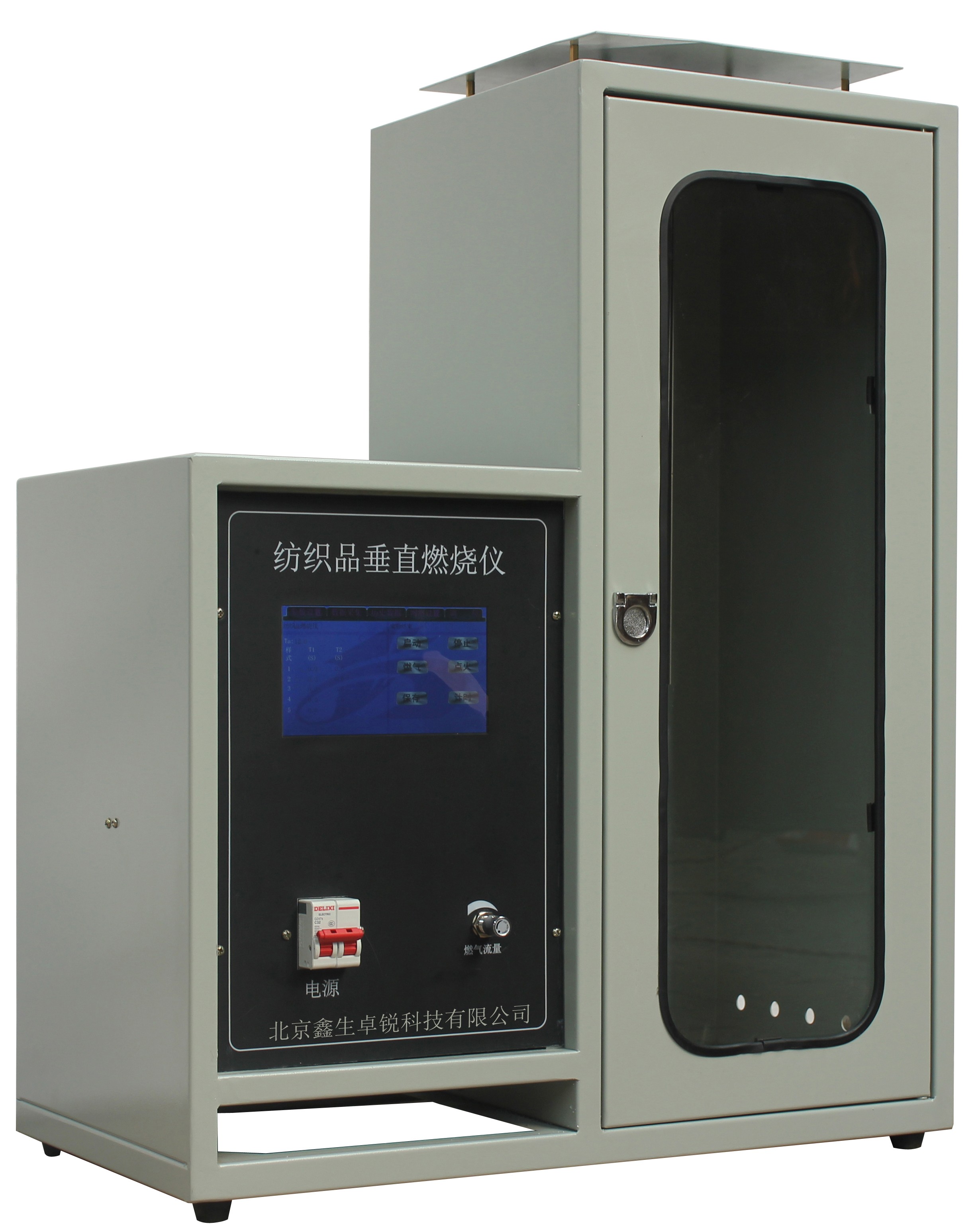
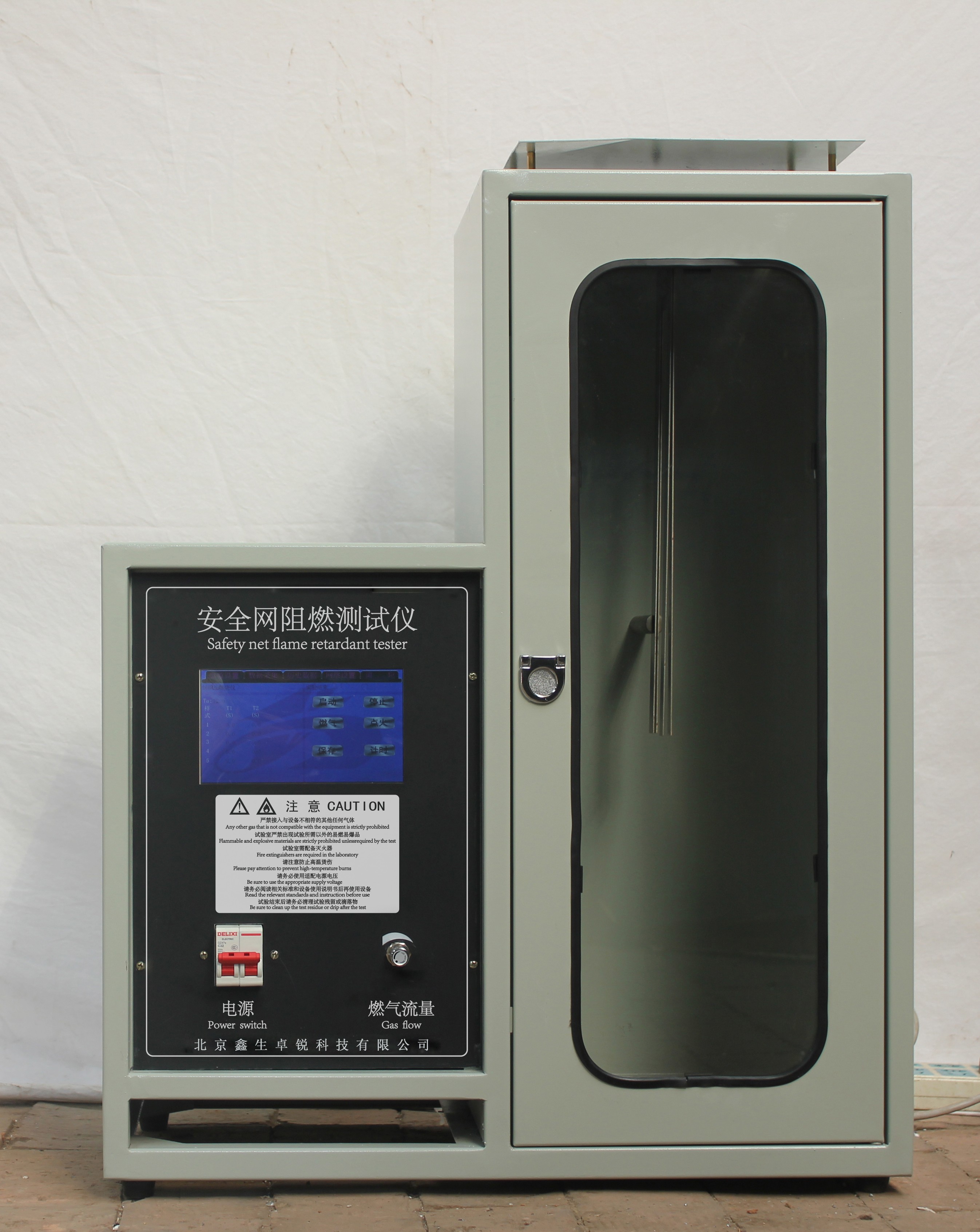
Open the sample holder smoothly, place the sample vertically into the sample holder, ensuring that the upper end of the sample is aligned with the top of the sample holder, and the lower end naturally hangs down. The surface of the sample is free of tension and wrinkles.
Adjust the relative position between the sample holder and the igniter so that the distance between the top of the igniter and the bottom of the sample meets the standard requirements, and the flame axis coincides with the vertical axis of the sample.
Ignition and Timing
Press the ignition button and start the timing device at the same time. Ignite according to the standard specified ignition time (12s ± 0.2s); If droplets appear during the ignition process of the sample, it is necessary to observe whether the droplets ignite the degreased cotton below (placed 300mm from the lower end of the sample).
After reaching the specified ignition time, immediately remove the igniter and record the flame burning time of the sample; After the flame combustion stops, record the flameless combustion time of the sample.
Data recording and ending
After the experiment is completed, wait for the sample to cool down and measure the damaged length of the sample (the distance from the damaged edge at the bottom of the sample to the undamaged part), accurate to 1mm.
Record the flame burning time, flameless burning time, damage length, and droplet ignition status of each sample, close the gas valve and equipment power, and clean the test residue.