-
E-mail
113994515@qq.com
-
Phone
18513498889
-
Address
No. 158, Tongzhou District Science and Technology Park, Beijing
Beijing Xinsheng Zhuorui Technology Co., Ltd
Technical principle and operation process of halogen pretreatment for oxygen bomb combustion test device
Date: 2025-12-17Read: 10
Technical principle and process of halogen pretreatment for igniter of YDRSY oxygen bomb combustion test device
Technical principle:
Halogen pretreatment is based on the core logic of "cleaning activation protection": firstly, halogen compounds, oil stains, and oxide layers on the surface of the igniter are removed by physical or chemical means, eliminating the obstruction of pollutants to the ignition arc; Further enhance the surface activity of the electrode through activation treatment to ensure concentrated release of ignition energy; Finally, anti-corrosion coating or passivation treatment is used to form a dense protective film on the electrode surface, isolating the contact between halogen gas and the electrode and delaying the corrosion process.
Working Principle:
The sample burns, oxidizes and decomposes solid and liquid organic samples under the action of high-pressure oxygen in a closed system, converting them into chlorides, bromides, etc. that can be absorbed by the solution. An absorbent solution is placed inside the oxygen bomb to collect and absorb the decomposed halogens. The absorbed solution can be quantitatively tested for halogen and sulfur content using external standard methods such as ion chromatography, ion selective electrode method, photometry, or titration.
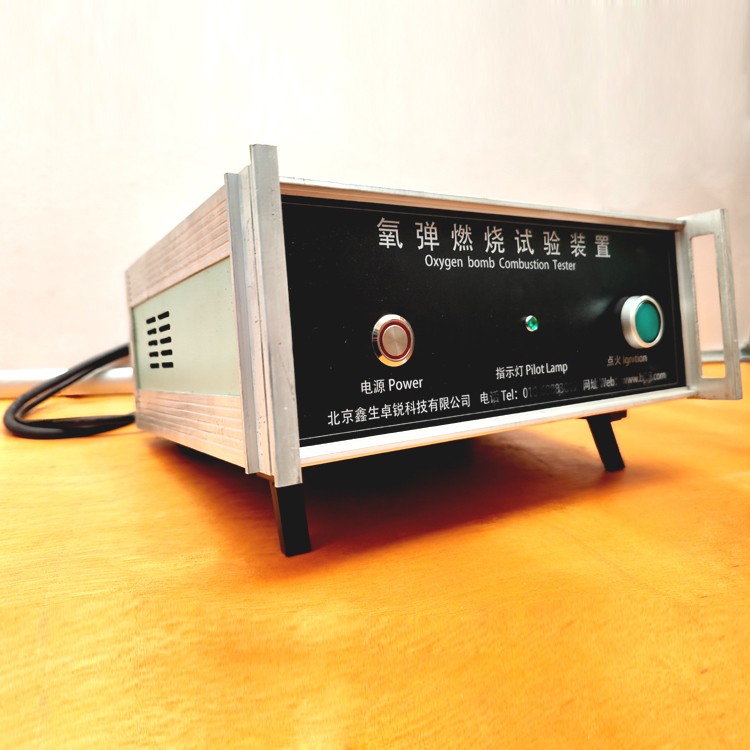
main process
Preparation for pre-treatment: Disassemble the electrode assembly of the igniter, clean the visible impurities on the surface, and check the wear of the electrodes;
Cleaning treatment: Using ultrasonic cleaning (combined with specialized neutral cleaning agents) or plasma cleaning technology to remove halogen residues and oxide layers, avoiding secondary corrosion caused by the use of strong acid and alkali cleaning agents;
Activation treatment: By activating with argon plasma or electrochemical polishing, the conductivity and activity of the electrode surface are improved;
Protective treatment: Apply high-temperature and corrosion-resistant coatings (such as titanium nitride coatings) or perform passivation treatment to enhance the electrode's resistance to halogen corrosion;
Drying and assembly: Dry the processed electrode components (temperature controlled at 80-120 ℃), assemble them back into the igniter according to specifications, and conduct ignition testing verification.
The ZR-YDRSY oxygen bomb combustion test device developed and produced by Beijing Xinsheng Zhuorui Technology Co., Ltd. is used in the following areas: oxygen bomb combustion test device, also known as halogen determination pretreatment device, composed of customized oxygen bomb, pressure reducing valve, oxygenation instrument, electronic pulse igniter, etc. Mainly used in laboratories, research institutions, university laboratories, third-party quality inspection units, for testing flammable liquids, powder materials, halogens, plasticizers and other flammable substances, as well as for analyzing the combustion and residual state of materials. It is also used for quantitative analysis of heavy metals and harmful halogen elements in electrical plastic products and circuit boards. It is used for pre-treatment of waste halogen samples, ion chromatography analysis of solid (or liquid) samples after combustion in oxygen bombs, and absorption of combustion gases by absorption liquids. It is also used as a sample pre-treatment device for ion chromatography analysis.
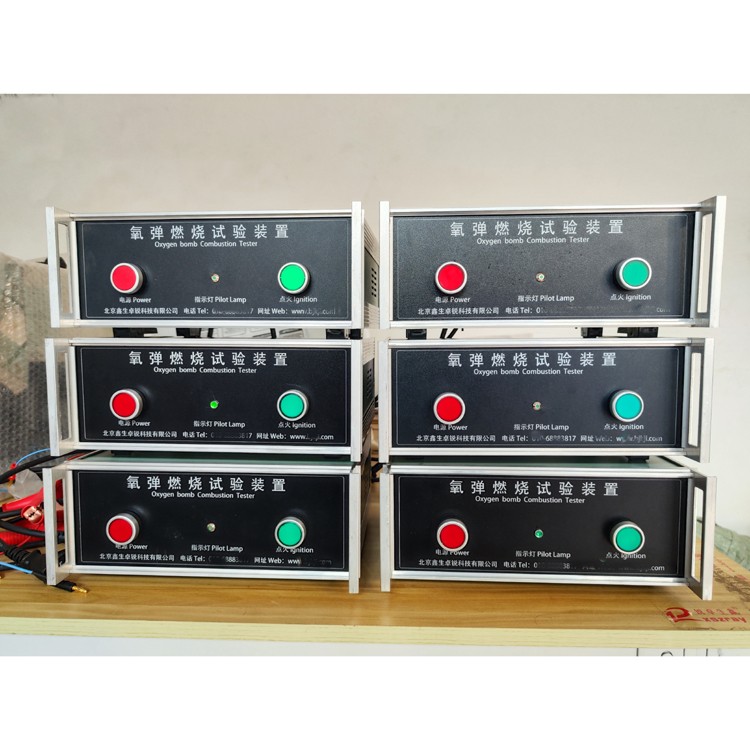
Experimental working principle: The sample burns, oxidizes, and decomposes solid and liquid organic samples under the action of high-pressure oxygen in a closed system, converting them into chlorides, bromides, etc. that can be absorbed by the solution. An absorbent solution is placed inside the oxygen bomb to collect and absorb the decomposed halogens. The absorbed solution can be quantitatively tested for halogen and sulfur content using external standard methods such as ion chromatography, ion selective electrode method, photometry, or titration.