-
E-mail
113994515@qq.com
-
Phone
18513498889
-
Address
No. 158, Tongzhou District Science and Technology Park, Beijing
Beijing Xinsheng Zhuorui Technology Co., Ltd
The significance of measuring the combustion performance of safety nets using a textile vertical combustion instrument
Date: 2025-12-17Read: 8
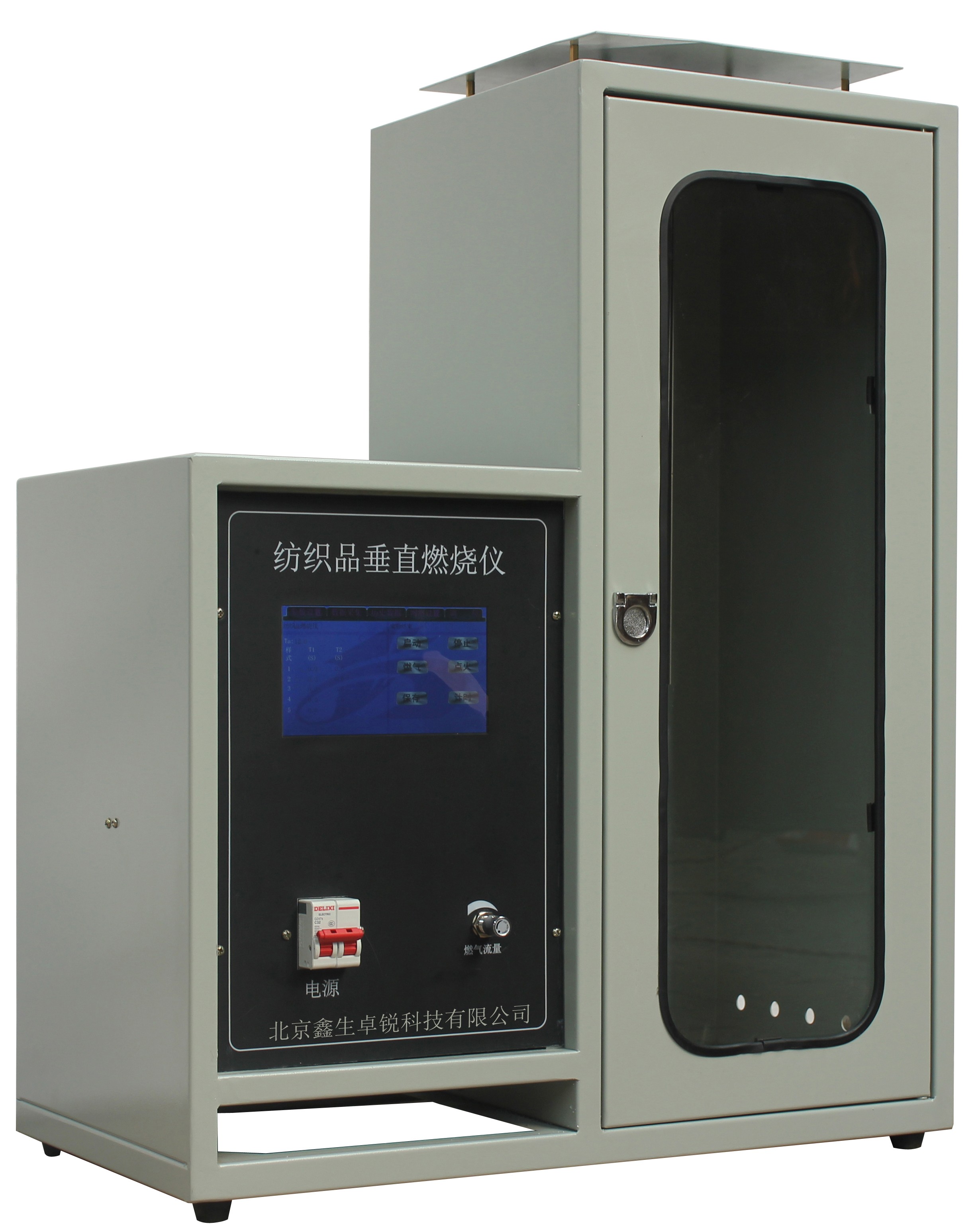
Textile vertical combustion tester: flame retardant testing from laboratory to production line
In the application fields of textiles such as clothing, home textiles, and automotive interiors, flame retardancy is one of the main indicators for measuring product safety - for example, if children's clothing burns rapidly in the event of fire, it may cause serious burns; If the flame retardancy of automotive interior textiles is poor, a large amount of toxic gases will be released in a fire, posing a threat to the safety of drivers and passengers. The textile vertical combustion instrument, which simulates the combustion scene of textiles in a vertical suspension state and evaluates their flame retardant performance, is now gradually extending to production lines and becoming a quality control tool for "real-time detection and adjustment".
The detection principle of the textile vertical combustion instrument is based on the "vertical combustion method", which is an internationally recognized flame retardant testing method for textiles (such as GB/T 5455-2014 "Determination of Vertical Combustion Performance of Textiles"). During testing, a textile sample with dimensions of (300 ± 2) mm × (80 ± 2) mm is vertically suspended on a sample rack, and a layer of degreased cotton is placed (100 ± 10) mm below the lower edge of the sample to detect the presence of molten droplets; Subsequently, an ignition source with a specified power (usually a propane flame) is used to ignite from the lower edge of the sample. The ignition time is divided into "12 seconds" (for ordinary textiles) and "3 seconds" (for thin textiles). After removing the ignition source, the equipment automatically records three key indicators: "reignition time" (the time for the sample to continue burning after removing the ignition source), "smoldering time" (the time for the sample to smoldering after reignition stops), and "damage length" (the length of damage to the sample after combustion). These three indicators are used to comprehensively determine the flame retardant level of the textile.
In laboratory settings, the textile vertical combustion instrument serves as a "gatekeeper" for product development and quality inspection to some extent. Beijing Xinsheng Zhuorui Technology Co., Ltd. develops and produces textile vertical combustion testers, safety net flame retardant testers, and fully automatic touch screen models to test the flame retardant performance of materials. When developing new flame retardant textiles, engineers use a vertical combustion instrument to test the flame retardant effect of samples with different flame retardant formulations and different fabric structures, continuously optimizing product formulations; When enterprises conduct finished product inspections, random samples are taken from each batch of products and tested by instruments to determine whether they meet customer or standard requirements, in order to avoid unqualified products from entering the market. With the advancement of intelligent manufacturing, miniaturized and intelligent textile vertical combustion instruments have begun to enter the production line. In the fabric production process, the equipment can sample and test the first, middle, and last ends of each roll of fabric separately. If it is found that a certain section of fabric does not meet the flame retardant performance standards, the production line can immediately stop and adjust the process (such as adjusting the flame retardant spraying amount, drying temperature, etc.) to avoid the scrapping of the entire roll of fabric, which not only reduces production costs but also improves product quality stability.