-
E-mail
2860308992@qq.com
-
Phone
13011285763
-
Address
Room 1066, Building 2, East Ring Road, Yanqing Park, Zhongguancun, Yanqing District, Beijing
Beijing Zhongke Micro Nano Precision Instrument Co., Ltd
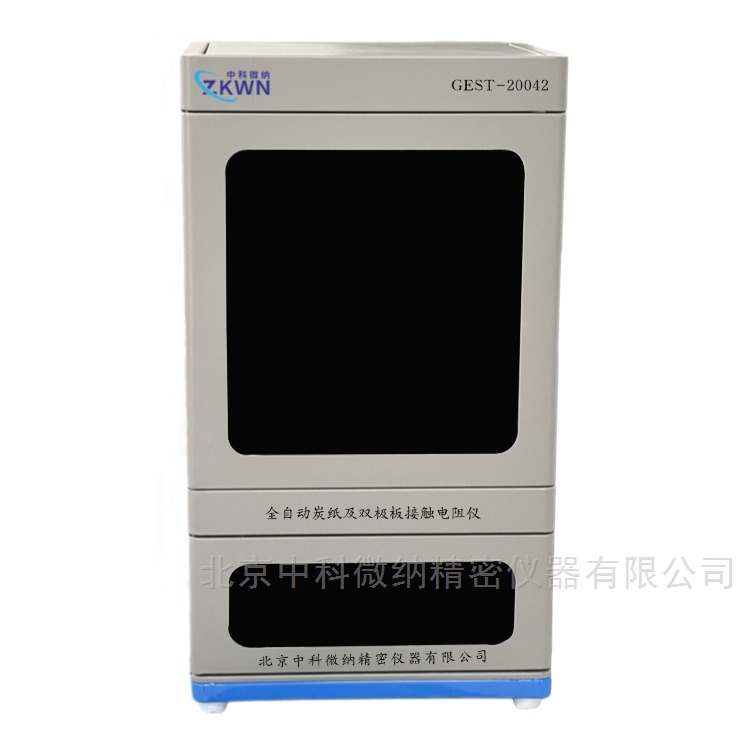
Fully automatic carbon paper and bipolar plate contact resistance meter: outlining a clear picture of the performance of fuel cell core materials
Date: 2025-12-19Read: 10
On the path of exploring the forefront of proton exchange membrane fuel cell technology, the performance characterization of its core components - gas diffusion layer (carbon paper) and bipolar plate - has become the key to understanding overall performance. The electrical properties of materials are like the veins of energy flow, and their state profoundly affects the efficiency and durability of batteries. Traditional methods are difficult to comprehensively capture the characteristics of materials in different dimensions and form a complete understanding under unified conditions.
To this end, we have launched a new fully automatic carbon paper and bipolar plate contact resistance meter. It adopts an integrated design concept, integrating the resistance evaluation of materials in both vertical and horizontal directions on the same platform, aiming to provide users with a coherent and intuitive way to observe the electrical behavior of materials under different working conditions, and provide coherent data support for research and development decisions and quality judgments.
1、 Fusion design: single platform, dual dimensional observation
This instrument is designed for a deeper understanding of the electrical properties of fuel cell core materials. It directly responds to users' demand for a comprehensive perspective in material evaluation, particularly enabling observation of the resistance behavior of materials in different directions on the same device. This design avoids cognitive barriers caused by device switching or method differences, keeping the research focus always on the material performance itself.
The smooth operation of the instrument depends on the coordinated work of its internal systems:
Stable and controllable force loading system: using motor-driven loading method to achieve smooth adjustment and stable maintenance of pressure. It runs quietly and can effectively simulate the pressure environment in which batteries are stacked and operated, providing physical conditions that are in line with reality for electrical testing.
A well adapted resistance measurement system: Its measurement core has a wide response range, which can clearly present the response of materials with high conductivity to materials with certain impedance characteristics in an electrified state, ensuring clear and reliable data measurement for different types of samples.
Clear and intuitive control acquisition system: Interacting through a touch interface, the process is clear and the logic is distinct. The key data and trends during the testing process are presented in real-time in the form of charts for easy observation and recording, and support the on-site organization of result reports.
Stable and consistent dedicated measuring electrodes: using standardized designed dedicated electrodes with special surface treatment to ensure stable contact with the sample, providing consistent basic conditions for multiple measurements and supporting effective data comparison and analysis.
2、 Intelligent Analysis: The Evolution from Data to Insight
The deep value of this instrument lies in its ability to control the testing process and reveal the meaning of the data
Dimension fusion and complete field of view: With the integration of two classic methods, a single device can evaluate the conductivity behavior of materials in both vertical and planar directions. This provides a complementary perspective for understanding the electrical properties of materials, forming a more comprehensive cognitive picture.
Panoramic presentation, transparent process: During testing, the applied force, the degree of material deformation, and the resulting electrical parameters are synchronously captured and dynamically displayed. The entire testing process is clearly visible, and the changes in status are clear at a glance.
Diverse modes and scene adaptation: Whether it is steady-state observation under constant conditions, step-by-step exploration according to a set gradient, or focusing on the characteristics of specific compression states, the instrument can provide corresponding testing paths to adapt to multiple objectives ranging from routine inspection to in-depth research.
Trend analysis, revealing correlations: During multi-step gradient testing, the instrument not only records data from each point, but also automatically sorts out the relationships between the data, calculates the magnitude and trend of changes, intuitively displays the potential patterns of material properties changing with pressure, and helps users capture internal patterns.
Automatic process and simple operation: from start to finish, the main testing steps are automatically completed. After parameter setting, the instrument automatically performs testing, collects data, and returns to its initial state after completion. Combining convenient data management and remote maintenance functions has improved work efficiency and user experience.
3、 Conclusion: Clarify characteristics and support development
This fully automatic carbon paper and bipolar plate contact resistance meter is dedicated to transforming complex material electrical properties into clear and coherent information flow through its integrated testing concept, smooth control process, and in-depth data analysis capabilities. It is not only a practical tool for exploring material performance and optimizing formulation processes during the research and development stage, but also a reliable partner for monitoring product characteristics and ensuring consistency in the production process.
Its application makes the evaluation of the electrical properties of fuel cell core materials more systematic and concrete. We hope that with its clear observation window, it can help industry colleagues better understand materials, effectively promote technological progress, and jointly promote fuel cell technology towards a more mature and stable future.