-
E-mail
1485311053@qq.com
-
Phone
13806142315
-
Address
27 Hongshan Road, Jintan District
Changzhou Jintan Taina Instrument Factory
Calibration and maintenance of ozone analyzer: management points for light source stability and sensor lifespan
Date: 2025-11-24Read: 104
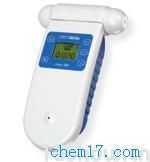
Ozone analyzerIt is a core equipment for monitoring atmospheric ozone layer and ground ozone pollution, widely used in environmental protection departments, scientific research institutions, and industrial production (such as residual detection after ozone disinfection). The detection principle is mainly divided into UV spectrophotometry and electrochemical method, and the stability of the light source and the lifespan of the sensor are the two key factors affecting its accuracy, which need to be managed with emphasis.
1、 Light source stability:
The ultraviolet photometric ozone analyzer calculates ozone concentration by comparing the difference in ultraviolet intensity between the reference light path (without ozone) and the measurement light path (containing ozone) (according to the Beer Lambert law). The stability of its core component, the low-pressure mercury lamp (emitting 253.7nm ultraviolet light), directly affects the measurement results:
Light intensity attenuation: After long-term use of mercury lamp tubes (usually exceeding 1000-2000 hours), filament evaporation or electrode aging can lead to a decrease in the emitted 253.7nm ultraviolet light intensity, reducing the signal difference between the measurement light path and the reference light path, and ultimately displaying a low ozone concentration (such as 80ppb in actual 100ppb).
Wavelength drift: The center wavelength of ultraviolet light emitted by mercury lamps may shift due to thermal deformation or fatigue of the lamp tube material (such as shifting from 253.7nm to 253.9nm), while ozone is most sensitive to the absorption peak at 253.7nm. Wavelength shift can lead to errors in the calculation of absorption coefficients and increase measurement errors.
Solution: Regularly check the status of the light source (measure 253.7nm light intensity with a UV light intensity meter every 3 months). If the light intensity is lower than 80% of the initial value or the wavelength deviation exceeds ± 0.2nm, the mercury lamp needs to be replaced (it is recommended to use original accessories to ensure wavelength accuracy). In daily use, avoid frequent switching of light sources (to reduce electrode thermal shock) and maintain good heat dissipation of the instrument (ambient temperature not exceeding 30 ℃).
2、 Sensor lifespan:
The electrochemical ozone analyzer generates a current through the oxidation reaction between ozone and a working electrode (such as a platinum electrode), and the magnitude of the current is proportional to the concentration of ozone. But the electrolyte in the sensor (such as phosphate buffer solution) will gradually evaporate, or the electrode surface will be poisoned due to long-term exposure to ozone (such as the formation of a passivation film), resulting in:
Decreased sensitivity: Insufficient electrolyte reduces ion conductivity efficiency, slows down electrode reaction rate, and displays low ozone concentration;
Slow response: After the electrode surface is passivated, the reaction time between ozone and the electrode is prolonged, and the instrument's response speed to concentration changes slows down (such as a 10-20 second reading delay when the ozone concentration suddenly increases).
Solution: The lifespan of electrochemical sensors is usually 1-2 years (shortened to 6-12 months in high concentration ozone environments), and the sensor status needs to be checked regularly (with standard ozone gas test response values every 6 months). If the sensitivity is found to be lower than 50% of the initial value (such as standard 100ppb ozone display value<50ppb), the sensor needs to be replaced. In daily maintenance, avoid exposing the sensor to ozone environments beyond its range (such as>200ppb). After use, promptly blow the electrode with clean air (or nitrogen) to prevent residual ozone corrosion.
3、 Calibration and daily management:
Ozone analyzerCalibration needs to be performed every 3-6 months (shortened to 1 month for high-precision monitoring scenarios), using standard ozone gas (such as 0pppb, 50ppb, 100ppb) as input to the instrument, and comparing the deviation between the displayed value and the standard value (allowable error is usually ± 2% -5%). During the calibration process, it is necessary to simultaneously check whether the ultraviolet light path is clean (wipe the lens with anhydrous ethanol to avoid dust scattering ultraviolet light), whether the sampling pump flow rate is stable (deviation<± 5%), and whether the circuit connection is reliable (to avoid signal loss caused by poor contact).
By managing the stability of the light source (regular replacement of mercury lamps), extending the lifespan of sensors (standardized use and replacement), and strictly calibrating processes, ozone analyzers can maintain high-precision measurements within ± 2% for a long time, providing reliable technical support for atmospheric environmental protection and human health protection.