-
E-mail
2850687972@qq.com
-
Phone
13538469076
-
Address
Dongcheng Lixin Jinhui Industrial Park, Dongguan City, Guangdong Province
Guangdong Aisili Testing Instrument Co., Ltd
Quick temperature change, constant temperature and humidity test chamber supplier: technical analysis and industry application fully revealed
Date: 2025-12-04Read: 7
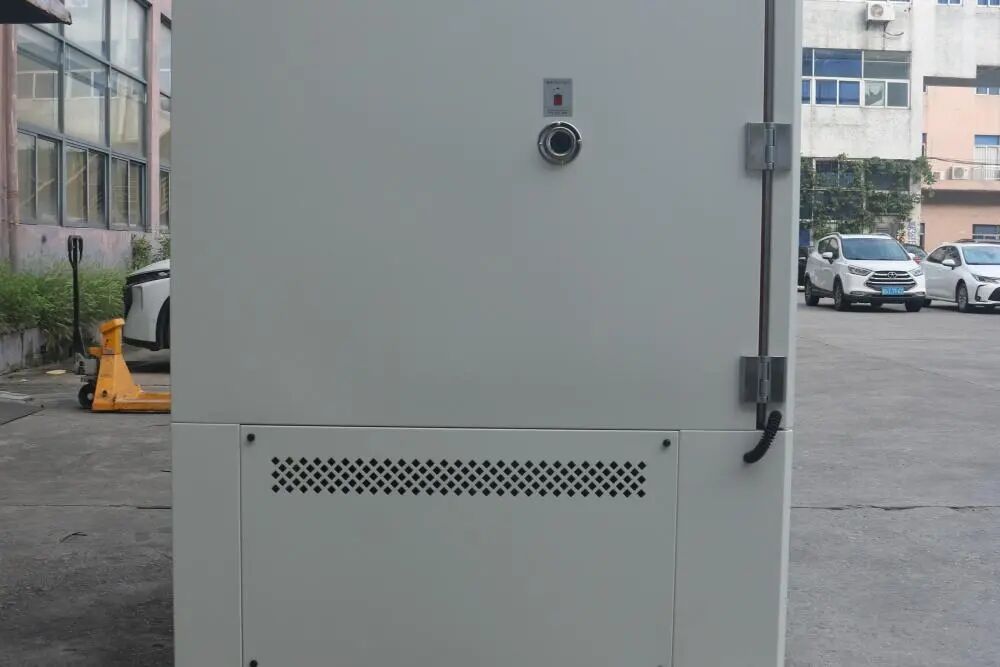
In the fields of industrial manufacturing and scientific research, environmental simulation testing equipment is one of the core tools to ensure product reliability. among which,Rapid temperature change, constant temperature and humidity test chamberWith its high-precision and high-efficiency environmental simulation capabilities, it has become a testing equipment for industries such as electronics, automotive, and aerospace. This article will comprehensively analyze the value of this equipment from four dimensions: technical principles, core advantages, industry applications, and selection points, and explore how to choose high-quality suppliers.

1、 Technical principle: How to achieve dual control of "rapid temperature change" and "constant temperature and humidity"?
The core function of the rapid temperature change constant temperature and humidity test chamber is to simulate temperature and humidity environments in a short period of time through a precision control system, while maintaining parameter stability. Its technical implementation mainly relies on three major systems:
1. Refrigeration and Heating SystemThe combination of compressor refrigeration and electric heating tube is used to achieve rapid temperature rise and fall through PID control algorithm. For example, the temperature change rate from -70 ℃ to+150 ℃ can reach 10 ℃/min, far exceeding the 3-5 ℃/min of traditional test chambers.
2. Humidification and dehumidification systemThrough steam humidification and freeze dehumidification technology, the humidity range of 10% -98% RH can be controlled. Some * * devices are also equipped with ultrasonic humidification modules to further improve the uniformity of humidity control.
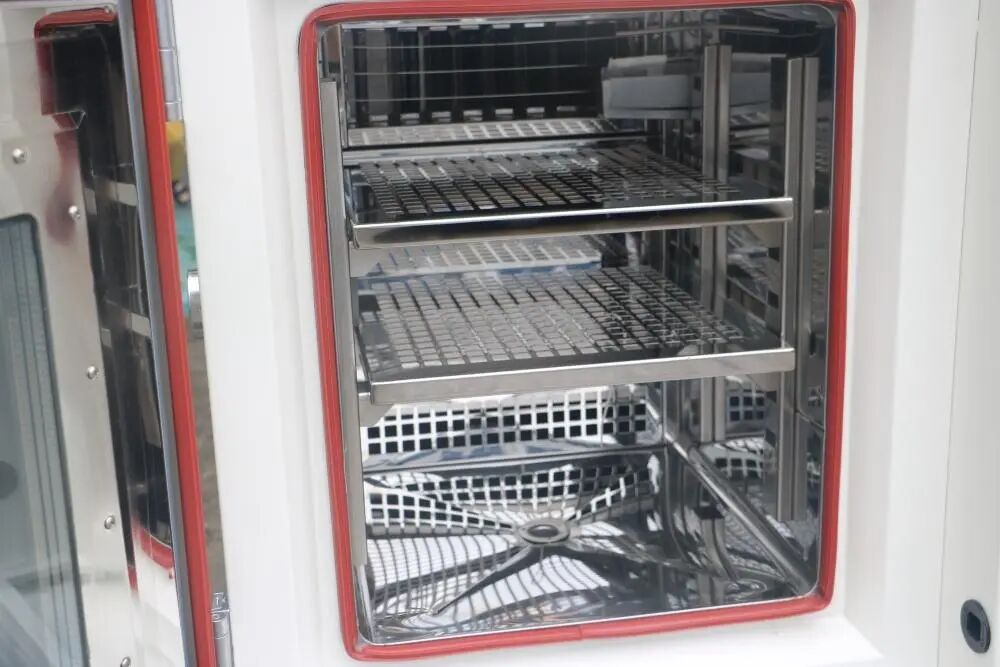
3. Air circulation systemAdopting high-power centrifugal fans and multi blade wind turbine design to ensure uniform temperature and humidity distribution within the box of ≤± 1.5 ℃, avoiding local testing deviations.
The collaborative work of these systems enables the test chamber to simulate an environment of "ice and fire" while maintaining long-term stable operation, providing reliable data support for product reliability testing.
2、 Core advantage: Why choose a rapid temperature change test chamber?
Compared to traditional constant temperature and humidity test chambers, rapid temperature change equipment has significant advantages in efficiency, accuracy, and applicability:
1. Accelerated product failure analysisQuickly expose defects in materials or components through a temperature changing environment. For example, in the cyclic testing of electronic components from -40 ℃ to+85 ℃, problems such as solder joint virtual soldering and sealing failure can be detected in advance, shortening the research and development cycle by more than 30%.
2. Meet strict industry standardsStandards such as AEC-Q100 for automotive electronics and GJB 150 for products require equipment to have the ability to quickly change temperature. For example, a new energy vehicle battery manufacturer verified the safety of battery packs in climate conditions through testing at -40 ℃ to+85 ℃ and 10 ℃/min.
3. Multi scenario compatibilityThe device can customize temperature and humidity combination curves to simulate complex environments such as desert day night temperature differences and tropical rainforest high humidity. A certain communication equipment manufacturer successfully solved the condensation problem of base station equipment in tropical regions by customizing the "high temperature and high humidity+rapid cooling" mode.
4. Energy saving and environmentally friendly designUsing variable frequency compressors and environmentally friendly refrigerants, energy consumption is reduced by 20% compared to traditional equipment, while complying with international environmental standards such as RoHS and REACH.
3、 Industry applications: Which fields require rapid temperature change test chambers?
1. electronics industryChips, PCB boards, connectors, etc. need to undergo temperature change testing to verify their weather resistance. For example, a semiconductor company conducted tests from -55 ℃ to+125 ℃ to ensure the stability of its products in the climate.
2. automotive industryThe engine controller, battery pack, sensors, etc. need to simulate scenarios such as "high-altitude low-temperature start" and "high-temperature exposure". A certain car company has shortened the road test cycle of new cars from 6 months to 2 months through rapid temperature change testing.
3. aerospaceSatellite components and aircraft instruments need to withstand temperature changes ranging from -100 ℃ to+200 ℃. A certain aerospace technology group verifies the shrinkage rate and sealing performance of materials in the space environment through customized equipment.
4. new energy sectorPhotovoltaic inverters and energy storage batteries need to simulate an environment with "day night temperature difference+high humidity". A certain photovoltaic enterprise found through testing that the packaging material of the components is prone to cracking during cycling from -20 ℃ to+85 ℃, thus optimizing the production process.
4、 Selection points: How to choose a reliable supplier?
Faced with numerous suppliers in the market, enterprises need to comprehensively evaluate from the following dimensions:
1. technical strengthCheck if the manufacturer has independent research and development capabilities, such as mastering core technologies such as PID control algorithms and variable frequency compression. Prioritize manufacturers who can provide customized solutions.
2. Equipment stabilityRequest manufacturers to provide MTBF (mean time) data or refer to peer cases. For example, a certain manufacturer's equipment has been continuously running for 5000 hours and has been recognized by multiple Fortune 500 companies.
3. service capabilityIncluding pre-sales solution consultation, in sales installation and debugging, and after-sales maintenance response. Some manufacturers provide a "7 × 24-hour remote diagnosis+48 hour on-site" service, which can significantly reduce the risk of downtime.
4. Cost effectiveness considerationsAvoid simply pursuing low prices, and consider factors such as equipment lifespan, energy consumption, and maintenance costs. For example, although the price of a certain imported brand of equipment is 30% higher, its lifespan is as long as 10 years, and the long-term cost is lower.
5. Industry reputationQuery manufacturer qualifications and user evaluations through industry associations and third-party platforms. For example, a certain manufacturer has been awarded the title of "Environmental Testing Equipment * * Supplier" for three consecutive years, with a customer repurchase rate of over 60%.
Conclusion: Future Trends of Environmental Testing Equipment
With the advancement of Industry 4.0 and intelligent manufacturing, rapid temperature change, constant temperature and humidity test chambers are developing towards intelligence and modularization. For example, some devices have integrated IoT modules that can upload real-time test data to the cloud, enabling remote monitoring and big data analysis. For enterprises, choosing suppliers with advanced technology and comprehensive services is not only the key to improving product reliability, but also a strategic investment in building core competitiveness. In the future market competition, equipment suppliers who can accurately simulate the environment and provide full lifecycle services,.