-
E-mail
2131784470@qq.com
-
Phone
13538469076
-
Address
Jinhui Industrial Park, Dongcheng District, Dongguan City, Guangdong Province
Guangdong Aisili Testing Instrument Co., Ltd
Operation method of temperature humidity vibration three comprehensive test box
Date: 2025-10-13Read: 43
The temperature humidity vibration three comprehensive test chamber is a testing equipment that can simulate various environmental conditions, widely used in aerospace, electronics, automotive and other fields. It can test the performance of products in different temperature humidity and vibration combination environments to evaluate their reliability and stability. The following will provide a detailed explanation of its operation method.
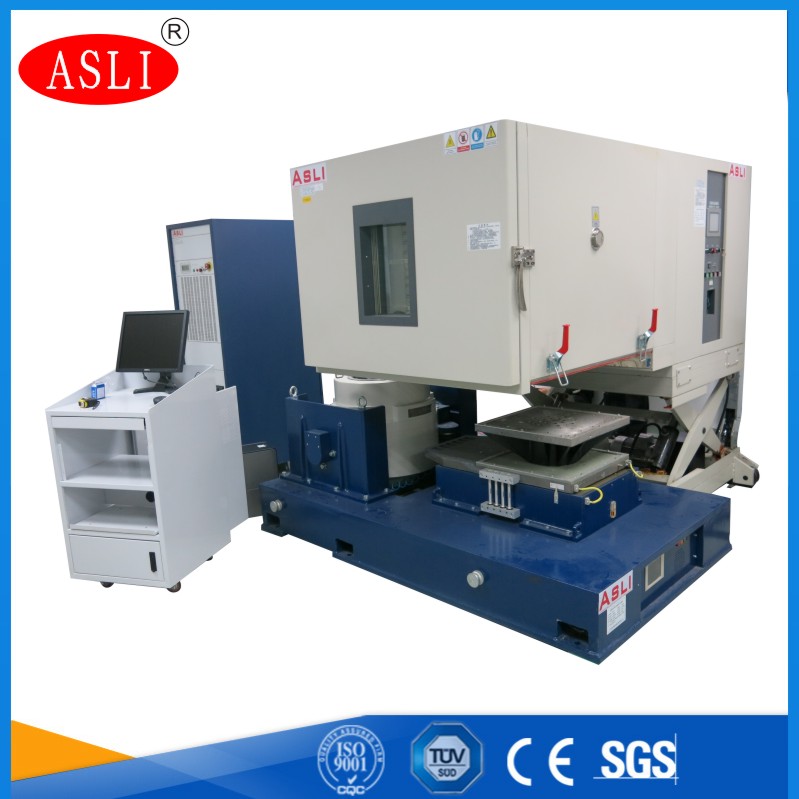
Preparation before the experiment
1. Equipment inspection: Before each use of the equipment, a comprehensive inspection of the temperature, humidity, and vibration test chamber is required. Firstly, check if there is any damage to the appearance of the equipment, including whether there are cracks or deformations in the box body, and whether the box door can be opened and closed normally with good sealing. Next, check each connecting component to ensure that the power and signal lines are securely connected without any looseness. At the same time, check key components such as temperature and humidity sensors, vibration sensors, etc. to ensure their normal operation, which can be preliminarily tested through the self checking function of the equipment.
2. Preparation of test samples: Place the samples to be tested properly on the sample rack inside the test chamber. The placement of samples should be careful not to obstruct the circulation of air inside the box, ensuring even distribution of insulation and humidity. For irregularly shaped or heavy samples, suitable fixtures should be used for fixation to prevent sample shaking or falling during vibration testing, which may affect the test results or even damage the equipment.
3. Environmental condition setting: Set appropriate temperature, humidity, and vibration parameters according to the experimental requirements. In terms of temperature setting, clarify the temperature range required for the experiment, such as setting the high temperature test between 60-100 and the low temperature test between -20 and 40. The humidity setting should consider the actual application scenario, and the common humidity range can be between 30% and 98% RH. The vibration parameter settings include vibration frequency, acceleration amplitude, etc. For example, the vibration frequency can be adjusted between 1Hz-2000Hz, and the acceleration amplitude can be set to 0.1g-2g according to the test standards. After setting up, carefully check whether the parameters are accurate.
Key points of operation during the experimental process
1. Start the device: After completing the above preparation work, turn on the power and turn on the device switch. After the device is started, the system will automatically initialize and wait for the device self-test to complete. After the device displays' ready ', press the' run 'button and the test chamber will start running according to the set parameters.
2. Real time monitoring: During the experimental process, close attention should be paid to the operating status of the equipment. Real time monitoring of temperature, humidity, and vibration measurements through the device's display screen ensures that they fluctuate within the set range. Generally speaking, the temperature fluctuation range should be controlled within ± 1, and the humidity fluctuation range should be within ± 3% RH. At the same time, observe whether there are any abnormal sounds or odors during the operation of the equipment. If any abnormal situation is found, immediately press the "stop" button, cut off the power, and conduct inspection and handling.
3. Data recording: Regularly record test data according to the test requirements, including test time, temperature, humidity, vibration parameters, etc. Data recording can be done manually or automatically through a computer system connected to the device. Automatically recorded data has higher accuracy and is easier to analyze and process in the future. The recorded data should be properly stored for the purpose of evaluating the results after the experiment is completed.
Operation after the end of the experiment
1. Stop the test: When the test reaches the predetermined time or all test items are completed, press the "stop" button to stop the test box from running. Waiting for the temperature and humidity inside the device to return to near room temperature usually takes 15-30 minutes to avoid sample damage or personnel burns caused by excessive temperature differences.
2. Take out the sample: Open the box door and carefully take out the test sample. When taking samples, attention should be paid to preventing burns or electric shock, and protective gloves can be worn. The extracted samples should be thoroughly inspected to observe for any damage, deformation, or other conditions, and recorded.
3. Equipment cleaning and maintenance: After the experiment is completed, clean the equipment. Wipe the inside of the test chamber with a clean damp cloth to remove any residual dust, debris, etc. from the sample. Regularly clean the ventilation and drainage openings of the equipment to prevent blockages. At the same time, regular maintenance should be carried out according to the equipment's maintenance manual, such as replacing the filter screen, adding lubricating oil, etc., to ensure the performance and service life of the equipment.