-
E-mail
51037070@qq.com
-
Phone
18028963555
-
Address
Room 113, Building 1, No. 3 Shugang Avenue, Hongmei Town, Dongguan City, Guangdong Province
Guangdong Derui Testing Equipment Co., Ltd
Solution for UV Weather Resistance Testing System of Medical Mask Fabric
Date: 2025-12-08Read: 6
Medical mask fabrics are subject to various environmental factors during actual use, among which ultraviolet radiation is an important aspect. In order to evaluate its ability to withstand ultraviolet radiation, a specialized testing system needs to be used for testing. This testing system mainly simulates natural lighting conditions, irradiates fabric samples for a certain period of time, and observes their performance changes
The testing system usually includes a light source, a sample holder, a control system, and a data recording section. The light source generally uses ultraviolet lamps, which can emit specific wavelengths of ultraviolet light. The sample rack is used to secure fabric samples and ensure that their surfaces receive even illumination. The control system can adjust parameters such as light intensity, time, and ambient temperature. The data recording section is responsible for collecting various data during the testing process, such as light intensity, time, sample discoloration, intensity changes, etc.
Before conducting the test, it is necessary to prepare a certain quantity of medical mask fabric samples. These samples should come from the same batch to ensure consistency of test results. The size and shape of the sample should meet the testing standards, usually rectangular or circular. The sample needs to be placed in a standard environment for a period of time before testing to eliminate the impact of previous processing or storage.
During the testing process, place the sample on the sample rack and adjust the distance between the light source and the sample to ensure uniform illumination intensity. After starting the testing system, the ultraviolet lamp starts working and illuminates the sample. The testing time can be set as needed, commonly ranging from tens to hundreds of hours. During the testing process, the control system will continuously monitor and adjust the environmental conditions to ensure the stability of the test.
After the test is completed, take out the sample for evaluation of various performance indicators. Common evaluation indicators include color change, tensile strength, elongation at break, etc. The color change can be measured by a colorimeter to calculate the color difference value of the sample before and after irradiation. The tensile strength and elongation at break are tested using a mechanical testing machine to compare the changes in values before and after irradiation. These data can help determine the UV weather resistance of the fabric.
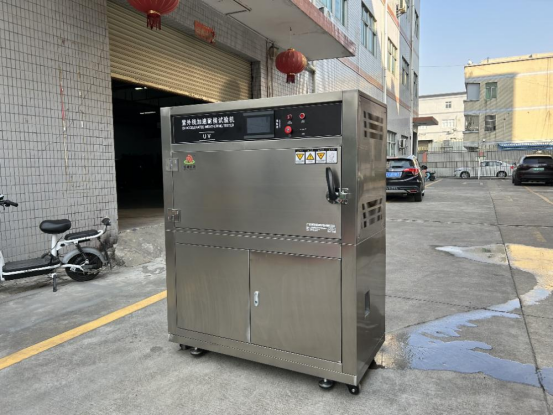
The accuracy of the testing system is affected by various factors. The stability of the light source is crucial, and the aging of ultraviolet lamps can lead to a decrease in light intensity, which affects the test results. Regular calibration or replacement of the lamp tube is required. The control of environmental temperature is also important, as excessively high temperatures may accelerate the aging of fabrics, leading to test results deviating from actual conditions. The placement of samples can also affect the uniformity of lighting, and it is necessary to ensure that each sample surface receives consistent light intensity.
In order to improve the reliability of testing, multiple samples are usually placed simultaneously in one test, and the average value is taken as the final result. For some key performance indicators, multiple repeated tests can be conducted to verify the consistency of the results. The recording of test data should be detailed, including test conditions, sample information, test time, and changes in various performance indicators.
In addition to conventional testing methods, there are also some ways to accelerate testing. Accelerated testing can quickly evaluate the UV weather resistance of fabrics by increasing light intensity or temperature, shortening testing time. However, the results of accelerated testing may differ from actual usage, so it is necessary to analyze them in conjunction with long-term testing data.
The maintenance of the testing system is also an important part of ensuring testing accuracy. Regularly cleaning the light source and sample holder, checking whether the sensors of the control system are working properly, and recording the operating status of the equipment are all necessary measures. If any abnormalities are found, they should be repaired or adjusted in a timely manner.

The UV weather resistance test of medical mask fabrics is not only applicable for quality control in the production process, but also for the development of new fabrics. Through testing, the impact of different materials or processes on UV weather resistance can be understood, providing a basis for product improvement. For example, adding certain additives may improve the UV resistance of fabrics, but their effectiveness needs to be verified through testing.

In practical applications, the UV weather resistance test results of medical mask fabrics can help users understand the product's service life. If the fabric shows good durability in the test, it indicates that it can maintain stable performance for a long time in outdoor or high light environments. On the contrary, it is necessary to consider strengthening protection or shortening the replacement cycle.
The UV weather resistance testing system for medical mask fabrics is an important tool used to evaluate the performance changes of fabrics under UV irradiation. Through scientific testing methods and rigorous data analysis, reliable support can be provided for product quality control and improvement.
1. The testing system evaluates the weather resistance of medical mask fabrics by simulating the UV irradiation environment, mainly including color changes and mechanical performance indicators.
During the testing process, it is necessary to control factors such as light intensity, temperature, and time to ensure the accuracy and reproducibility of the results.
3. Test data can be used for product quality control and new material development, helping to improve the environmental adaptability of products.