-
E-mail
315157160@qq.com
-
Phone
18167170356
-
Address
Open Source Art Park, No. 59 Daying Street, Dalu Industrial Park, Yuhang District, Hangzhou City
Hangzhou Beno Optical Technology Co., Ltd
Benoit Optics teaches you how to operate and use an integrating sphere spectrometer correctly.
Date: 2025-12-19Read: 8
1、 Equipment Overview
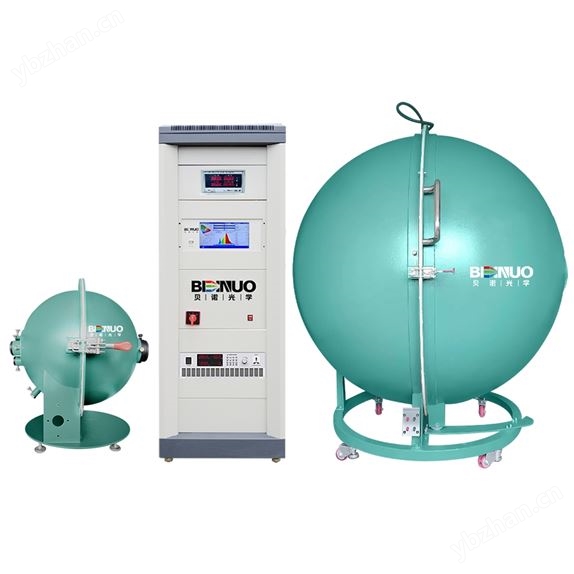
The core function of an integrating sphere spectrometer is to form a uniform light field through diffuse reflection on the inner wall, achieving high-precision measurement. It can cover parameters such as light source spectral power distribution, chromaticity coordinates, color temperature, color rendering index, luminous flux, as well as material reflectivity and transmittance testing. Calibration is a key link to ensure data reliability.
2、 Calibration core steps
(1) System preheating and basic settings
Start the spectral analysis software and accurately set the integrating sphere diameter and automatic integration time according to the device model;
Connect to a standard light source (such as a halogen lamp) and preheat continuously for at least 5 minutes to ensure stable light source output and avoid calibration deviation caused by insufficient preheating.
(2) Environmental control and preliminary verification
Maintain a stable laboratory environment throughout the calibration process, with temperature and humidity that meet equipment operating requirements to avoid environmental fluctuations affecting calibration results;
After completing the above calibration steps, conduct a preliminary retest of the standard lamp to verify whether the core parameters are close to the standard values, in preparation for subsequent precise verification.
3、 Calibration accuracy verification (key steps)
(1) Retesting operation
Enter the device testing page and conduct a formal retest of the standard lamp, focusing on recording core parameters such as luminous flux and color temperature;
Result judgment criteria: The measured luminous flux should be within the range of ± 1% of the calibration value, and the color temperature deviation should be ≤ 15K; if it exceeds this range, it needs to return to the "key parameter calibration" step for re operation.
(2) Data verification process
Calibration data saving check: Enter the device calibration interface and confirm that the "last calibration time" has been synchronized and updated to ensure effective storage of calibration data;
Historical data comparison: Compare the results of this retest with previous calibrated test data. If there is a significant difference, check the stability of the standard lamp (such as whether it is aging or fully preheated) or whether the laboratory temperature and humidity are abnormal.
4、 Important precautions
Power matching requirements: Different models of equipment must be matched with corresponding specifications of power supplies (such as WL series, CHP series dedicated power supplies), and it is strictly prohibited to mix non matching power supplies;
Measurement accuracy optimization: It is recommended to use the dual light path import method for high-precision measurement scenarios, which can improve the angle uniformity to 1.3%;
Calibration cycle: It is recommended to calibrate once a month. If the device is restarted after long-term disuse, an additional calibration is required;
Re calibration trigger condition: If the tested lamp is replaced or the temperature of the integrating sphere changes by more than 4 ℃ after calibration, the complete calibration process must be re executed;
Standard Lamp Usage Specification: Before retesting, ensure that the standard lamp is preheated for 10-15 minutes to reach a stable working state and avoid distortion of verification results due to unstable light sources.