-
E-mail
315157160@qq.com
-
Phone
18167170356
-
Address
Open Source Art Park, No. 59 Daying Street, Dalu Industrial Park, Yuhang District, Hangzhou City
Hangzhou Beno Optical Technology Co., Ltd
Understand the functions and roles of the fire emergency light detector in one article
Date: 2025-11-14Read: 6
Fire emergency light detector is a professional instrument used to detect and test the function and performance of fire emergency lighting equipment (such as emergency lights, emergency evacuation indicator lights, etc.). Fire emergency lights are an important component of building fire protection systems, providing illumination and guidance in emergency situations such as fires, ensuring safe evacuation of personnel. The function of the detector is to conduct a comprehensive inspection of these devices, ensuring their normal operation in the event of a fire and ensuring the safety of personnel.
The function and function of the fire emergency light detector
1. Check the working status of emergency lights:
-Battery voltage: Check the voltage of the built-in battery of the emergency light to ensure that the battery voltage is within the normal range. If the battery voltage is too low, the emergency lights may not start properly and may even fail completely.
-Battery capacity test: By simulating the working state of emergency lights, the capacity and health status of the battery are detected to ensure that the battery can provide sufficient lighting time in the event of a power outage.
2. Emergency light source detection:
-Brightness test: The brightness of emergency lights needs to meet the national standards. The fire emergency light detector can test the actual brightness of the lighting fixtures in working condition to determine whether they comply with regulations.
-Light color test: Check whether the light emitted by the lamp meets the standard requirements (such as color, color temperature, etc.), to ensure that the light can clearly guide the evacuation path in emergency situations.
3. Automatic function detection:
-Automatic switching test: The emergency light should be able to automatically switch to battery power mode after the mains power is cut off. The detector can simulate a power outage and test whether the emergency lights can switch to emergency mode in a timely and stable manner.
-Automatic restoration function: When the mains power is restored, the emergency lights should be able to automatically restore to normal lighting status. The detector will check this function.
4. Regular inspection and maintenance:
-Fire emergency lights require regular inspection and maintenance. The detector can assist users in daily inspection work, ensuring that the performance of fire emergency lights meets standards and avoiding failure in a fire caused by equipment failure.
-Fault diagnosis: The detector can quickly diagnose the fault of the emergency light and provide specific repair suggestions to help the staff solve the problem in a timely manner.
5. Run time test:
-Continuous discharge test: By simulating a power outage environment, the emergency light battery can continuously illuminate for a period of time in a fully discharged state, ensuring that it meets the minimum working time required by national regulations (generally 1 to 3 hours).
6. Recording and reporting functions:
-The detector can record the results of each test and generate a test report. These data help establish equipment records, facilitate long-term maintenance and management, and ensure that fire protection facilities comply with fire safety regulations.
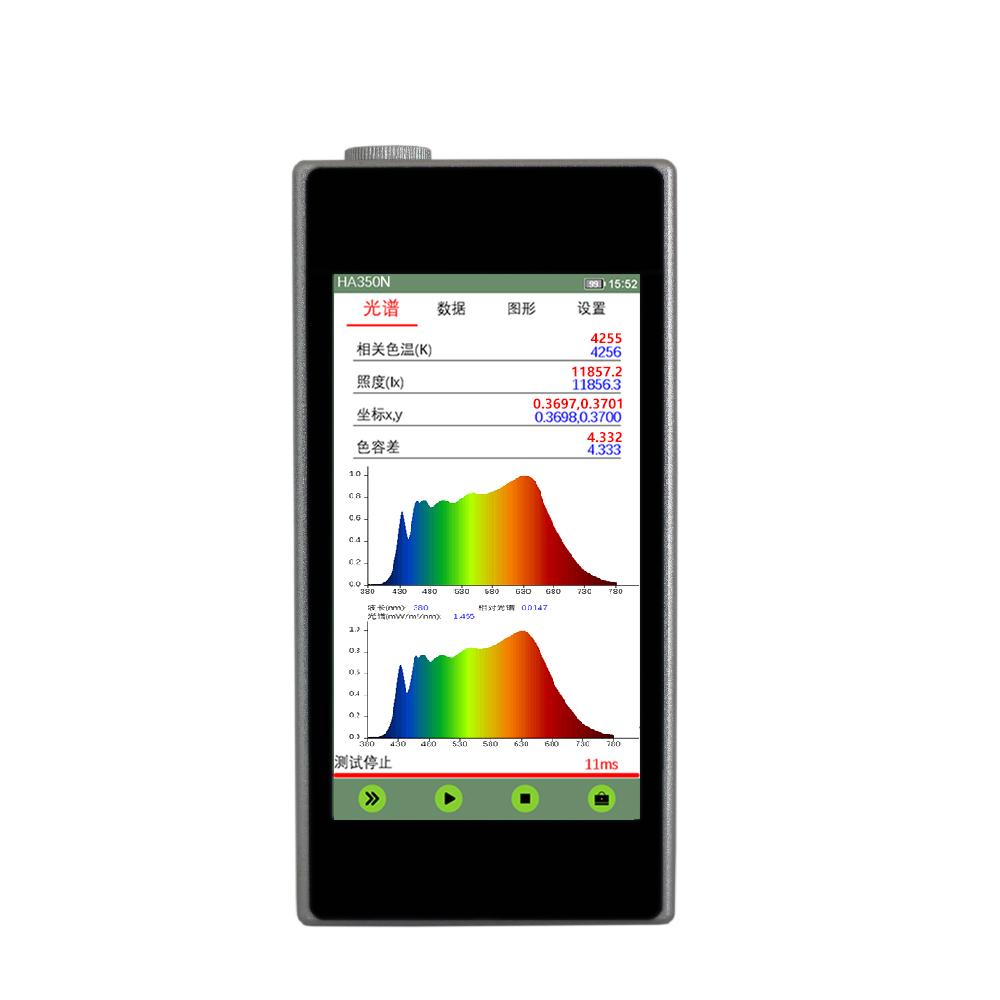
Components of fire emergency light detector
1. Test host: As a core device, it is usually equipped with a large screen display and operation interface, through which users can control the testing process and view the test results.
2. Battery testing module: used to detect the voltage, capacity, and discharge time of emergency light batteries, ensuring that the batteries can meet emergency needs.
3. Luminescence testing module: used to test the illumination intensity of emergency lights to ensure their brightness meets national standards.
4. Electrical performance testing module: Test the automatic switching function of emergency lights in the event of a power outage, as well as the battery charging status.
5. Communication function: Some detectors have the ability to connect with computers or other intelligent devices, enabling data storage, analysis, and report generation.
Application field
1. Building fire inspection: Fire emergency light detectors are widely used in fire inspections of newly constructed and renovated buildings to ensure that all emergency light equipment complies with fire safety regulations.
2. Maintenance of fire-fighting equipment: For buildings that have already been put into use, regular testing of fire-fighting equipment is very important. Testing instruments can help facility managers carry out efficient and accurate maintenance work.
3. Public places and shopping malls: Public places, shopping malls, office buildings, etc. require the installation of a large number of emergency lighting equipment. Fire emergency light detectors can help with periodic inspections to ensure the normal operation of the equipment.
4. Schools, hospitals and other special places: In these places, the normal operation of emergency lights is crucial. Regular inspections can provide reliable security for these places.
Precautions for use
1. Regular calibration: The fire emergency light detector needs to be calibrated regularly to ensure the accuracy of its test results.
2. Operation specifications: Operators should follow the equipment manual to avoid inaccurate test results or equipment damage caused by misoperation.
3. Inspection record preservation: Regular inspection records should be kept for future inspection and reference, and to ensure that fire-fighting facilities comply with the requirements of the local fire management department.
4. Choose the appropriate testing equipment: Select the appropriate equipment according to the testing needs to ensure that the testing equipment can meet various testing requirements (such as different types of emergency lights, different working environments, etc.).
The fire emergency light detector is an important tool in the inspection of fire protection facilities, which can help relevant personnel accurately check the performance of emergency lighting equipment and ensure that emergency lights can work normally in emergency situations such as fires. Through testing and maintenance, the safety of buildings can be greatly improved, ensuring the evacuation safety of people in emergency situations. Therefore, it plays a crucial role in fire safety management.
Last Article: On site testing instruments for architectural lighting
Next Article: BNS-200 imaging brightness meter