-
E-mail
liqindi@hzsszn.com
-
Phone
13454673196
-
Address
4th Floor, Building 1, Fuhua Building, Zijin Science and Technology Innovation Park, Hangzhou, Zhejiang
Hangzhou Double Color Intelligent Testing Instrument Co., Ltd
Expert Tips: Advanced Operational Techniques to Fully Unleash the Potential of Plant Nutritional Spectral Analysis Systems
Date: 2025-10-22Read: 7
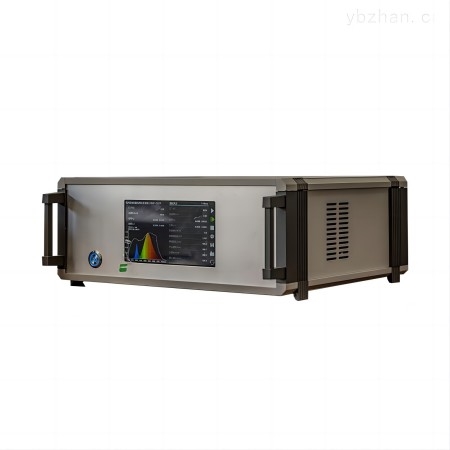
Plant Nutrition Spectral Analysis SystemAs a common tool in modern agriculture and scientific research, it has extended from traditional laboratory testing to real-time diagnosis in the field, providing scientific basis for precision fertilization and crop health management. However, many users are only at the stage of acquiring basic data and have not fully realized their potential. To truly become a 'user expert', mastering the following advanced operational skills is crucial.
1、 Optimize sampling strategy to enhance data representativeness
Ordinary operations often randomly select blades for scanning, while experts emphasize "precise sampling". Specific parts should be selected according to the growth stage of crops, such as functional leaves taken during the tillering stage of rice and new shoots and leaves taken during the flowering stage of fruit trees. At the same time, avoid sampling immediately in direct sunlight or after rain to prevent water interference with spectral signals. It is recommended to use the "multi-point mixed sampling method", which involves selecting 5-10 representative plants from the same location in the same plot and merging their leaves for analysis, significantly improving the stability and reliability of the results.
2、 Make good use of multispectral and hyperspectral fusion analysis
Most systems support multi band acquisition such as visible light, near-infrared (NIR), and short wave infrared (SWIR). Experts do not view a single index (such as NDVI) in isolation, but instead build a "spectral fingerprint database" that combines multiple vegetation indices (such as PRI, MCARI, TCARI) for comprehensive interpretation. For example, by analyzing the correlation between the slope of the red border and chlorophyll index, it is possible to more accurately distinguish between nitrogen deficiency and yellowing caused by diseases.
3、 Establish a localized calibration model
The universal built-in model is suitable for large-scale trend judgment, but its accuracy is limited. A true expert will use known soil nutrient and leaf chemical analysis data to establish localized regression models for the local area and crop. By training the raw spectral data with partial least squares (PLS) or machine learning algorithms, the prediction errors of elements such as nitrogen, phosphorus, and potassium can be reduced by more than 30%.
4、 Dynamic monitoring and trend warning
Experts are good at upgrading single detection to "dynamic monitoring". Regularly (such as weekly) conduct spectral scans on the same plot and draw curves of changes in nutritional parameters. When the content of a certain element shows an abnormal downward trend, the system can issue a warning 7-10 days in advance to achieve "preventive" management, rather than "remedial" fertilization.
5、 Data integration and intelligent decision-making
In the end, experts will integrate spectral data with multi-source information such as meteorology, soil moisture, and yield history into agricultural management platforms, use AI algorithms to generate personalized fertilizer prescription maps, drive variable fertilizer machine operations, and achieve a leap from "looking at numbers" to "making decisions".
By mastering these skills, you will no longer bePlant Nutrition Spectral Analysis SystemThe operator is the 'data commander' of smart agriculture.