-
E-mail
fcybkj@163.com
-
Phone
18936753178
-
Address
Jinhu County Industrial Park, Huai'an City
Huai'an Feichuang Instrument Technology Co., Ltd
Working principle of temperature calibration furnace and key technical analysis of temperature field uniformity
Date: 2025-08-14Read: 7
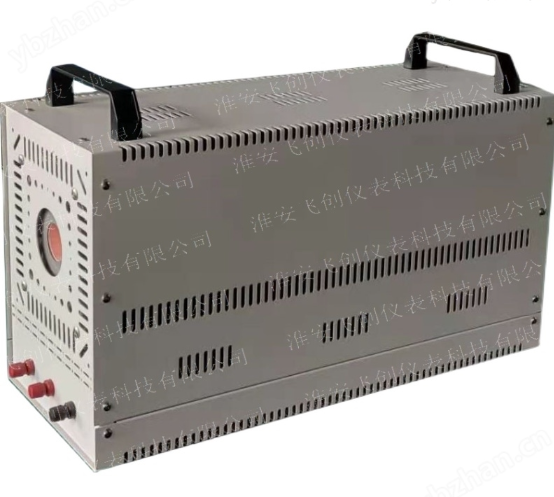
The working principle of the temperature calibration furnace is mainly based on the thermoelectric effect. Thermocouples are composed of two conductors with different compositions (called thermocouple wires or thermoelectric electrodes) connected at both ends to form a circuit. When the temperatures of the two junction points are different, an electromotive force is generated in the circuit, which is called thermoelectric potential and is the basis for temperature measurement by thermocouples. During the verification process,Temperature calibration furnaceBy using electric heating wires to generate heat, the furnace is heated to form a stable and uniform constant temperature field inside the furnace, which provides a constant temperature environment for thermocouple calibration. The constant temperature of the calibration furnace is the result of the dynamic balance between the heating amount of the electric heating wire, the thermal capacity and heat dissipation of the calibration furnace. The temperature control instrument controls the heating power of the electric heating wire to fluctuate within a certain range to ensure the stability of the furnace temperature.
The uniformity of the temperature field of the temperature verification furnace is an important indicator for evaluating its performance, and the key technologies mainly include the following aspects:
1. Furnace design and heating element layout:
The design of the furnace needs to consider the effects of various heat transfer modes such as heat conduction, convection, and radiation to ensure the uniformity of temperature distribution inside the furnace.
The layout of heating elements should be reasonable to avoid temperature blind spots or hot spots, ensuring temperature consistency throughout the furnace.
2. High precision temperature control and sensor calibration:
Temperature calibration furnaceA high-precision temperature control system should be equipped, which can quickly respond and maintain the set temperature stably, reducing temperature fluctuations.
Sensors need to be calibrated regularly to ensure the accuracy of their measurement results. Meanwhile, the placement and quantity of sensors should also be reasonable to comprehensively reflect the temperature distribution inside the furnace.
3. Insulation materials and thermal radiation management:
Increasing the thickness of the insulation material for the furnace lining can reduce radial heat conduction differences and improve temperature field uniformity.
Optimizing thermal radiation management, such as using reflective screens and other measures, can reduce heat loss and improve the uniformity of temperature distribution inside the furnace.
4. Temperature uniformity testing and evaluation:
Using standardized testing methods (such as the nine point temperature measurement method) to test the uniformity of furnace temperature, ensuring the accuracy and comparability of test results.
Evaluate the uniformity of temperature field through quantitative evaluation indicators such as temperature difference coefficient (Cv), in order to optimize furnace design and heating element layout.
5. Application of advanced control technology:
Advanced technologies such as programmable logic controller (PLC) are used to achieve combined "flashing" control of the burner, which can dynamically adjust the heating power according to the temperature distribution inside the furnace, further improving the uniformity of the temperature field.
By combining multiple detection methods such as infrared imaging and numerical simulation, the temperature field distribution can be analyzed more comprehensively and accurately, providing data support for furnace optimization and process improvement.
The key technologies for temperature field uniformity in temperature verification furnaces involve furnace design and heating element layout, high-precision temperature control and sensor calibration, insulation materials and thermal radiation management, temperature uniformity testing and evaluation, and the application of advanced control technologies. The comprehensive application of these technologies can ensureTemperature calibration furnaceProvide a stable and accurate temperature environment to meet various calibration requirements.