-
E-mail
3008863989@qq.com
-
Phone
18761508201
-
Address
No. 5, ASEAN Road, Nanzha Town, Jiangyin City
Jiangsu Ankerui Electric Appliance Manufacturing Co., Ltd
Analysis on the Design Points and Optimization of Integrated Solar Energy Storage Rooftop Photovoltaic Power Station
Date: 2025-12-12Read: 8
Ankrui Liu Qiuxia
Abstract: Starting from the composition of the system structure and the key technologies that need to be solved in the project, a rooftop distributed photovoltaic power station scheme based on integrated light storage is designed. The feasibility of the scheme is verified through actual assembly and operation cases, and a practical and feasible solution is found for rooftop photovoltaic power generation based on integrated light storage.
Keywords: roof; Distributed photovoltaic power station; Integrated light storage; operating effect
0. Introduction
In recent years, photovoltaic power generation technology has made significant progress, with costs gradually decreasing and application areas constantly expanding. Rooftop distributed photovoltaic power stations, with their unique advantages, have become an important application form of photovoltaic power generation. However, photovoltaic power generation has certain instability, such as the influence of light intensity and weather conditions, which leads to significant fluctuations in photovoltaic power generation. To solve this problem, integrated light storage technology has emerged. The integrated photovoltaic energy storage technology combines photovoltaic power generation with energy storage systems, achieving smooth output of photovoltaic power generation, improving system stability and reliability, and expanding the application fields of photovoltaic power generation.
Roof distributed photovoltaic power station system structure based on integrated light storage
1.1 Overall System Framework
The overall framework of a rooftop distributed photovoltaic power station based on integrated light storage includes photovoltaic arrays and inverters, energy storage systems, power dispatching and energy management systems. Photovoltaic arrays convert solar energy into direct current electricity; Inverters convert DC electrical energy into AC electrical energy for use in power grids or loads; The energy storage system is responsible for supplying power to the load when photovoltaic power generation is insufficient to meet the load demand, as well as storing electrical energy when there is excess photovoltaic power generation; The power dispatch and energy management system achieves coordinated control of photovoltaic power generation and energy storage systems based on load demand and photovoltaic power generation situation. Through the close collaboration of the above parts, the rooftop distributed photovoltaic power station system based on integrated light storage can achieve efficient utilization of solar energy, improve system stability and reliability.
1.2 Photovoltaic Array and Inverter
The photovoltaic array is the core part of a rooftop distributed photovoltaic power station system based on integrated light storage, mainly responsible for converting solar energy into direct current electricity. The selection and design of photovoltaic arrays should consider the performance, cost, and reliability of photovoltaic modules, and select suitable photovoltaic arrays according to different application requirements. At the same time, in order to achieve high-power tracking and improve system efficiency, the selection and control strategy of inverters are also crucial.
1.3 Energy storage system
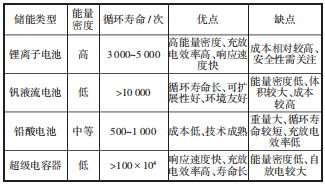
Energy storage systems can choose different types of energy storage technologies according to different application scenarios and needs, such as lithium-ion batteries, vanadium flow batteries, etc. The capacity design of energy storage systems needs to fully consider factors such as the volatility of photovoltaic power generation, load demand, and system costs. In addition, the control strategy of the energy storage system is also an important link to ensure the stable operation of the system. According to different application scenarios, it is necessary to choose the appropriate energy storage system. The following is a comparison of common energy storage types (see Table 1).
1.4 Power Dispatch and Energy Management System
The power dispatch and energy management system is responsible for coordinating and controlling the photovoltaic power generation and energy storage systems, achieving smooth output of photovoltaic power generation, and improving the stability and reliability of the system. The power dispatch and energy management system requires real-time monitoring of photovoltaic power generation, energy storage system status, and load demand, and the development of reasonable dispatch strategies. Typical scheduling strategies include peak valley smoothing, prioritizing load demands, and optimizing charging and discharging strategies. To improve the intelligence level of the system, technologies such as artificial intelligence and big data analysis can be combined for power dispatching and energy management.
2. Key technologies
The key technologies in the rooftop distributed photovoltaic power station system based on the integration of light and energy storage include the selection and design of high-efficiency photovoltaic modules, inverter technology, energy storage system technology, power dispatching and energy management strategies, as well as roof structure optimization and safety design.
2.1 Selection and Design of Photovoltaic Modules
The performance of photovoltaic modules directly affects the power generation efficiency of the entire system. When selecting photovoltaic modules, factors such as performance parameters, cost, reliability, and lifespan should be fully considered. The common types of photovoltaic modules in the current market include crystalline silicon solar cell modules, thin-film solar cell modules, etc. In addition, based on the specific conditions and requirements of the roof, a reasonable layout of photovoltaic arrays can be designed to achieve maximum power generation under different lighting conditions.
2.2 Inverter Technology
Inverters are key equipment in photovoltaic power generation systems, responsible for converting the direct current energy generated by photovoltaic arrays into alternating current energy. The performance and control strategy of inverters have a significant impact on the efficiency and stability of the entire system. At present, there are mainly different types of inverters on the market, such as centralized inverters, string inverters, and micro inverters. When selecting an inverter, comprehensive consideration should be given to factors such as system size, component characteristics, and installation conditions. Meanwhile, the high-power point tracking (MPPT) algorithm and protection function of the inverter also have a significant impact on system performance.
2.3 Energy storage system technology
The energy storage system is a key component of the integrated rooftop distributed photovoltaic power station, and its performance and design directly affect the stability and reliability of the system.
2.3.1 Selection of Energy Storage Types
According to different application scenarios and requirements, different types of energy storage technologies can be selected, such as lithium-ion batteries, vanadium flow batteries, grade * capacitors, etc. When choosing an energy storage type, factors such as the performance, cost, lifespan, and safety of the energy storage equipment should be considered.
2.3.2 Energy storage capacity design
The design of energy storage capacity needs to fully consider factors such as the volatility of photovoltaic power generation, load demand, and system costs. Reasonable energy storage capacity design can ensure stable operation of the system under different lighting and load conditions, while avoiding excessive investment. Energy balance analysis, probability statistical analysis, and other methods are usually used to calculate and optimize energy storage capacity.
2.3.3 Energy storage system control strategy
The control strategy of energy storage systems plays an important role in ensuring stable system operation and improving power generation efficiency. Common control strategies include optimization of charging and discharging strategies, state estimation, fault diagnosis, and protection. At the same time, more intelligent energy storage system control can be achieved by combining technologies such as artificial intelligence and big data analysis.
2.4 Power Dispatch and Energy Management Strategies
The power dispatch and energy management strategies play a crucial role in achieving the coordinated operation of photovoltaic power generation and energy storage systems. Typical scheduling strategies include peak valley smoothing, prioritizing load demands, and optimizing charging and discharging strategies. The power dispatch and energy management strategies should be dynamically adjusted based on actual load demand, photovoltaic power generation situation, and energy storage system status to achieve stable operation and efficient power generation of the system.
2.5 Roof Structure Optimization and Safety Design
The optimization of roof structure and safety design are crucial for ensuring the stable operation and extending the system life of distributed photovoltaic power plants on roofs. In the design process, factors such as roof load-bearing capacity, structural form, installation method, lightning protection, fire prevention, and wind prevention should be fully considered. In addition, it is necessary to arrange photovoltaic modules, inverters, energy storage systems and other equipment in a reasonable manner to facilitate the installation, maintenance and troubleshooting of the system. In terms of security design, national and regional standards and regulations should be followed to ensure the safe operation of the system under various environmental conditions.
3. Implementation case
Based on the above design concepts and key technologies, practical applications have been carried out in a large commercial complex. The roof area of the complex is approximately 5000m2. In order to improve energy efficiency and reduce electricity costs, a distributed photovoltaic power station integrating light storage is installed on the roof. The design goal of this project is to meet approximately 60% of the daily electricity demand of commercial complexes.
3.1 Design Scheme and Implementation
Select the corresponding hardware based on the roof area and the owner's needs. Photovoltaic modules: LONGiSolar LR6-72HPH450W monocrystalline silicon modules are selected, totaling 560 pieces, with a total installed capacity of 252kWp. Inverter: Sungrow SG110CX three-phase string inverters are selected, with a total of 2 units and a total capacity of 220kW. Energy storage system: CATLLFP lithium-ion batteries are selected, with an energy storage capacity of 300kW · h. During the implementation process, photovoltaic modules are arranged on the roof at a south tilt angle of 20 degrees to maximize power generation. At the same time, inverters and energy storage systems are installed in the machine room near the roof to reduce line losses.
3.2 Performance Evaluation and Optimization
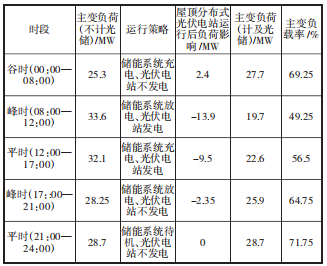
After one year of operation, the power generation of the photovoltaic power station reached approximately 305 MW · h, meeting the expected target. The energy storage system stores the remaining electricity generated by photovoltaic power during the day and releases it at night, enabling commercial complexes to achieve smooth peak and valley periods during peak electricity consumption. The following is the load change of the main transformer after the operation of the power station (see Table 2). Through monitoring and analysis of system performance, it was found that the power generation efficiency of photovoltaic modules needs to be further improved. Therefore, the cleaning frequency has been increased to ensure the long-term stable operation of photovoltaic modules.
3.3 Economic Benefit Analysis
The total investment of this project is approximately 1.5 million RMB. After one year of operation, about 180000 yuan in electricity expenses were saved. Meanwhile, according to the local government's subsidy policy, the project can also receive an annual subsidy income of about 70000 yuan. Overall, the investment payback period of this project is about 6 years, which has good economic benefits.
3.4 Project Analysis
Based on the actual electricity demand of the commercial complex, this case has reasonably configured photovoltaic modules, inverters, and energy storage systems, enabling the entire system to meet about 60% of daily electricity demand and reduce dependence on external power grids. The selected LONGiSolar LR6-72HPH450W monocrystalline silicon module has a high conversion efficiency (20.6%), ensuring the high performance and stability of the photovoltaic power generation system. In addition, Sungrow SG110CX three-phase series inverters are used, which have high efficiency and can adapt to operation under different lighting conditions, improving the energy output of the entire system. At the same time, CATLLFP lithium-ion batteries are used as energy storage systems, which have high energy density, long lifespan, and safety, and can effectively store and utilize photovoltaic power generation. Through the power dispatch and energy management system, the storage of daytime photovoltaic power generation and nighttime release have been achieved, reducing the power load during peak periods and improving the stability of the entire system. In the later stage, optimization was also carried out to discover and solve the problem of photovoltaic module power generation efficiency, increase the cleaning frequency, and ensure the long-term stable operation of photovoltaic modules.
4. Acrel-2000MG Microgrid Energy Management System from Ankerui
4.1 Overview
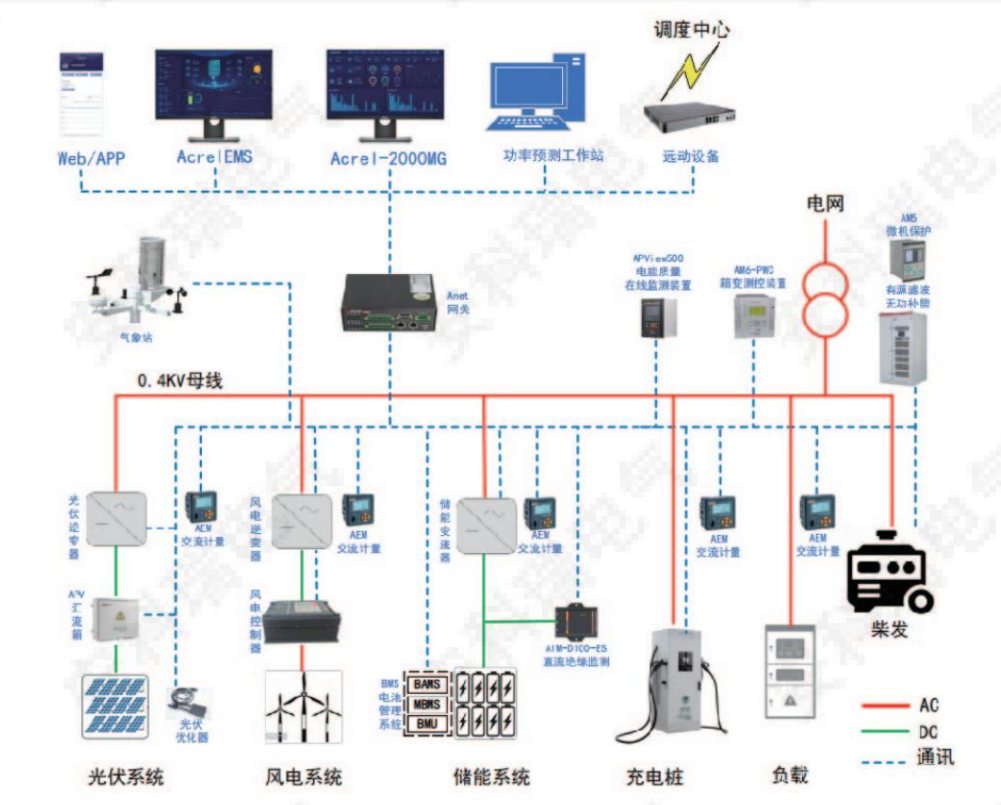
Acrel-2000MG energy storage management system is a localized energy management system developed by Ankerui specifically for industrial and commercial energy storage power stations. It can achieve functions such as data collection, data processing, data storage, data query and analysis, visual monitoring, alarm management, statistical reporting, strategy management, historical curves, etc. for energy storage power stations. Among them, strategy management supports multiple control strategy choices, including planning curves, peak shaving and valley filling, demand control, anti backflow, etc. This system can not only achieve unified monitoring and management of various energy storage units at the lower level, but also achieve data communication and interaction with the higher-level scheduling system and cloud platform. It can accept higher-level scheduling instructions and meet remote monitoring and operation, ensuring the safe, stable, reliable, and economical operation of the energy storage system.
4.2 Application Scenarios
Suitable for industrial and commercial energy storage power stations, as well as new energy distribution and storage power stations.
4.3 System Architecture
4.4 System Functions
(1) Real time monitoring
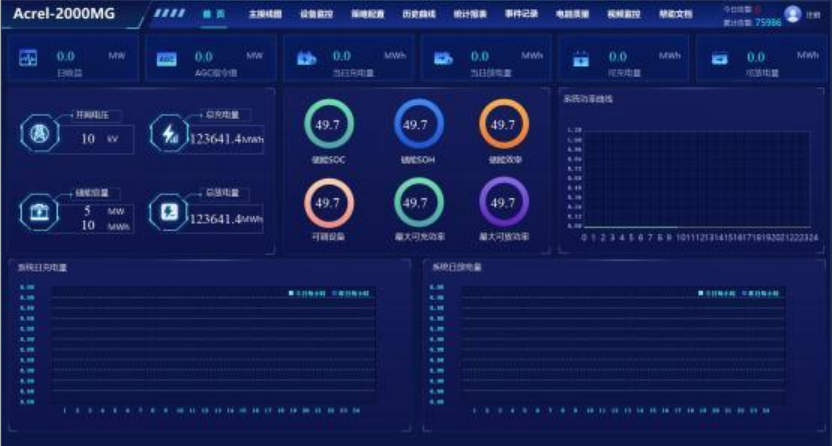
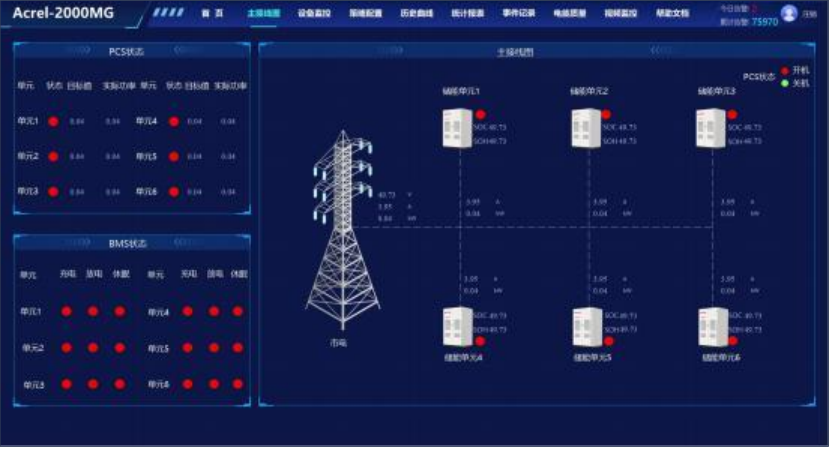
Real time monitoring of the operation of microgrids, including mains power, photovoltaic power, wind power, energy storage, charging piles, and electricity load, as well as revenue data, weather conditions, energy conservation and emission reduction information.
(2) Intelligent monitoring
Real time monitoring of system environment, photovoltaic modules, photovoltaic inverters, wind power control inverters, energy storage batteries, energy storage converters, electrical equipment, etc., to grasp the operation status of microgrid systems.
(3) Power prediction
Short term and ultra short term power generation prediction for distributed generation systems, and display qualification rate and error analysis.

(4) Power quality
Continuous monitoring of power quality and reliability throughout the entire microgrid system. Monitor and analyze steady-state data such as voltage harmonics, voltage flicker, and voltage imbalance, as well as transient data such as voltage rise/fall and voltage interruption, and display waveform recording. Monitor voltage and current transients.
(5) Visual operation
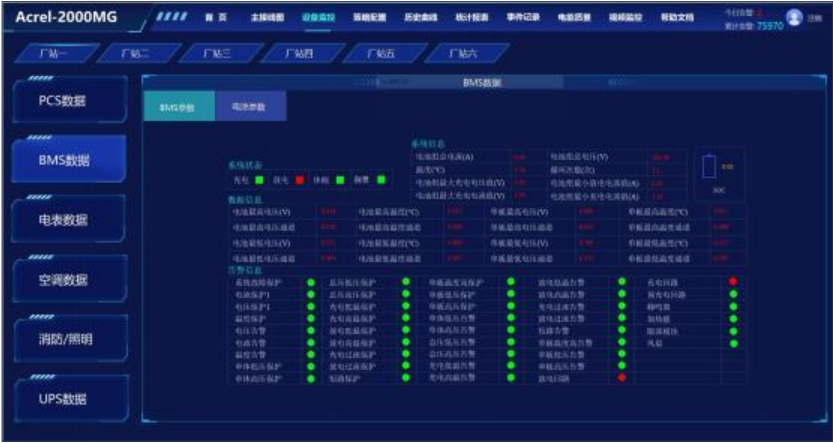
Realize unmanned operation of microgrids and achieve digital, intelligent, and convenient management; Continuous monitoring of important loads and equipment.

(6) Optimization control
By analyzing historical electricity consumption data and weather conditions to predict load power, and combining distributed power generation output and energy storage status, economic optimization scheduling can be achieved to reduce peak or off peak electricity consumption and overall electricity costs for enterprises.
(7) Profit analysis
Users can view daily electricity consumption and revenue data for photovoltaic, energy storage, and charging stations, and can also switch to annual reports to view monthly electricity consumption and revenue.
(8) Energy analysis
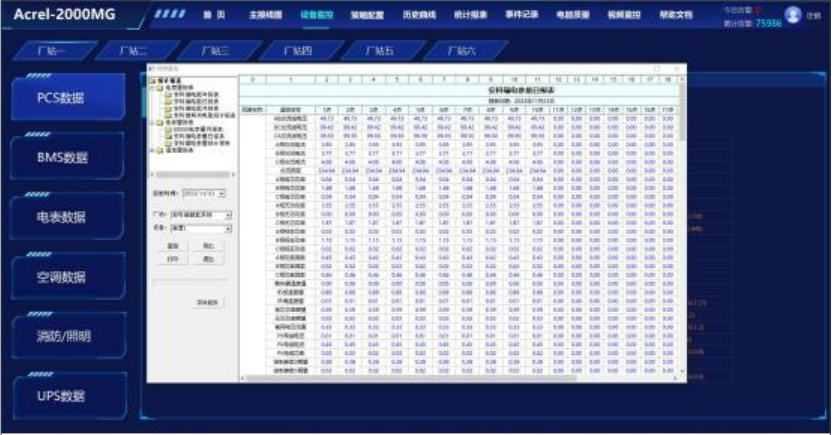
By analyzing the power generation efficiency and conversion efficiency of photovoltaic, wind power, and energy storage equipment, it is used to evaluate the performance and status of the equipment.
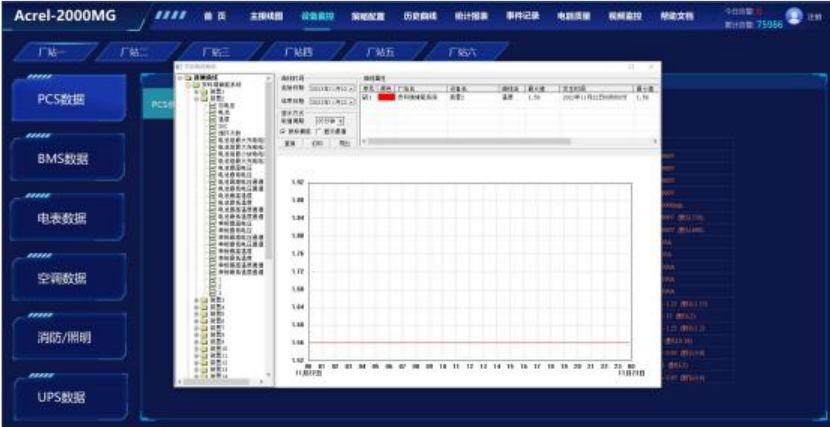
(9) Strategy configuration
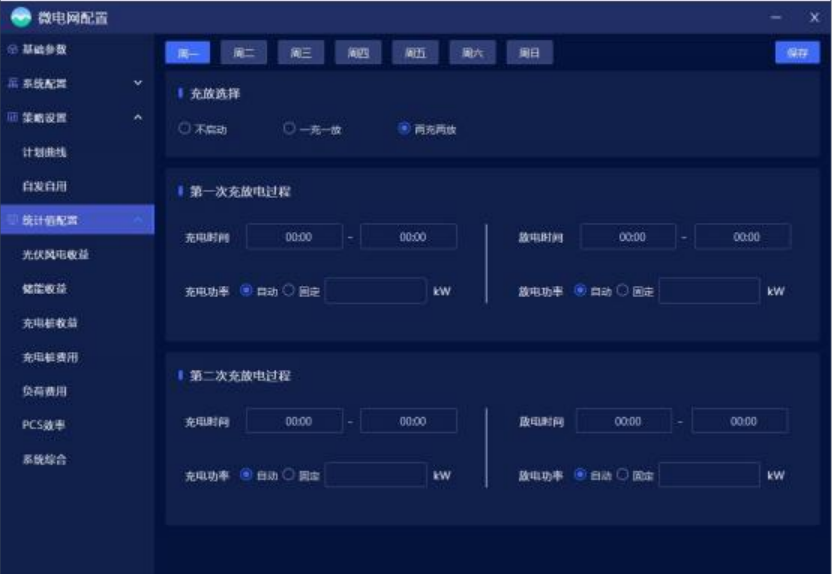
Microgrid configuration mainly involves setting the composition, basic parameters, operation strategies, and statistical values of the microgrid system. The strategies include planning curves, peak shaving and valley filling, demand control, new energy consumption, reverse power control, etc.
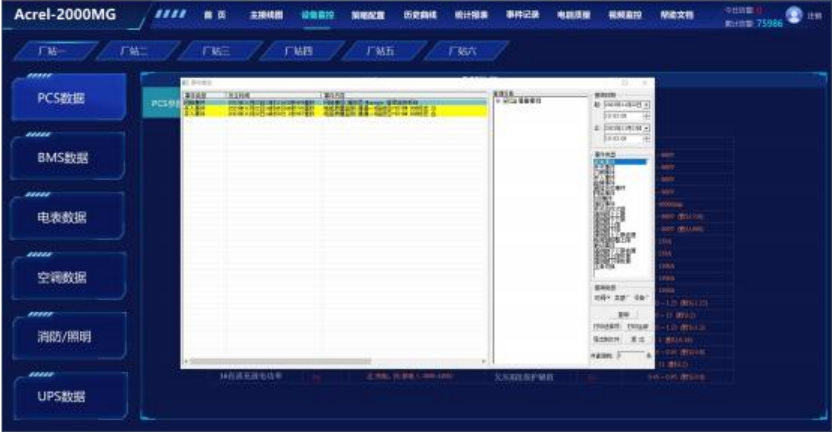
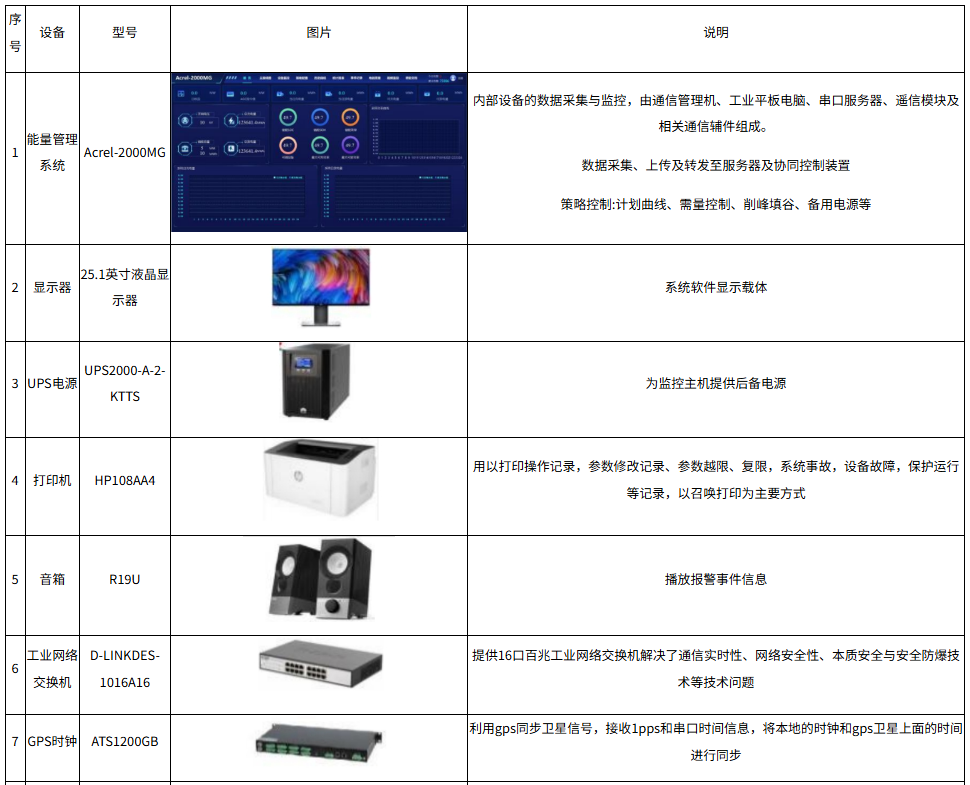
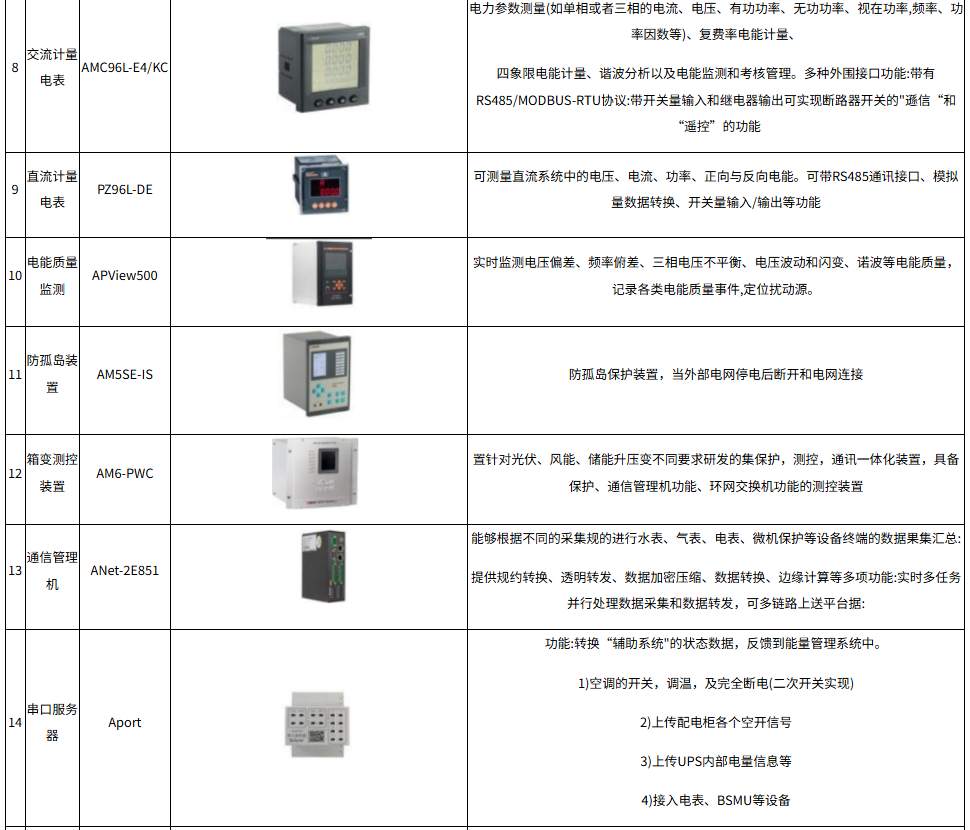
5. Hardware and its supporting products

6. Conclusion
The integrated rooftop distributed photovoltaic power station combines photovoltaic power generation and energy storage systems, which has significant energy optimization and economic benefits. The system architecture includes photovoltaic arrays, inverters, energy storage systems, and power dispatch and energy management systems. The key technologies involve photovoltaic module selection and design, inverter technology, energy storage system technology, and power dispatch and energy management strategies. Through the analysis of practical application cases, it can be found that the integrated photovoltaic and storage roof distributed photovoltaic power station has a wide range of application prospects in buildings. With the further development of photovoltaic and energy storage technologies and policy support, the technological advantages and economic benefits of integrated rooftop distributed photovoltaic power stations will become more apparent. In the future, integrated rooftop distributed photovoltaic power stations will provide clean and sustainable energy solutions for more buildings, making positive contributions to addressing energy crises and climate change.
References
[1] Chen Yumeng Design and Implementation of Roof Distributed Photovoltaic Power Station Based on Integrated Light Storage System
[2] Zhi Ideal, Li Bei Design and Implementation of Roof Distributed Photovoltaic Power Station [J]. Integrated Circuit Application, 2023, 40 (3): 52-54
[3] Ye Hongji, Wei Dong, Guo Qian, etc Calculation method for predicting power generation of distributed photovoltaic power plants based on design information [J]. Journal of Solar Energy, 2021, 42 (4): 253-259
[4] Ankerui Enterprise Microgrid Design and Application Manual. May 2022 Edition