-
E-mail
3008863989@qq.com
-
Phone
18761508201
-
Address
No. 5, ASEAN Road, Nanzha Town, Jiangyin City
Jiangsu Ankerui Electric Appliance Manufacturing Co., Ltd
Empowering the Internet of Things: Analysis of Monitoring and Electrical Fault Diagnosis of Integrated Optical Storage Systems
Date: 2025-12-11Read: 8
Ankrui Liu Qiuxia
Abstract: With the rapid development of renewable energy, especially photovoltaic power generation technology, photovoltaic energy storage integrated systems have become an important way to achieve sustainable energy development. However, the stable operation and efficiency of the system have always been key factors restricting its development. The application of Internet of Things technology provides effective remote monitoring and fault diagnosis methods for photovoltaic energy storage integrated systems. This article systematically studies the remote monitoring and fault diagnosis technology of photovoltaic energy storage integrated system based on Internet of Things, analyzes the advantages of system operation after integrating Internet of Things technology, and proposes an effective fault detection and diagnosis process. Through experimental verification, it has been proven that the system is effective in improving photovoltaic power generation efficiency, reducing maintenance costs, and ensuring system stability.
Keywords: Internet of Things; Photovoltaic power generation; Energy storage system; Remote monitoring; fault diagnosis
0 Introduction
The photovoltaic energy storage integrated system, as a new type of renewable energy utilization method, has received attention due to its advantages of green environmental protection and strong sustainability. With the continuous expansion of system scale and the increase of application scenarios, the operational safety, stability, and maintenance efficiency of the system have become urgent problems to be solved. The introduction of IoT technology provides a new solution for remote monitoring and fault diagnosis. The Internet of Things technology uses intelligent sensors, communication technology, and cloud computing to achieve real-time data collection, transmission, and analysis of systems, in order to promptly detect and address potential issues. This article aims to explore how to apply IoT technology to photovoltaic energy storage integrated systems, and optimize their remote monitoring and fault diagnosis functions.
The Importance and Development Trends of Photovoltaic Energy Storage Systems
The photovoltaic energy storage system, as an important component of the new energy field, is important in that it can effectively convert solar energy, a clean and renewable energy source, into electrical energy, and solve the intermittent problem of solar power generation through energy storage facilities, improving energy utilization efficiency and system power supply reliability. With the strengthening of environmental awareness and the reduction of dependence on traditional fossil fuels, photovoltaic energy storage systems are playing an increasingly important role in the transformation of energy structure. This system can not only reduce greenhouse gas emissions and alleviate climate change, but also provide stable power supply for remote areas and areas with unstable power grids, promoting sustainable socio-economic development.
Technological innovation continuously promotes the improvement of photovoltaic power generation efficiency and the reduction of energy storage costs. For example, the research and development of photovoltaic cell materials is moving towards greater efficiency and lower cost, with the emergence of new materials such as perovskite solar cells. At the same time, energy storage technology is constantly advancing, with the energy density of lithium-ion batteries increasing and costs decreasing. Other types of energy storage technologies such as flow batteries and compressed air energy storage are also being researched and developed. The improvement of system integration and intelligence level. With the development of the Internet of Things and artificial intelligence technology, more and more photovoltaic energy storage systems are adopting intelligent monitoring and management technology, achieving optimal system operation, improving energy efficiency and system stability. The system can automatically adjust its power generation and energy storage strategies based on factors such as weather changes, user demand, and electricity price fluctuations, achieving maximum economic benefits.
2. Integrated photovoltaic energy storage system architecture
2.1 Introduction to Photovoltaic Power Generation System
The core component of the photovoltaic energy storage integrated system is the photovoltaic power generation system, which uses solar panels to convert solar radiation energy into direct current electricity. This conversion process is achieved through the photoelectric effect of semiconductor materials. When sunlight shines on a photovoltaic panel, photons interact with electrons in the semiconductor to generate current. Photovoltaic power generation systems typically include photovoltaic panels, brackets, inverters, monitoring equipment, and supporting components such as cables and junction boxes. A photovoltaic panel is a system typically composed of multiple photovoltaic cells connected in series or parallel to provide the required voltage and current. The efficiency and quality of photovoltaic cells directly determine the power generation efficiency and stability of the entire system. At present, there are three common types of photovoltaic cells in the market: monocrystalline silicon, polycrystalline silicon, and thin film, each with its own characteristics and applicable environment.
2.2 The role of energy storage system
The photovoltaic energy storage integrated system is an energy system that integrates photovoltaic power generation and power storage. In this system, the energy storage system plays a crucial role. Due to the weather dependence and day night cycle of solar power generation, the power supply it produces is not stable. This is where the energy storage system comes into play. Energy storage systems typically use battery storage technologies such as lithium-ion or lead-acid batteries to store excess electricity generated by photovoltaic power generation and release it during periods of low sunlight or peak demand, ensuring the continuity and stability of power supply.
2.3 Advantages of Integrated Systems
The core advantage of the photovoltaic energy storage integrated system lies in its ability to closely integrate solar power generation with energy storage, forming a system that can effectively convert and flexibly respond to various power supply needs. This system can not only convert solar energy into electricity during the day, but also store excess electricity through energy storage devices for use at night or in rainy weather, effectively solving the intermittent problem caused by natural conditions in traditional photovoltaic systems. Specifically, the efficiency of photovoltaic panels in an integrated system in converting solar energy into electrical energy can be expressed as:

In the equation, Pout is the power output from the photovoltaic panel, while Ein is the total amount of solar energy incident on the photovoltaic panel.
In addition, the integrated system can dynamically adjust power output according to actual electricity demand, which is achieved through an intelligent management system. It can monitor users' electricity consumption patterns and predict electricity demand, thereby optimizing the working status of photovoltaic power generation and energy storage equipment. For example, when predicting an increase in electricity demand, the system can store more electricity in advance to meet the upcoming peak period. This intelligent regulation can be summarized by the following formula:
Pstored(t+1)=Pstored(t)+Pcharge(t)-Pdischarge(t)
In the equation, Pstored represents the current stored electrical energy, while Pccharge and Pdischarge represent the charging and discharging power at time t, respectively.
For remote areas or places with unstable power grids, photovoltaic energy storage integrated systems are an ideal solution because they can operate independently of traditional power grids and provide users with stable and reliable power supply. With the advancement of energy storage technology, such as the increase in energy density and cost reduction of lithium-ion batteries, the economy of integrated systems has been significantly improved. The cost-effectiveness of energy storage devices can be evaluated through their cycle life and unit energy cost:
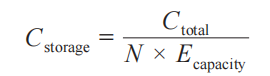
In the formula, Csstorage is the total cost of the energy storage device, N is the number of cycles of the device, and Ecapacity is the amount of electricity that can be provided per cycle.
3. Remote monitoring technology
3.1 Sensor Technology and Data Collection
Remote monitoring technology plays a crucial role in the integrated photovoltaic energy storage system, making intelligent operation and maintenance of the system possible. By integrating * * sensor technology, data communication methods, and the big data processing capabilities of cloud platforms, remote monitoring technology can achieve real-time monitoring and management of the entire system status. The implementation of this technology relies on a series of dense sensors that continuously collect data from various key nodes of the system, including photovoltaic panels, inverters, and energy storage devices. The data provided by sensor technology is multifaceted, covering environmental information and device performance indicators. For example, temperature sensors can monitor the temperature of photovoltaic panels and energy storage devices, and the relationship between their output voltage V and temperature T can be expressed by the following formula:

In the equation, a,b,c, It is a coefficient determined based on the characteristics of the sensor, and T is the temperature. Current and voltage sensors can monitor the electrical performance of photovoltaic systems, using Ohm's law to describe the relationship between current I, voltage V, and resistance R in the circuit. V=IR, while light sensors can measure the intensity of sunlight to evaluate the power generation potential of photovoltaic panels. The relationship between output current I and incident light intensity E can be approximated as: I=kE, where k is the response coefficient of the sensor. Through the data collected by these sensors, the system can monitor the working status and environmental conditions of the equipment in real time, providing decision support for the optimized operation of the system. The data communication means ensure that these data can be transmitted in real-time to the cloud platform for processing and analysis, which usually involves the encryption and decryption processes of the data. Its mathematical model can be expressed as:

In the formula, (P represents the original data, (C represents the encrypted data, (E.k is the encryption function, (D_k is the decryption function, and (k is the key). The cloud platform is responsible for processing this data, using * * data analysis methods such as machine learning algorithms to predict the system's operating trends and potential maintenance needs. These analyses may involve complex mathematical models such as regression analysis, time series analysis, etc. A simple linear regression model can be represented as:

In the equation, y is the response variable, x1, x2, xn are explanatory variables, β 0, β 1, β n are model parameters, and ϵ is the error term.
3.2 Data Communication Methods
The collected data needs to be transmitted to the monitoring center or cloud platform through reliable data communication methods. Data communication can be conducted through wired networks such as Ethernet, as well as wireless methods such as cellular networks, satellite communication, or Wi Fi. In some remote or inconvenient areas for wiring, wireless communication methods are more convenient and flexible. With the development of IoT technology, low-power wide area network (LPWAN) technologies such as LoRa and NB IoT are increasingly being applied to remote monitoring
In the testing system, these technologies are particularly suitable for transmitting small amounts of data, with advantages such as wide coverage and low power consumption. The specific characteristics of data communication methods are shown in the table.
Table 1 Characteristics of Data Communication Methods

3.3 Cloud Platform and Data Processing
After the data is successfully transmitted to the cloud platform through the communication network, the next step is the data processing stage. Cloud platforms have powerful data storage and computing capabilities, which can process and analyze massive amounts of data. Through data processing algorithms such as machine learning and artificial intelligence technology, cloud platforms can not only achieve real-time monitoring of data, but also perform high performance functions such as fault prediction, performance analysis, and optimization suggestions. In addition, users can view the system status anytime, anywhere through the interface provided by the cloud platform on their computer or mobile device, achieving remote control and management, greatly improving the system's operation and maintenance efficiency and intelligence level. The photovoltaic cloud platform and data processing system of IoT technology are shown in Figure 1
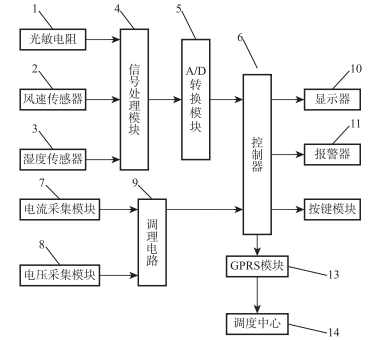
Figure 1 Photovoltaic Cloud Platform and Data Processing System of IoT Technology
4 Fault diagnosis methods
4.1 Fault detection technology
Fault diagnosis methods play a crucial role in modern industrial and technological systems, especially in complex systems that require long-term stable operation, such as photovoltaic energy storage integrated systems. Fault detection technology is the starting point of fault diagnosis, which captures possible abnormal signals by monitoring the operating status of equipment and environmental parameters. These signals may manifest as sudden changes in data, such as a sharp increase in temperature, fluctuations in current and voltage beyond normal ranges, or a gradual decline in performance indicators, such as a decrease in the power generation efficiency of photovoltaic panels. Sensors play a fundamental role here, collecting critical data in real-time and transmitting it to the analysis system. The photovoltaic fault detection technology system is shown in Figure 2.

4.2 Optimization Effect Evaluation and Analysis
Mainly evaluate parameters such as accuracy, recall, F1 score, calculation time, and false alarm rate. The evaluation method is to apply the optimized model to actual operational data and compare the performance indicators of the model before and after optimization. At the same time, conduct a large number of experiments to verify the feasibility and effectiveness of the optimization method. Subsequently, by comparing the experimental results and analyzing the data, it was found that the optimized model showed significant improvements in accuracy, recall, F1 score, and other aspects, while also reducing computation time and false alarm rate. This indicates that optimization methods can effectively improve the accuracy and efficiency of automatic capture methods for the fault operation status of electrical equipment in hydropower stations.
5 Ankerui Acrel-2000MG Microgrid Energy Management System
5.1 Overview
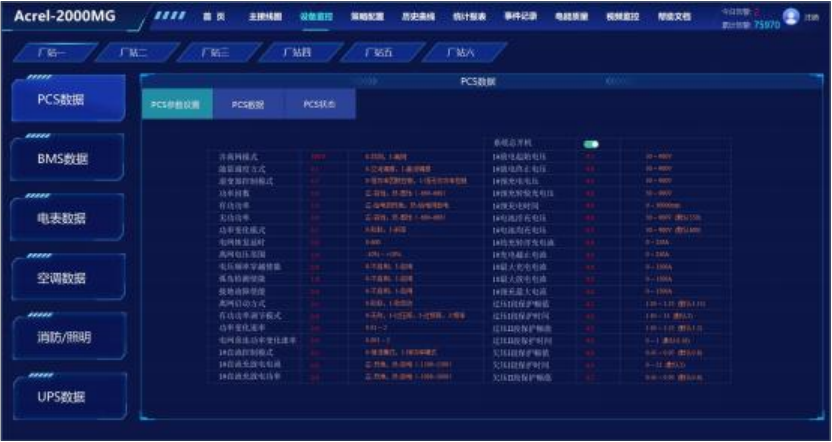
Acrel-2000MG energy storage management system is a localized energy management system developed by Ankerui specifically for industrial and commercial energy storage power stations. It can achieve functions such as data collection, data processing, data storage, data query and analysis, visual monitoring, alarm management, statistical reporting, strategy management, historical curves, etc. for energy storage power stations. Among them, strategy management supports multiple control strategy choices, including planning curves, peak shaving and valley filling, demand control, anti backflow, etc. This system can not only achieve unified monitoring and management of various energy storage units, but also achieve data communication and interaction with the upper scheduling system and cloud platform. It can accept upper scheduling instructions and meet remote monitoring and operation, ensuring the safe, stable, reliable, and economical operation of the energy storage system.
5.2 Application Scenarios
Suitable for industrial and commercial energy storage power stations, as well as new energy distribution and storage power stations.
5.3 System Structure
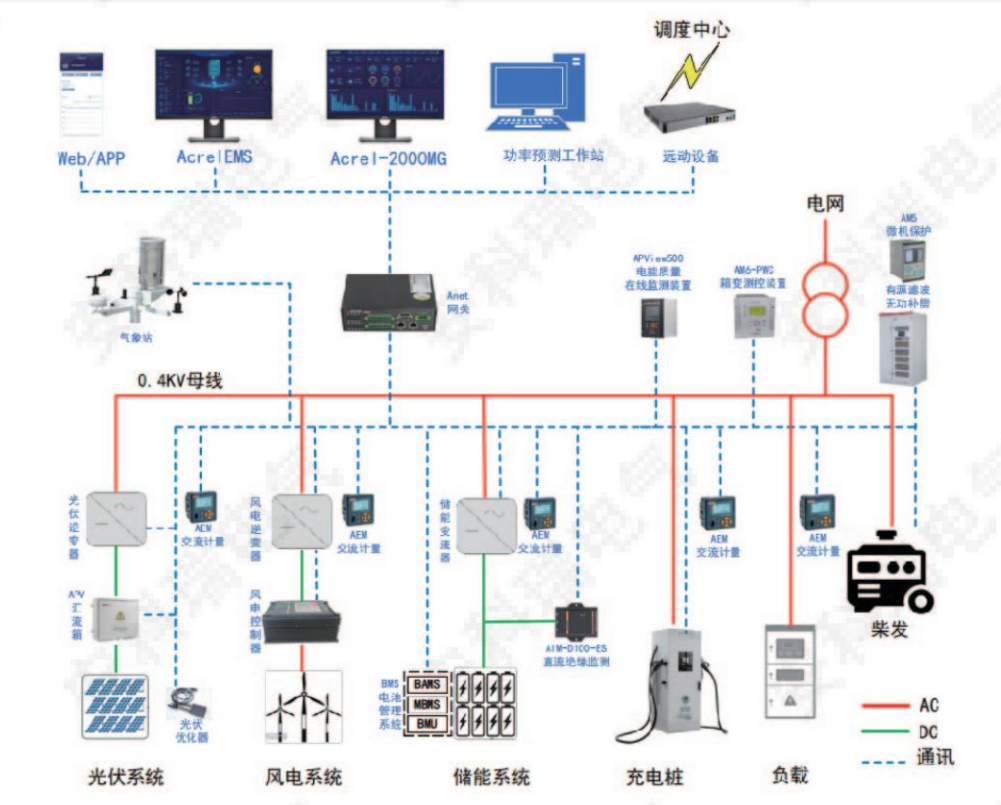
5.4 System Functions
(1) Real time monitoring
Real time monitoring of the operation of microgrids, including mains power, photovoltaic power, wind power, energy storage, charging piles, and electricity load, as well as revenue data, weather conditions, energy conservation and emission reduction information.
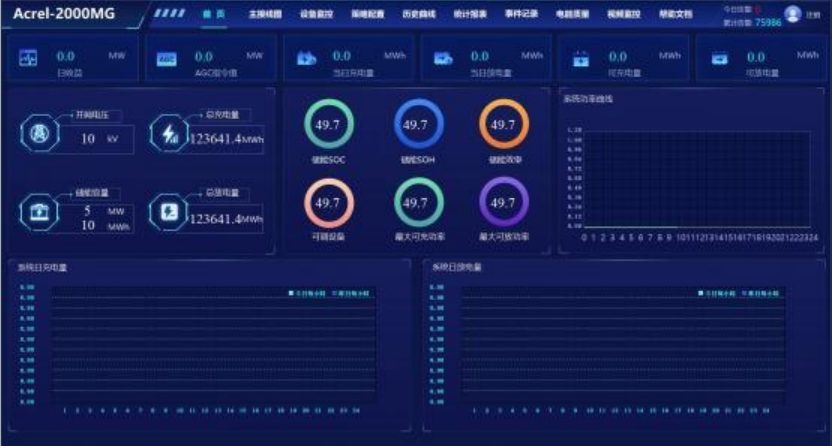
(2) Intelligent monitoring
Real time monitoring of system environment, photovoltaic modules, photovoltaic inverters, wind power control inverters, energy storage batteries, energy storage converters, electrical equipment, etc., to grasp the operation status of microgrid systems.

(3) Power prediction
Short term and ultra short term power generation prediction for distributed generation systems, and display qualification rate and error analysis.
(4) Power quality
Continuous monitoring of power quality and reliability throughout the entire microgrid system. Monitor and analyze steady-state data such as voltage harmonics, voltage flicker, and voltage imbalance, as well as transient data such as voltage rise/fall and voltage interruption, and display waveform recording. Monitor voltage and current transients.

(5) Visual operation
Realize unmanned operation of microgrids and achieve digital, intelligent, and convenient management; Continuous monitoring of important loads and equipment.

(6) Optimization control
By analyzing historical electricity consumption data and weather conditions to predict load power, and combining distributed power generation output and energy storage status, economic optimization scheduling can be achieved to reduce peak or off peak electricity consumption and overall electricity costs for enterprises.

(7) Profit analysis
Users can view daily electricity consumption and revenue data for photovoltaic, energy storage, and charging stations, and can also switch to annual reports to view monthly electricity consumption and revenue.
(8) Energy analysis
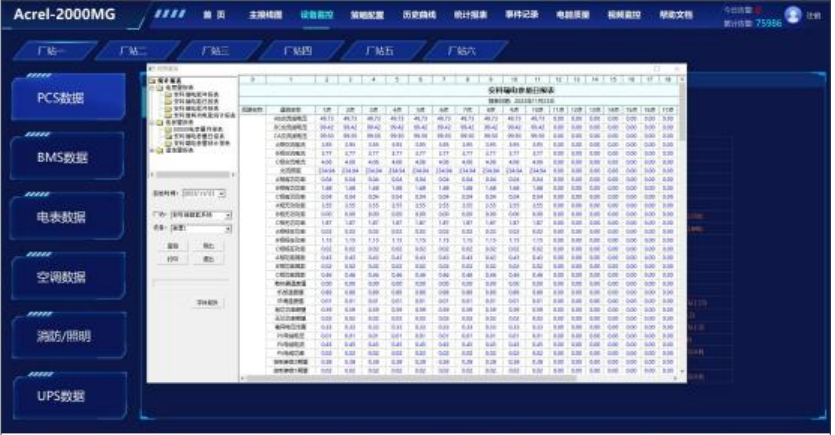
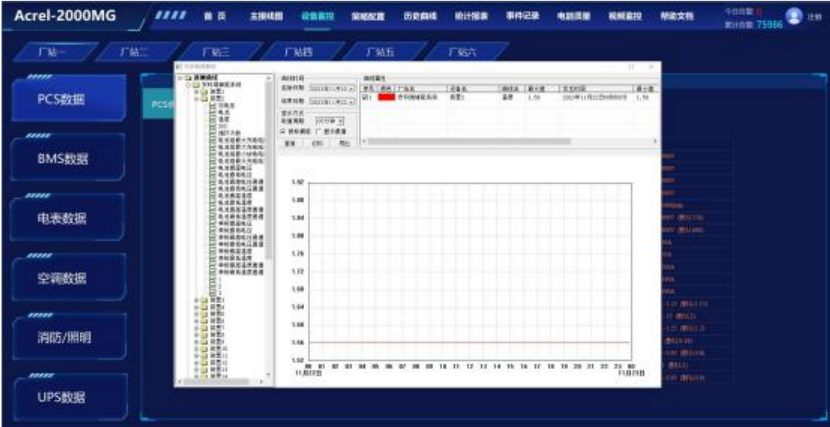
By analyzing the power generation efficiency and conversion efficiency of photovoltaic, wind power, and energy storage equipment, it is used to evaluate the performance and status of the equipment.
(9) Strategy configuration
Microgrid configuration mainly involves setting the composition, basic parameters, operation strategies, and statistical values of the microgrid system. The strategies include planning curves, peak shaving and valley filling, demand control, new energy consumption, reverse power control, etc.

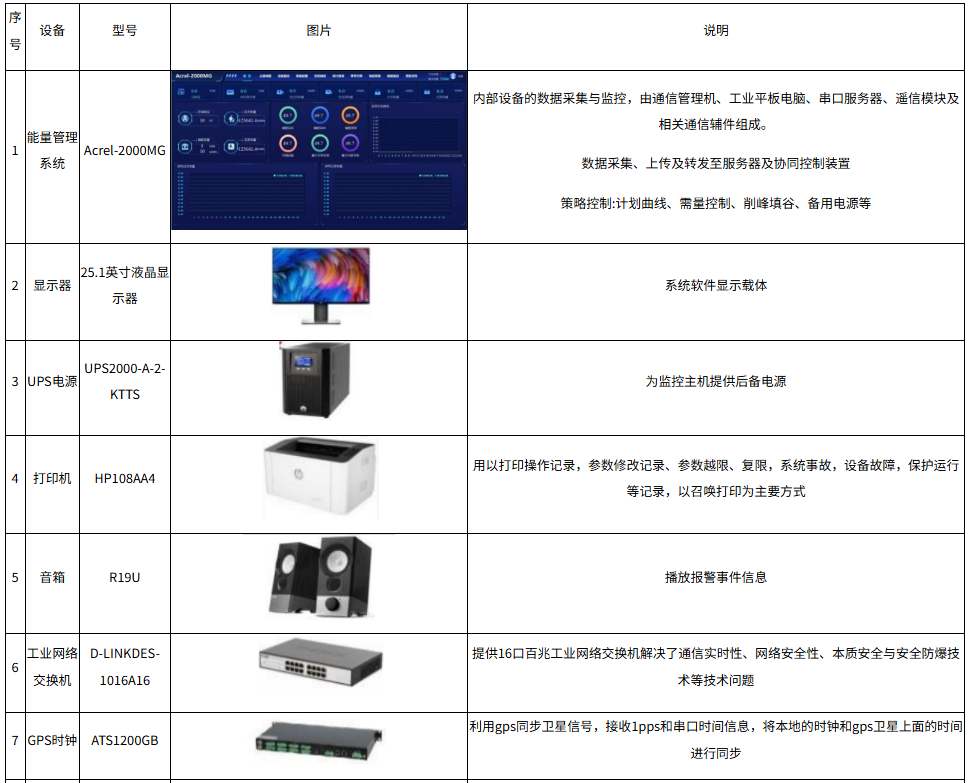
6 Hardware and its supporting products

7 Conclusion
In summary, the automatic capture method for the fault operation status of electrical equipment in hydropower stations studied in this article achieves early detection and accurate positioning of faults by monitoring the operation status of electrical equipment in real time and using a convolutional neural network (CNN) model to learn and predict the collected data. However, this method still has some limitations, such as the need to improve the recognition accuracy for certain complex fault types. In the future, more advanced deep learning models such as Variational Autoencoders (VAEs) or Generative Adversarial Networks (GANs) need to be introduced to improve the recognition accuracy and generalization ability of fault types; Combining multiple sources of information, such as equipment status monitoring data, operation logs, etc., to better evaluate the operational status of electrical devices; Consider applying this method to other types of energy or industrial equipment to expand its application scope; Conduct in-depth research on processing methods for large capacity and high-dimensional data to further improve the training efficiency and generalization ability of the model.
With the development of deep learning technology, multiple different modalities of monitoring data will be fused together in the future to ensure the accuracy and quality of fault detection. With the integrated application of Internet and Internet of Things technology, it can effectively realize remote monitoring and diagnosis of electrical devices of hydropower stations, and strengthen fault response speed and maintenance efficiency. The promotion and application prospects of this method are broad, and it is of great significance for improving the safety, reliability, and operational efficiency of hydropower stations, providing stronger support for the intelligent development of hydropower stations.
References
[1] Li Gengrong Exploration of the Application of the "Four Step Testing Method" in the Identification and Troubleshooting of Short Circuit Faults in Electrical Devices [J]. Hongshuihe, 2021, 40 (2): 84-89
[2] Chang Shuo, Liang Jie, Jiang Jiuchao Automatic capture method for fault operation status of electrical equipment in hydropower stations based on simulated annealing algorithm [J]. Water Resources and Hydropower Technology (Chinese and English), 2022, 53 (3): 110-118
[3] Xin Qingsong Research on Remote Monitoring and Fault Diagnosis of Photovoltaic Energy Storage Integrated System Based on Internet of Things Technology
[4] Ankerui Enterprise Microgrid Design and Application Manual. May 2022 Edition