-
E-mail
2880263323@qq.com
-
Phone
18761593852
-
Address
No. 5 ASEAN Road, ASEAN Industrial Park, Nanzha Town, Jiangyin City, Jiangsu Province
Jiangsu Ankerui Electric Appliance Manufacturing Co., Ltd
Application of Ankerui wireless temperature measurement products in China Mobile (Lanzhou, Gansu) data center B02 project
Date: 2025-11-28Read: 78
Detailed introduction:
Abstract: Data centers are important computing network infrastructure for promoting the development of the digital economy, providing equipment hosting and network access services for numerous enterprises and government units, ensuring the stable operation of core business for enterprises and institutions; As a network hub to promote data exchange and support digital transformation in various industries; Data centers are the core of modern information technology, and their design and management directly affect the development of the digital economy. This project is a new infrastructure project in Gansu Province, belonging to the second phase of China Mobile's Lanzhou Data Center project in Gansu Province. It has important strategic value in the "East Data West Computing" project, and can undertake the computing power demand in the east and promote the optimization of data resource allocation in the east and west. This article introduces the application of Ankerui wireless temperature measurement products in the B02 project of China Mobile (Lanzhou, Gansu) data center. Wireless temperature measurement products monitor the temperature of key parts in real time and issue timely alarms, combined with temperature and humidity monitoring to adjust the environment, effectively avoiding the risk of faults caused by abnormal temperature, ensuring the stable operation of data centers, and providing important basic support for data center operation and maintenance.
Keywords: data center, stable operation, wireless temperature measurement, temperature and humidity monitoring
1 Overview
The data center B02 located in the Northwest Big Data Industrial Park of Lanzhou City, Gansu Province is part of the China Mobile (Lanzhou, Gansu) Data Center Phase II project, with a total construction area of approximately 26000 square meters including standardized data center buildings, power centers, etc., and an installed capacity of approximately 3587 aircraft. The project will commence in February 2022, and the B02 data center room will be topped out by the end of August. The construction of the B02 machine building electromechanical project in Lanzhou, Gansu will begin in 2025. The planned number of racks for Building B02 of Lanzhou Data Center in Gansu is 1626, and the mechanical and electrical supporting facilities include power system, air conditioning system, machine room process, electrical system, intelligent system and other supporting contents.

As a new infrastructure project in Gansu Province, the project, when put into operation, will contribute to the development of digital economy in Gansu Province, further implement the national "broadband China" strategy, provide technical support for the construction of digital Lanzhou, smart cities, etc., and will also inject new impetus and create new space for the development of artificial intelligence industry, 5G technology, and industrial interconnection in Lanzhou. In the national "East West Calculation" project layout, the strategic value of this data center is particularly prominent. As an important computing power node in the western region, it will effectively undertake the overflow computing power demand from the eastern region. By integrating the rich green energy resources (such as wind power and photovoltaics) in Gansu and surrounding areas, it will build a low-carbon computing power cluster, which not only alleviates the computing power shortage and energy consumption pressure in the eastern region, but also promotes the optimization of data resource allocation in the east and west, accelerating the formation of a collaborative pattern of "East data, West storage, East computing, West rendering", and providing a key pivot for the balanced layout of the national computing power network. The completion of this data center is not only a milestone in the upgrading of digital infrastructure in Gansu, but also an important engine to activate regional innovation momentum, connect with national strategic implementation, and drive deep industrial transformation, laying a solid foundation for Gansu to achieve leapfrog development in the digital economy era.
Our company has teamed up with ZTE Technology to jointly complete the B02 project of China Mobile's Lanzhou Data Center in Gansu.
2 Product requirements and configuration plan
2.1 Product Requirements
This time, wireless temperature measurement products need to be configured for the B02 project of China Mobile Lanzhou Data Center in Gansu to monitor the status of low-voltage cabinets in the power distribution project within the factory area.
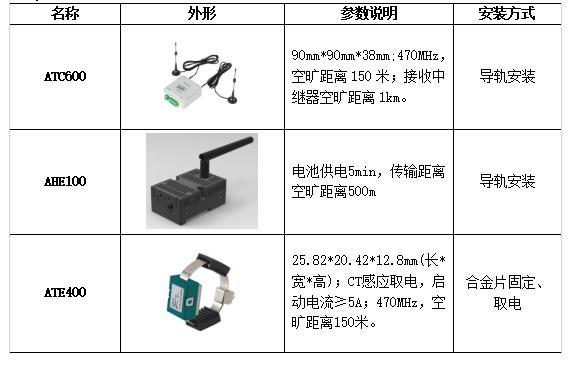
Firstly, the project requires wireless temperature measurement of the low-voltage drawer cabinet. Due to the small space inside the low-voltage cabinet, ATE400 with passive induction power supply capability is selected as the temperature measurement device; Secondly, the project requires the ability to upload transceiver data through RS485 interface, so ATC600-C is selected as the transmitting and receiving device. At the same time, considering the space problem in the distribution room, ATC600-Z is selected as the repeater; The project requires monitoring of the environment and temperature and humidity inside the cabinet, so AHE100 is selected to measure temperature and humidity.
The requirements for wireless temperature sensors are as follows:
1) Non battery powered wireless temperature sensor (powered by induction)
2) Wireless frequency: 470MHz;
3) Starting current: ≥ 5A;
4) Temperature measurement range: -50 ℃ to+125 ℃;
5) Sampling frequency: 15s;
6) Transmission frequency: 15s;
7) Accuracy: ± 1 ℃;
8) Working temperature: -40 ℃ to+85 ℃;
9) Maximum working current: rated current of 5000 A per operation;
10) Temperature rise requirement: Under rated working conditions, the device should not reach a temperature that may affect the insulation of the primary equipment of the switchgear and the normal operation of the measured point. When the current transformer coil of the device passes through 1250 A for 30 minutes and the ambient temperature is 20 ℃, the surface temperature rise of the wireless temperature sensor should not exceed 10 K.
11) Transmission distance: The open distance should not exceed 150 meters.
The requirements for the receiver are as follows:
1) Working power supply: DC 24V;
2) Transmission distance: open distance not exceeding 150 meters;
3) Communication interface: 1 RS485 serial communication interface, Modbus RTU communication protocol;
4) Installation method: 35mm rail type.
The requirements for temperature and humidity sensors are as follows:
1) Working power supply: battery powered;
2) Transmission distance: open distance not exceeding 500 meters;
3) Measurement range: temperature -30 ℃~85 ℃, humidity 0~100% RH;
4) Sampling frequency: 25s;
5) Transmission frequency: 5 minutes (report in advance when there is a temperature change ≥ 2 ℃ or humidity change ≥ 5% RH);
6) Accuracy: Temperature ± 1 ℃, humidity ± 3% RH;
7) Installation method: 35mm rail type.
Based on the above requirements, Ankerui's wireless temperature measurement products are selected as shown in the table below:
2.2 Configuration Plan
This project mainly focuses on the configuration of low-voltage drawer cabinets, with a total of 18 distribution rooms installed for three-point temperature measurement on low-voltage busbars, three-point temperature measurement on outgoing circuits, temperature and humidity measurement inside cabinets, and environmental temperature and humidity measurement.
Taking some drawings as an example, a single drawing is as follows:
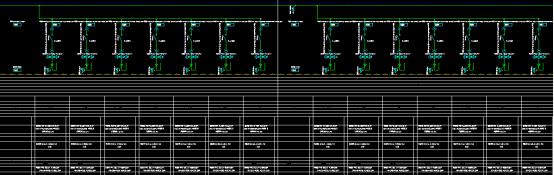
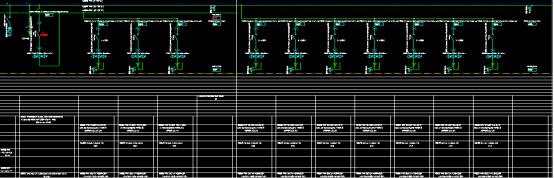
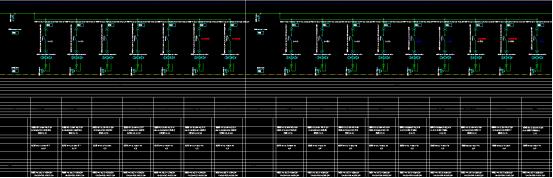
In the B02 project of China Mobile Lanzhou Data Center in Gansu, a total of 1902 wireless temperature sensors, 220 temperature and humidity sensors, 18 wireless temperature receivers, and 18 repeaters were used.
3. On site installation pictures
Three point temperature measurement for low-voltage incoming busbar cabinet, three-point temperature measurement for low-voltage drawer cabinet, temperature and humidity detection inside the cabinet, and environmental temperature and humidity detection. The wireless temperature measurement transceiver and power module are installed in the cable room inside the cabinet.
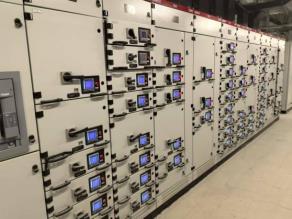

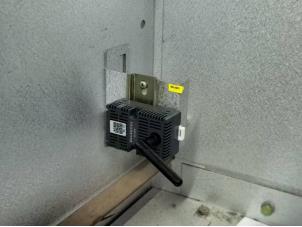
On site installation pictures
4 Conclusion
The low-voltage cabinet is the core link of power distribution in data centers. Due to its connection with the user side, the internal circuit breakers, terminals, and other parts may carry current for a long time, which may cause the contact resistance to increase due to various reasons such as device aging, bolt loosening, etc. The abnormal temperature rise may accelerate the aging of the insulation layer, leading to short circuit faults; Overheating and deformation of metal components can damage the stability of electrical connections; There is even a risk of causing fires, resulting in large-scale power outages that can easily cause casualties and property damage. The core value of wireless temperature measurement devices lies in the ability to collect real-time temperature readings of key areas through wireless temperature sensors that come into contact with hotspots, avoiding the delay and blind spots caused by manual inspections that prevent timely detection of abnormal temperature increases; When the temperature rises abnormally, it is transmitted wirelessly to the receiver, and then transmitted to the gateway through RS485 to record data, triggering an alarm. This can promptly remind the operation and maintenance personnel that the temperature is abnormal and needs to be repaired, avoiding power outages caused by unexpected situations; Moreover, since wireless temperature sensors do not require wiring and only require the installation of the receiver's working power supply, they are easy to install in low-voltage circuits with small space and many components; The monitoring of temperature and humidity in the same environment has an impact on the lifespan of various equipment in substations or distribution rooms. For example, long-term exposure to high temperature and humidity environments may lead to a decrease in the heat dissipation efficiency of electrical cabinets and damage to insulation performance; Causing corrosion of metal components and affecting their use; Temperature and humidity monitoring can be linked with air conditioning, dehumidifiers, etc. to timely adjust the temperature and humidity in substations or distribution rooms to achieve a suitable environment. These two together constitute the monitoring of the equipment status and environmental status of the low-voltage cabinet in the data center, focusing on detecting potential faults and impacts, which can reduce the risk and losses of faults, ensure the stable operation of the data center, and are an indispensable foundation for the operation and maintenance of current data center projects.