-
E-mail
juhai_tech@163.com
-
Phone
18751906628
-
Address
Room 305, Building 1, Nanda Science Park, Qixia District, Nanjing City
Nanjing Juhai Information Technology Co., Ltd
Analysis of Real time Dynamic Positioning Error Sources in RTK Navigation and Positioning System
Date: 2025-11-19Read: 12
Real Time Kinematic (RTK) positioning is a high-precision GNSS positioning technology based on carrier phase observation, which can achieve centimeter or even millimeter level real-time positioning accuracy. However, in practical applications, multiple error sources can affect the performance and reliability of RTK systems. Thoroughly analyzing these sources of errors is of great significance for improving system robustness, optimizing algorithm design, and expanding application scenarios.
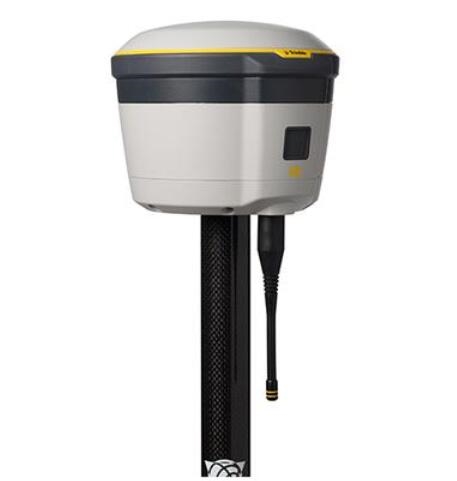
1、 Classification and Analysis of Main Error Sources
1. Satellite end error
-Satellite orbit error: The inaccuracy of broadcast ephemeris or precise ephemeris leads to satellite position deviation, which affects the accuracy of baseline calculation.
-Satellite clock bias: Although differential processing can significantly reduce the impact of clock bias, residual clock bias may still introduce millimeter to centimeter level errors.
-Relativity effects and antenna phase center deviation: Although they can be corrected by models, fine modeling is still required in high dynamic or long baseline scenarios.
2. Signal propagation path error
-Ionospheric delay:
(1) The first-order term can be effectively eliminated by double difference under short baseline (<10 km);
(2) High order terms and spatiotemporal gradient changes (especially during peak solar activity) may lead to residual errors;
(3) Multi frequency observations can construct ionospheric free combinations for further suppression.
-Tropospheric delay:
(1) The wet component is difficult to accurately model and is one of the main residual error sources in short baseline RTK;
(2) Hopfield, Saastamoinen and other models are often used in combination with parameter estimation for compensation.
-Multipath effect:
(1) Caused by reflections from surrounding buildings, water surfaces, and ground, it can lead to cycle jumping or failure in ambiguity resolution in severe cases;
(2) Especially prominent in complex environments such as urban canyons, mining areas, and ports;
(3) It can be alleviated through anti multipath antennas, signal-to-noise ratio (SNR) filtering, spatial filtering, and other means.
3. Receiver end error
-Receiver noise and quantization error: affect the accuracy of carrier phase observation, usually at the millimeter level, but the cumulative effect cannot be ignored.
-Antenna Phase Center Variation (PCV): Phase center deviation caused by antenna installation posture, temperature changes, etc., needs to be corrected using a calibration model.
-Cycle Slip:
(1) Short signal interruption (such as obstruction or strong interference) leads to the loss of the entire cycle count;
(2) Need to rely on cycle slip detection and repair algorithms (such as TurboEdit, polynomial fitting) to maintain continuity.
4. Reference station related errors
-Reference station coordinate error: If the reference station coordinates are inaccurate, they will be directly transmitted to the mobile station for calculation results.
-Data link delay and interruption:
(1) The delay in radio or network transmission affects the timeliness of differential correction;
(2) Communication interruption can cause RTK mode to downgrade to single point positioning.
-Reference station multipath and environmental interference: can also affect the quality of differential correction values.
5. Algorithm and model errors
-Fuzzy fixed failure: Due to factors such as residual error, low satellite elevation angle, and weak geometric configuration (PDOP large), the floating point solution is not a fixed solution.
-Limitations of the double difference model assumption: In scenarios of ultra short or ultra long baselines and multi system fusion, traditional double difference models may introduce systematic biases.
2、 Example of quantification of error impact (typical scenario)

3、 Error suppression strategy
1. Multi frequency and multi system fusion (GPS/BDS/Galileo/GLONASS): enhances geometric strength and improves the success rate of fixing ambiguity.
2. Network RTK (NRTK) or PPP-RTK: Using regional reference networks to model atmospheric delays and extend effective operating distances.
3. Inertial navigation assistance (GNSS/INS tight coupling): maintains high-precision positioning during signal loss.
4. Intelligent cycle jump detection and repair algorithm: improving continuity and reliability.
5. Environmental perception and adaptive filtering: dynamically adjust weights based on SNR and satellite elevation angle.
The high accuracy of RTK systems relies on effective modeling and suppression of various error sources. With the development of multi system GNSS, 5G communication, artificial intelligence and other technologies, RTK will achieve higher robustness and availability in new scenarios such as complex cities, indoor edges, and low orbit enhancement in the future. Continuously optimizing the error handling mechanism is the key to promoting the evolution of RTK from a "professional surveying tool" to a "mass high-precision positioning infrastructure".