-
E-mail
2263199343@qq.com
-
Phone
18954137055
-
Address
Building 3, Zone 1, Times Headquarters Base, Lanxiang Road, Tianqiao District, Jinan
Shandong Derrick Instrument Co., Ltd
Application of fully automatic refractometer in the food industry
Date: 2025-07-17Read: 12
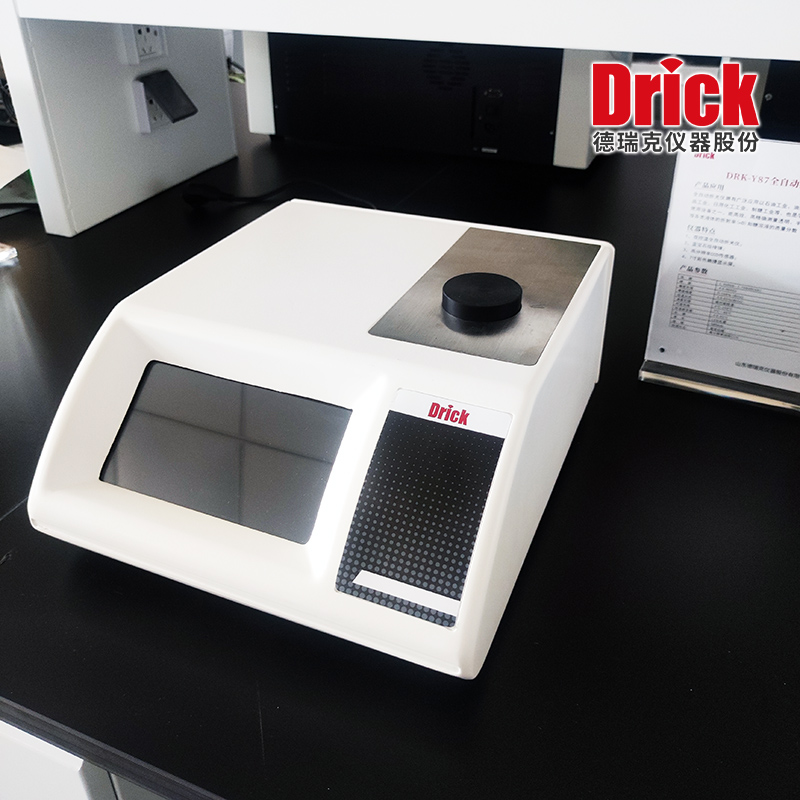
In the food industry, fully automatic refractometers have become the core equipment for detecting the content of soluble solids in liquid food due to their fast, accurate, and easy to operate characteristics. They are widely used in raw material acceptance, production process control, and finished product quality monitoring. The principle is based on the correlation between refractive index and substance concentration (at the same temperature, the higher the concentration of soluble solids in the solution, the higher the refractive index), which can directly reflect the content of sugar, salt, organic acid and other components. The following provides a detailed explanation from the aspects of application scenarios, detection objects, advantages, and precautions:
1、 Core application scenarios and detection purposes
1、Quality control of raw materials
Quickly screen the soluble solids content of food raw materials to determine if they meet production requirements. For example:
(1)The refractive index of fruit juice raw materials (such as concentrated apple juice) needs to be tested to determine whether the sugar content meets the standard (to avoid flavor deviation in the finished product due to insufficient concentration of raw materials).
(2)Honey raw materials are judged by their refractive index to determine maturity (mature honey has lower water content and higher refractive index, usually...)≥1.4740).
2、Real time monitoring of production process
In the production of beverages, jams, syrups, etc., real-time adjustment of process parameters through refractive index:
(1)In the sugar industry, monitoring the refractive index changes during the concentration process of sugar solution and accurately controlling the evaporation endpoint (such as the concentration of sucrose solution reaching)65%When the refractive index is stable, heating can be stopped.
(2)In the fermentation process (such as beer and fruit wine), the decrease in refractive index reflects the degree to which sugar is consumed by microorganisms and determines the fermentation progress.
3、Finished product quality inspection
According to the refractive index range specified in industry standards, verify whether the finished product is qualified:
(1)Bottled fruit juice and beverages must be labeled “Soluble solids content”(Like orange juice usually)≥10%)The refractometer can directly read and convert the content.
(2)The salt content or soluble solids in soy sauce and sauce must meet the standards (such as a positive correlation between the refractive index of soy sauce and salt content).
4、Quickly identify adulteration and quality abnormalities
Using the stability of refractive index to identify whether raw materials or finished products are adulterated:
(1)Adding water or sucrose solution to honey can cause a decrease in refractive index (natural honey typically has a lower refractive index)≥1.470).
(2)If the refractive index of concentrated fruit juice is lower than the standard, it may be diluted with water.
2、 Main testing objects and sample types
1、Common detection components
(1)Carbohydrates: Sucrose, glucose, fructose, maltose, etc. (are the main sources of soluble solids in food).
(2)Other soluble ingredients: salt (such as sodium chloride in soy sauce), organic acids (such as citric acid, malic acid), soluble proteins, additives (such as preservatives, thickeners), etc.
2、Typical sample types
(1)Liquid samples: fruit juice, beverages, honey, syrup, jam (diluted), beer, wine, soy sauce, vinegar, dairy products (such as milk, yogurt), concentrated soup ingredients.
(2)Semi solid samples: jelly, puree, sauce (need to be diluted with water to a flowable state).
3、 Advantages compared to traditional methods
1、Fast and efficient
The detection time only takes a few seconds to a few minutes (the sample does not require complex pre-treatment, can be directly added dropwise), much faster than the weight method (drying and weighing takes several hours) or chemical titration method, suitable for real-time monitoring of production lines.
2、Easy to operate
The fully automatic refractometer does not require professional operation, and the instrument automatically calibrates, reads, and can directly display concentration (such as...) “°Brix”(i.e. sucrose mass fraction) to reduce human error.
3、Low sample usage
Only a few drops of sample are needed (usually0.1~0.5mL)It belongs to non-destructive testing (some samples can be recycled), especially suitable for precious raw materials4、Good stability and repeatability
Accuracy can reach ±0.00002Refractive index unit(nD)Temperature control accuracy±0.1℃(Built in constant temperature device), ensuring reliable test results (with minimal deviation in multiple measurements of the same sample).
4、 Corresponding key parameters to industry standards
1、Common parameter units
(1)Refractive index(nD): Sodium lightDLine(589.3nm)The20℃As a standard (denoted asnD²⁰), is a characteristic constant of matter (such as20℃Pure water at that timenD²⁰for1.3330).
(2)°Brix(Bai Li Du): The most commonly used unit in the food industry, representing100gThe grams of sucrose in the solution (such as10°Brixexpress100gThe solution contains10gSucrose). In most cases, the refractive index can be directly converted to°Brix(The instrument has a built-in conversion formula).
2、Typical industry standard application
(1)《GB/T 10781.3-2022Luzhou flavor Baijiu: It can help judge the alcohol content and soluble solids content by refractive index.
(2)《GB/T 31121-2014Fruit and vegetable juices and their beverages ": It is stipulated that the soluble solids content in fruit juice must comply with the label markings (such as freshly squeezed fruit juice)≥10°Brix).
(3)《GB 14963-2011Honey ": Clarify the refractive index of honey(20℃)Should≥1.470(Corresponding to moisture content)≤23%).
5、 Operation precautions
1、sample pretreatment
(1)Removing impurities: Turbid samples need to be filtered or centrifuged (to avoid particles affecting the optical path), otherwise it may cause readings to be high or unstable.
(2)Temperature regulation: If the sample temperature deviates20℃It needs to be calibrated through the instrument's constant temperature function (temperature has a significant impact on refractive index, such as when the temperature of sucrose solution increases)1℃The refractive index decreases by about0.0001).
2、instrument calibration
(1)Daily calibration with pure water(20℃timenD=1.3330)High precision detection requires verification with a standard solution (such as a known concentration of sucrose solution).
(2)Regularly clean the prism (wipe with anhydrous ethanol to avoid residual sample contamination).
3、The influence of sample characteristics
(1)High viscosity samples (such as honey and syrup) need to ensure full coverage of the prism surface to avoid reading errors caused by bubbles or incomplete filling.
(2)Samples containing volatile components (such as alcoholic beverages) need to be quickly measured to prevent volatilization from changing concentration.
(3)Dark samples (such as soy sauce and concentrated fruit juice) may absorb light, and a refractometer with anti-interference function (such as near-infrared detection mode) should be selected.
4、Result conversion
The refractometer displays °BrixUsually based on sucrose standards, if the sample contains other components (such as salt, organic acids), the true concentration needs to be converted through a calibration curve (for example, the relationship between salt content and refractive index in soy sauce needs to be calibrated separately).
summary
Fully automatic refractometer in the food industryFast, precise, and low-costAs a core advantage, it indirectly reflects the content of soluble solids through the detection of refractive index, becoming a tool for raw material acceptance, production monitoring, and finished product quality inspection“Standard tools”Its application covers multiple categories such as juice, honey, beverages, seasonings, etc., effectively improving the quality control efficiency of food production and reducing labor costs and error risks.