-
E-mail
1591259053@qq.com
-
Phone
15666889209
-
Address
Room 207, Building 1, Weifang High tech Zone Optoelectronic Industry Accelerator (Phase I), No. 155 Optical Circuit, Weifang High tech Zone, Shandong Province
Download
Shandong Jingdao Optoelectronics Technology Co., Ltd
Water accumulation road monitoring station: fast data feedback, scientific basis for traffic diversion
Date: 2025-12-22Read: 7
【JD-JSJC】, Shandong Jingdao Optoelectronics, customer-centric and quality-oriented, work together for a win-win future.
In the daily operation of cities, the problem of road waterlogging often brings many troubles to traffic, not only affecting the efficiency of citizens' travel, but also posing a threat to traffic safety. The water accumulation road monitoring station, with its fast data feedback capability, provides scientific basis for traffic diversion and plays a key role in urban traffic management and water accumulation response work.
Quick data feedback: timely grasp of water accumulation dynamics
Efficient data collection
The water accumulation road monitoring station is equipped with various high-precision sensors, which can quickly and accurately collect various data related to water accumulation. The water level sensor is an important component of it, which can monitor the depth changes of road waterlogging in real time. Through advanced sensing technology, water level sensors can sensitively capture even the smallest fluctuations in water level and convert them into electrical signals. For example, when water accumulation begins to form, the water level sensor can detect the rise in water level in a short period of time, providing first-hand information for subsequent data processing and feedback.
Rain sensors are also indispensable, as they are mainly responsible for measuring rainfall and its intensity. During the rainfall process, rain sensors can accurately record the amount of rainfall per unit time. By analyzing this data, it can help determine the speed and potential degree of water accumulation. For example, in rainstorm weather, the rainfall sensor can quickly feedback the sharp increase of rainfall, indicating that the risk of road ponding increases for relevant departments.
In addition, some water accumulation road monitoring stations are equipped with flow sensors to monitor the flow rate of water accumulation. Flow sensors can measure the velocity and magnitude of water accumulation on roads, which is crucial for understanding the direction and diffusion range of water accumulation. For example, when the water flow in a certain area is high, it indicates that the water may be rapidly spreading and measures need to be taken in a timely manner to divert it.
These sensors work together to collect key data on road water accumulation in full and real-time, laying a solid foundation for rapid data feedback.
Rapid data transmission and processing
The data collected by the water accumulation road monitoring station needs to be quickly transmitted to the processing center for timely analysis and feedback. For this purpose, the monitoring station adopts high-speed data transmission technology, which ensures accurate and error free transmission of data in a short period of time, whether through wired or wireless networks. For example, using 4G or 5G wireless networks, data can be instantly sent from monitoring stations to the data processing center of traffic management departments, greatly reducing the time for data transmission.
Once the data arrives at the processing center, the first data processing system starts to take effect. This system can quickly screen, organize, and analyze a large amount of accumulated water data. Through preset algorithms, the system can quickly extract key information such as whether the depth of accumulated water exceeds the warning value, the trend of changes in accumulated water area, and the relationship between rainfall and accumulated water formation. For example, when the data feedback from the monitoring station shows that the depth of accumulated water on a certain road has rapidly increased and approached the warning value in a short period of time, the data processing system can immediately issue an alarm and transmit detailed dynamic information of accumulated water to relevant departments.
Fast data transmission and processing enable traffic management departments to obtain information on road water accumulation in a timely manner, providing strong support for making timely decisions.
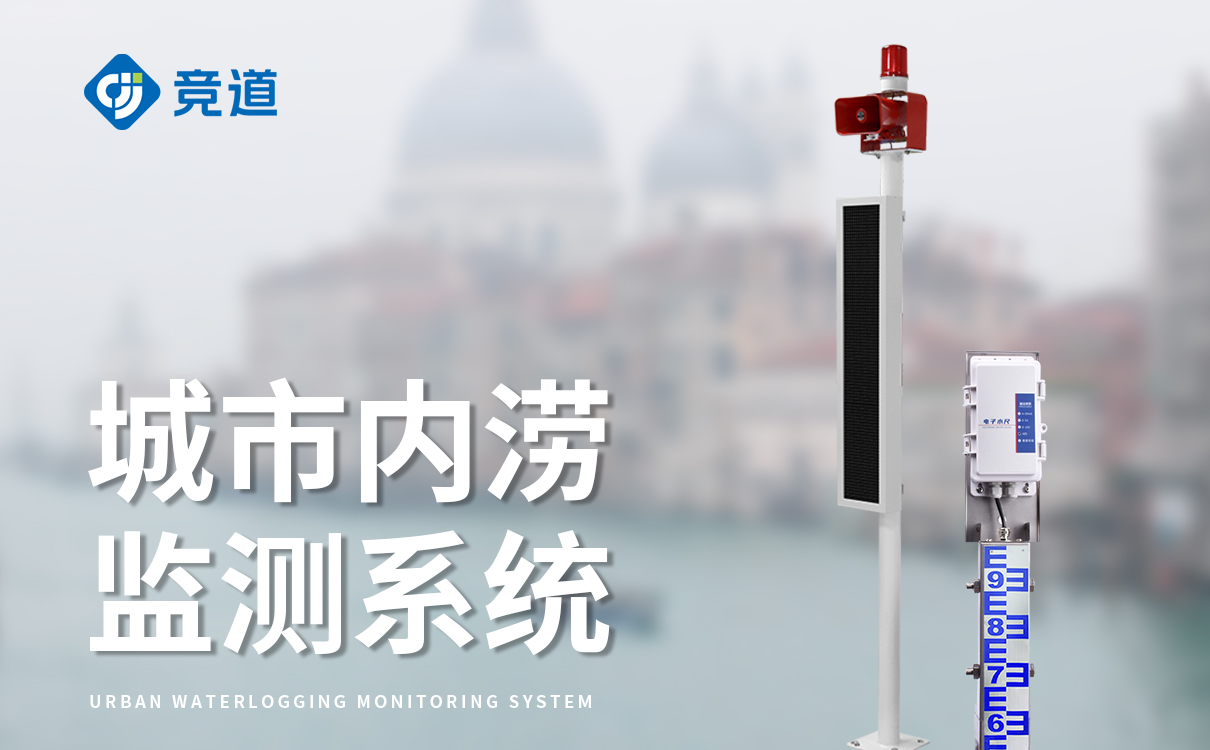
Scientific basis for traffic diversion: optimizing traffic management decisions
Accurate traffic control guidance
The rapid data feedback provided by the flooded road monitoring station provides accurate guidance for traffic control. When the data from the monitoring station shows severe water accumulation on a certain road, which may affect traffic safety, the traffic management department can quickly make traffic control decisions based on this data. For example, if the depth of accumulated water exceeds a certain limit and there is a significant risk of vehicle traffic, the traffic management department can promptly close the road section, set up warning signs, and guide vehicles to detour.
By real-time understanding of the location, scope, and severity of water accumulation, traffic management departments can more scientifically plan detour routes. For example, based on water accumulation monitoring data, it is found that multiple roads in a certain area are congested due to water accumulation. At this time, real-time traffic flow data and water accumulation conditions of surrounding roads can be used to plan detours for affected vehicles, avoiding them from rushing into other easily flooded or congested road sections and ensuring smooth traffic.
In addition, the data from the water accumulation road monitoring station can also help the traffic management department to arrange police forces reasonably. Increase duty on heavily flooded roads, responsible for directing traffic, directing vehicles, and ensuring orderly traffic. At the same time, adjust police deployment in a timely manner according to the dynamic changes of accumulated water, and improve the efficiency of traffic management.
Reasonable drainage scheduling support
In addition to traffic control, data from water accumulation road monitoring stations also plays an important supporting role in drainage scheduling. The drainage department can accurately determine the severity and distribution of accumulated water based on data such as water depth and flow rate feedback from monitoring stations, and thus schedule drainage equipment reasonably. For example, if the water flow in a certain area is large and the depth of the water continues to rise, the drainage department can promptly dispatch high-power drainage vehicles to the area for drainage operations.
By analyzing rainfall and waterlogging data, the drainage department can also predict the development trend of waterlogging and prepare for drainage in advance. For example, in situations where there is a large amount of rainfall and a continuous trend of rainfall, based on the data from the water accumulation road monitoring station, it is possible to determine which areas may experience severe water accumulation, deploy drainage equipment to the corresponding locations in advance, be proactive, improve drainage efficiency, eliminate road water accumulation as soon as possible, and restore normal traffic flow.
The water accumulation road monitoring station provides scientific basis for traffic diversion through rapid data feedback. Both traffic control and drainage scheduling are more reasonable and efficient due to these accurate and timely data. It plays an irreplaceable role in ensuring smooth urban transportation and reducing the impact of waterlogging on citizens' travel, and is an important defense line for cities to deal with road waterlogging problems.