-
E-mail
2355456200@qq.com
-
Phone
15021885022
-
Address
118 Xiuyan Road, Pudong New Area, Shanghai
Shanghai Botuo Instrument Co., Ltd
Intelligent sentinel for water quality clarification: the way to monitor and protect suspended solids concentration meters
Date: 2025-10-22Read: 6
In the fields of water quality monitoring, water treatment engineering, and water environment governance, suspended solids (SS) concentration is a key indicator for evaluating the cleanliness and pollution level of water bodies. Excessive concentration not only affects the transparency and ecological balance of water bodies, but may also clog water treatment equipment and increase purification costs.Suspended solids concentration meterThis real-time monitoring device that senses the impurity content in water bodies has become an intelligent sentinel for water quality control, providing reliable data support for water resource protection and water treatment efficiency improvement.
The mainstream detection principles include laser scattering method, infrared transmission method, and weighing method. The laser scattering method utilizes the scattering effect of suspended particles on the laser to calculate the concentration based on the scattered light intensity. The detection range is 0-5000mg/L, with an accuracy of ± 2% FS, and is suitable for low to medium concentration scenarios such as surface water and sewage; The infrared transmission method measures the attenuation degree of infrared light passing through water bodies to invert concentration. It has strong anti-interference ability and is suitable for detecting turbid water bodies such as industrial wastewater; The weighing method, as a national standard arbitration method, achieves accurate quantification through membrane retention drying weighing, and is commonly used for laboratory calibration and testing. Compared with traditional manual sampling and detection, online concentration meters achieve 24-hour continuous monitoring, with a data update frequency of up to once per second, and detection efficiency improved by hundreds of times.
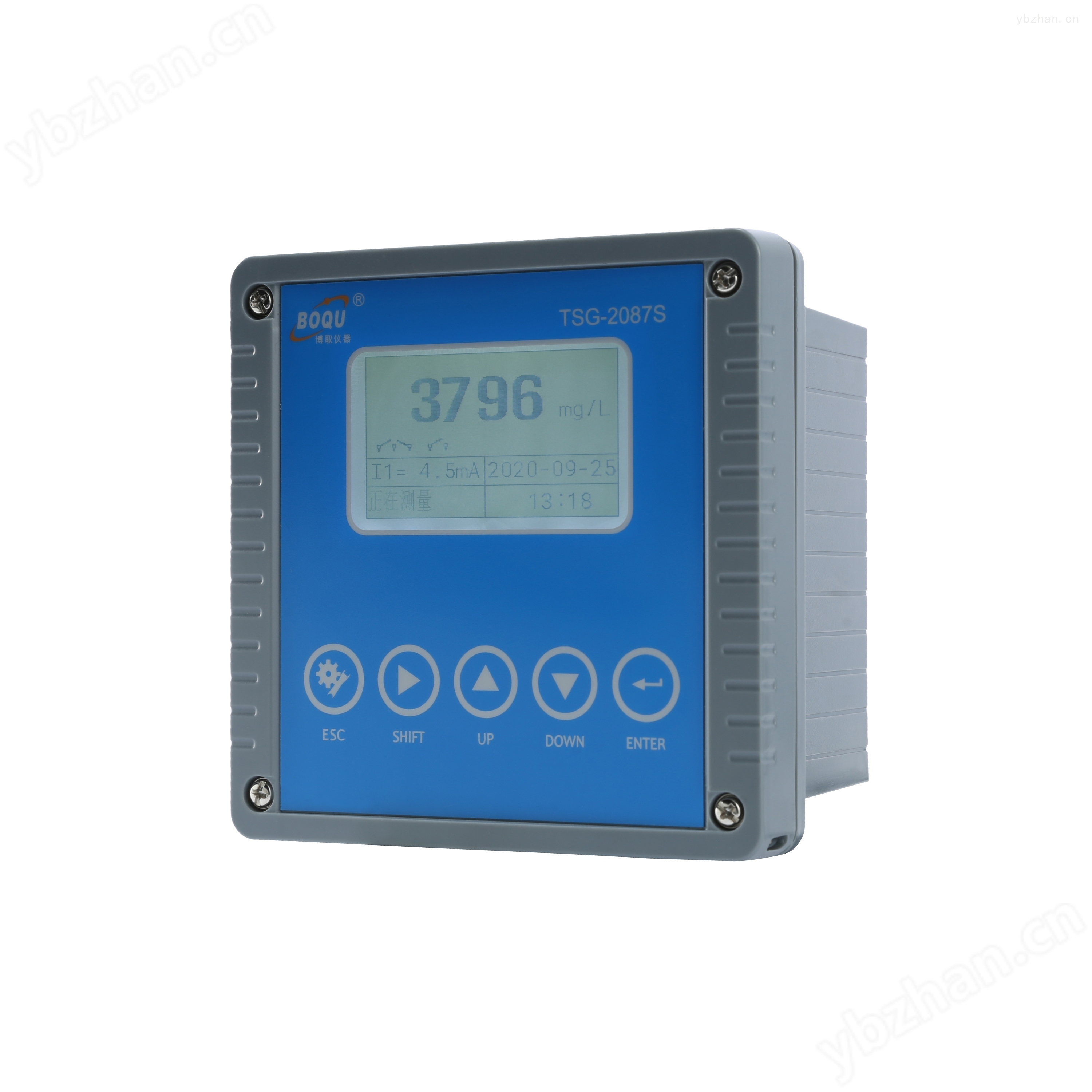
In the overall water quality control scenario, in the water treatment plant, it monitors the concentration of suspended solids in the effluent of the sedimentation tank in real time, providing a basis for judging the timing of backwashing the filter. After the introduction of a certain water plant, the loss of filter material decreased by 12%, and the effluent turbidity remained stable below 0.5NTU; In the sewage treatment plant, by monitoring the suspended solids concentration in the aeration tank and secondary sedimentation tank, optimizing the sludge return ratio and discharge volume, the effluent SS compliance rate is increased to 99%; In water environment management, monitoring equipment installed in rivers and lakes can track changes in suspended solids concentration in real time, timely warn of pollution events such as soil erosion and illegal discharge of sewage, and buy time for emergency response.
The upgrading of intelligence and durability of equipment is more in line with the requirements of complex water quality scenarios. The new generation suspended solids concentration meter is equipped with a touch sensitive operation interface, which displays concentration curves, historical data, and device status in real time. It supports 4G/5G wireless transmission and can synchronize data to the environmental monitoring platform; Some models are equipped with automatic cleaning devices, which regularly clean sensor probes with brushes or high-pressure water flow to avoid biological adhesion and impurity blockage. The maintenance cycle is extended to 1-3 months. Industrial grade equipment adopts IP68 waterproof shell and corrosion-resistant materials, which can resist the erosion of acid and alkali wastewater and high-temperature water bodies; The portable model weighs only 2kg and is equipped with rechargeable batteries and a folding stand, suitable for outdoor emergency monitoring and mobile inspection scenarios.
With the deepening of the concept of "green mountains and clear waters", suspended solids concentration meters are developing towards multi parameter integration and intelligence. The new equipment can simultaneously monitor multiple water quality parameters such as suspended solids, turbidity, and temperature, achieving "one device for multiple measurements" and becoming the core equipment for water quality control, injecting monitoring power into the sustainable utilization of water resources.