-
E-mail
2355456200@qq.com
-
Phone
15021885022
-
Address
118 Xiuyan Road, Pudong New Area, Shanghai
Shanghai Botuo Instrument Co., Ltd
Residual chlorine analyzer: a key monitoring equipment for ensuring water quality safety
Date: 2025-09-14Read: 8
Residual chlorine analyzerIt is an automated analysis equipment designed specifically for real-time monitoring of residual chlorine content in water quality. With core features such as continuous monitoring, rapid response, and automatic control, it is widely used in fields such as water plants, sewage treatment plants, swimming pools, and food processing. It tracks the concentration of residual chlorine in water in real time to ensure that the disinfection effect of water quality meets the standard, while avoiding secondary pollution caused by excessive residual chlorine. It is a key monitoring equipment for ensuring water quality safety.
Real time continuous monitoring and rapid response are its core competitiveness. The equipment adopts the detection principle of electrode method or optical method, and achieves 24-hour uninterrupted monitoring through the detection unit fixedly installed in the water pipeline or monitoring point. The data update frequency can reach once per second to once per minute, and the response time is ≤ 30 seconds. It can capture the fluctuation of residual chlorine concentration in the first time. The measurement range is usually 0-5mg/L or 0-10mg/L, with a measurement accuracy of ≤± 2% FS and a repeatability error of ≤ 1%, which can accurately reflect the residual chlorine status of water after disinfection. At the outlet of the clean water tank in the water treatment plant, an online residual chlorine detector monitors the concentration of residual chlorine in the factory water in real time to ensure that there is still sufficient disinfection capacity during the pipeline transportation process; At the discharge outlet of the sewage treatment plant, monitor the residual chlorine content in the tail water to avoid ecological impact on the receiving water body.
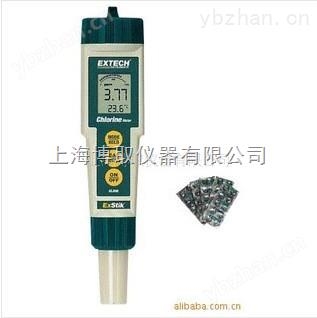
Automatic control and linkage adjustment improve operation and maintenance efficiency. The equipment is equipped with a PLC control system and an automatic dosing linkage interface. When the residual chlorine concentration is detected to be below the preset threshold, the dosing pump is automatically triggered to replenish the disinfectant; When the concentration exceeds the standard, the dosage will be automatically reduced or stopped, achieving a closed-loop control of "monitoring regulation". Equipped with automatic cleaning function, regularly clean the detection probe to avoid algae and microbial adhesion affecting detection accuracy, and the maintenance cycle can be extended to 1-2 weeks. In the maintenance of swimming pool water quality, the equipment linked chlorination device automatically adjusts the residual chlorine concentration to maintain clean and hygienic water quality; In the food processing and cleaning process, precise control of residual chlorine content in cleaning water is necessary to balance disinfection effectiveness and food safety.
Outstanding capabilities in intelligent networking and data management. The residual chlorine meter can upload real-time data to the central control platform or cloud management system, and management personnel can remotely view the residual chlorine concentration curve, historical data, and equipment operation status through computers and mobile phones. Equipped with high-definition LCD display screen, on-site intuitive display of detection data, alarm information and fault prompts; When the residual chlorine concentration exceeds the safe range, immediately activate the sound and light alarm, and push a text message or APP warning notification. In the sewage treatment system of large industrial parks, multiple online residual chlorine detectors are networked to achieve centralized control of residual chlorine concentration in each treatment unit; At third-party water quality monitoring stations, the continuous monitoring data provided by the equipment serves as a basis for water quality assessment.