-
E-mail
2355456200@qq.com
-
Phone
15021885022
-
Address
118 Xiuyan Road, Pudong New Area, Shanghai
Shanghai Botuo Instrument Co., Ltd
What is the core function of a pH meter?
Date: 2025-08-24Read: 10
In chemistry, biology, and many industrial production fields, the acidity or alkalinity of a solution is a crucial parameter. ButPH meterAccurately measuring the acidity and alkalinity of a solution, providing key basis for various chemical reactions and production processes.
The core function of a pH meter is to quickly and accurately measure the concentration of hydrogen ions in a solution, and present it intuitively in the form of pH value. It plays a role in both scientific research experiments in the laboratory and production process control in the factory workshop. In the water treatment industry, the quality of water is closely related to its pH value. For example, the pH value of drinking water needs to be maintained within a certain range to ensure human health, and excessive acidity or alkalinity may cause harm to the human body. The pH meter can monitor the pH value changes of the source water in real time, helping staff adjust the treatment process in a timely manner to ensure that the effluent meets the standards. For sewage treatment, the microbial activity at different stages has strict requirements for pH value. Monitoring with a pH meter can optimize the growth environment of microorganisms and improve treatment efficiency.
In the field of agriculture, the acidity and alkalinity of soil directly affect the growth of crops. Farmers use pH meters to measure the pH value of soil leachate, understand soil properties, and thus choose fertilizer types and amounts reasonably. Acidic soils may require the addition of lime to increase the pH value, while alkaline soils can be treated with substances such as gypsum to lower the pH value and achieve a suitable state for crop growth.
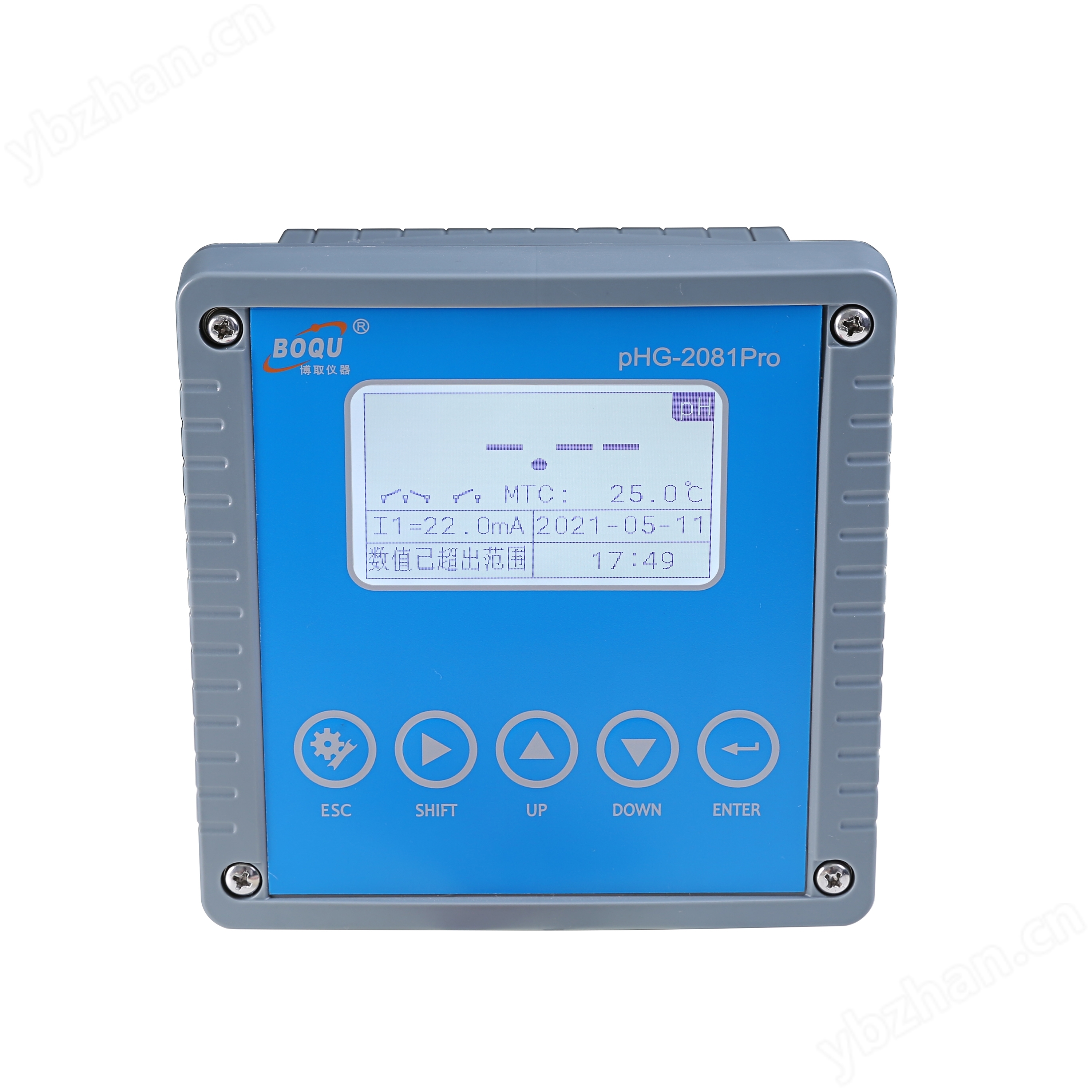
PH meter has the characteristics of high accuracy and stability. Advanced sensor technology and calibration systems ensure the reliability of measurement results. Modern pH meters are usually equipped with automatic temperature compensation function, as temperature can affect the activity of hydrogen ions in the solution. With this function, accurate pH readings can be obtained at different temperatures. Moreover, many pH meters can be connected to computers or other data acquisition devices to achieve continuous recording and analysis of data, making it convenient for researchers to study the trend of pH changes during the reaction process.
In addition, the operation of the pH meter is relatively simple and convenient. Simply insert the electrode probe into the solution to be tested and wait for a moment to read a stable pH value. This makes it widely used in teaching practice, as students can intuitively experience the process of acid-base reactions and deepen their understanding of chemical knowledge by operating the pH meter with their own hands. In short, as a powerful tool for measuring the acidity and alkalinity of solutions, pH meters are widely used in various fields, providing strong support for scientific research, industrial production, and daily life.