-
E-mail
duhongsong19823@126.com
-
Phone
15900508204
-
Address
Lane 989, Nanlu Road, Pudong New Area, Shanghai
Shanghai Hengyi Precision Instrument Co., Ltd
Introduction to the New Standard Multi functional Dynamic Bending and Twisting Testing Machine
Date: 2025-11-24Read: 99
The Hengyi dynamic bending testing equipment shall comply with GB/T 17554.1-2025, which is a newly released national standard for testing methods of card and identity recognition security equipment, and shall perform bidirectional torsion testing. Formally implemented on September 1, 2025, replacing the 2006 version of the standard.
This instrument is designed for the bending and torque tests of IC cards in national standards such as GB/T16649.1, GB/T 17554.1-2025, GB/T-17554.1-2006, ISO10373, and ISO7816-1998; Meets the above standards and is used for testing the bending and twisting performance of magnetic stripe cards, IC chip cards, smart cards, transportation cards, medical cards, social security cards, integrated circuit cards, and other cards.
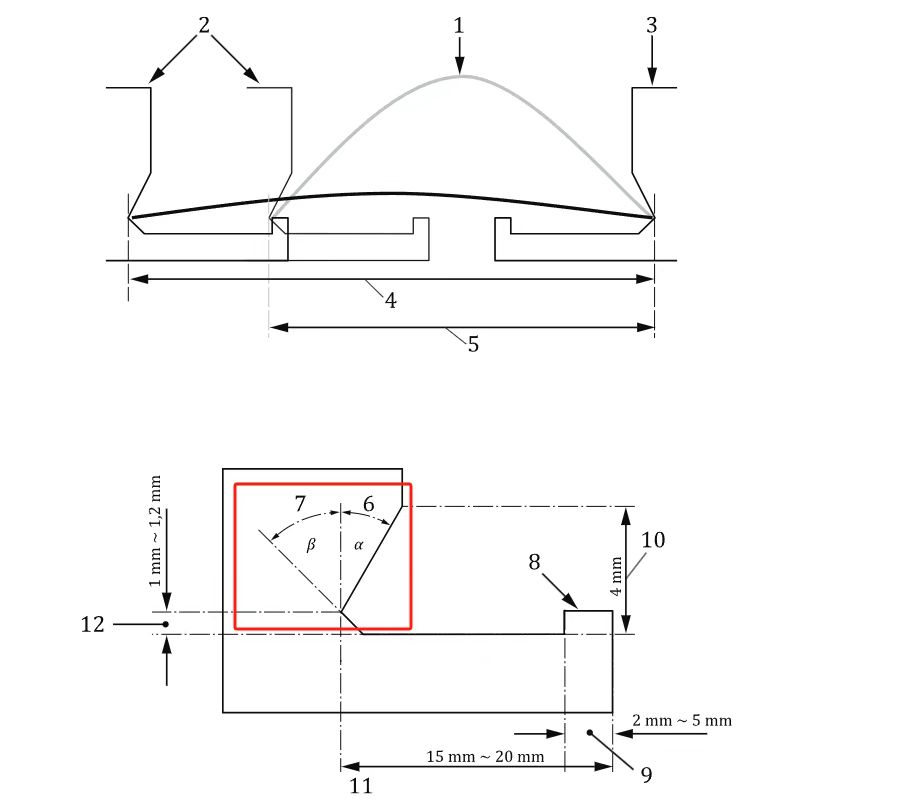
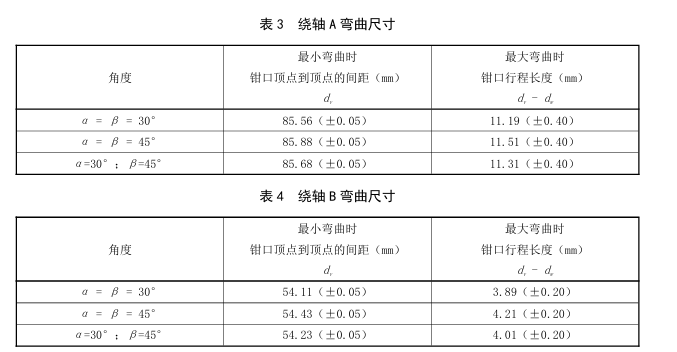
The purpose of the Hengyi dynamic bending testing equipment is to determine any adverse mechanical or functional effects on the card test sample caused by repeated application of torsional stress.
Testing principle of Hengyi dynamic bending testing equipment: Place the sample card between the jaws of the Hengyi dynamic bending twisting testing machine, position it so that the bending revolves around axis A, and if there is a contact point on the Nocat, the contact point should be placed on top first. One fourth of the total number of bends determined by the basic standard shall be used. If no such number is specified, 250 bends shall be used to reposition the card so that the other side of the card is located above, but the bends still revolve around axis A. The same number of bends as before shall be used.
Reposition the card and reset the testing machine so that the original surface of the card is facing upwards, but bent around axis B. If the card has contacts, it should be located on this surface, that is, the contacts are located on top. Reposition the card so that the other side of the card is located above, but still bends around axis B. Use the same number of bends as before.
The time between two sets of bending, as well as the time for one set of bending and completing the testable functional test of the card, should not exceed 1 hour
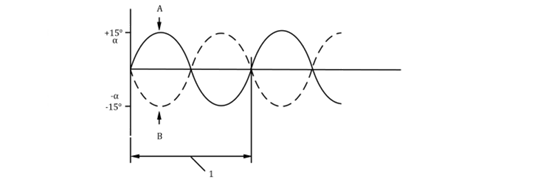
The principle of balance wing twist test: place the test card on the balance wing, make it loosely fixed in the grooves of the two guide rails, adjust the distance d, so that the short side of the card can rotate ± α with respect to the middle position, set the test frequency to 0.5 Hz, set the rotation angle α to 15 °± 1 °, and execute the number of twist cycles specified in the basic standard. If not specified, execute 1000 twist cycles. Check the testable functionality of the card at the beginning and end of the test. During the testing period, the inspection can also be conducted after one fourth of the twisting cycles specified in the basic standard.
Technical Specifications:
型号: HY(IC)
Test speed: Bending and twisting 30 r/min And 0.5 Hz
Test cycle: 1~9999 times
Distortion: ± 15 °± 1 ° Bidirectional d=86 mm
15 ° in both directions, with a total twist angle of 30 °
The large displacement of the long side is 20mm (+0.00mm, -1mm)
The small displacement of the long side is 2mm ± 0.50mm,
The large displacement of the short side is 10mm (+0.00mm, -1mm)
The small displacement of the long side is 1mm ± 0.50mm,
Number of bending stations for long sides: 5 stations
Number of short side bending stations: 5 stations
Bidirectional twisting workstation: 5 workstations
Dimensions: L745 X W380 X H300
Instrument weight: 70 kg
Voltage: AC220V ±5%
Power: 35W


