-
E-mail
heshengcn@163.com
-
Phone
13918154637
-
Address
201b, Building B, Fufeng Technology Industrial Park, No. 1200 Fenghua Road, Hongqiao Business District, Shanghai
Shanghai Hesheng Instrument Technology Co., Ltd
Determination and Measurement of Melting Point Tm of Polymers by Differential Scanning Calorimeter
Date: 2025-11-20Read: 11
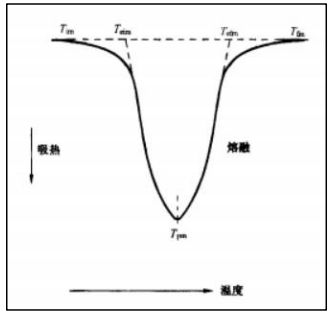
There are usually two simple methods to determine the melting point: one is to use the intersection point B between the tangent line of the peak front and the scanning baseline as the melting point, and the other is to directly use the peak vertex as the melting point. Due to the complex peak shape of polymers, the latter is more convenient, but attention must be paid to the influence of sample size on peak temperature.
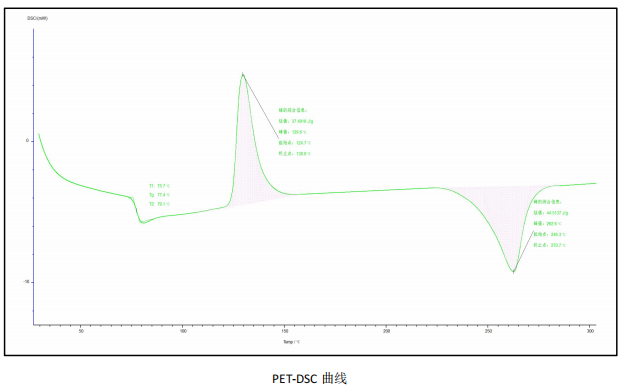
PET (Polyethylene terephthalate) is an aliphatic polyester used in mineral water bottles for daily drinking. It is a typical thermoplastic polymer formed by the condensation of terephthalic acid and ethylene glycol. Figure 1 shows its structural formula. Its wrinkle resistance, tear resistance, weather resistance, and low water absorption can be used in many different fields, and it is also used as a fiber in the production of sportswear. It is used for daily necessities and easy to recycle. It can be used for packaging, textiles, films, as well as molded parts for automobiles and electronic products. It exhibits resistance to impact, moisture, alcohol, and solvents. This type of film is often laminated with other films and is widely used in the food industry, such as coffee packaging or other food packaging, to prevent aroma loss. In order to obtain stable product quality, the characterization of material properties is very important.
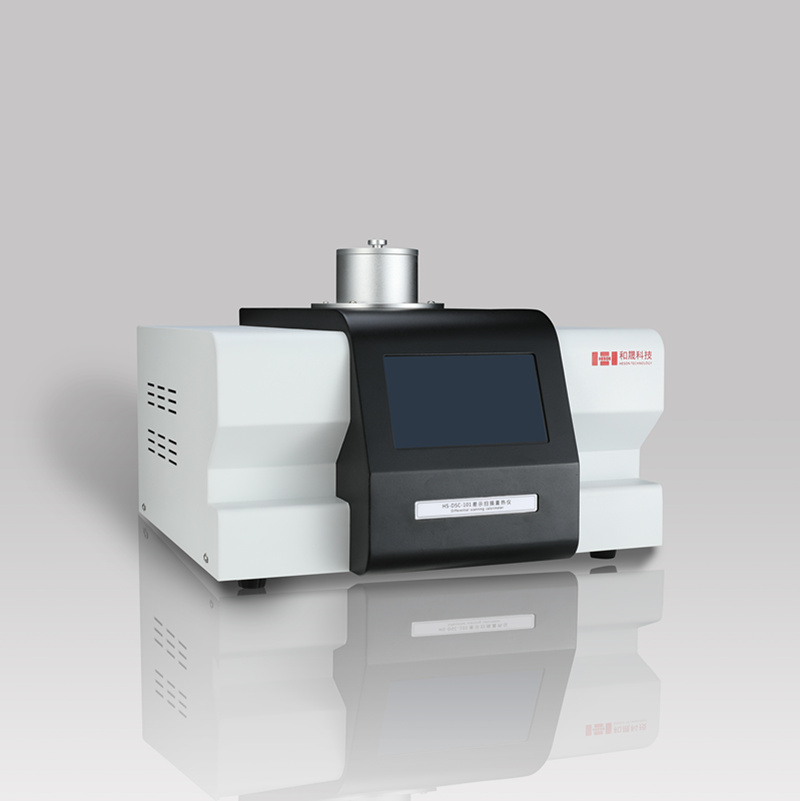
Shanghai Hesheng HS-DSC-101 Differential Scanning Calorimeter