-
E-mail
xxy@acze.com.cn
-
Phone
13713797181
-
Address
2105B, SEG Building, Huaqiang North Road, Futian District, Shenzhen
Shenzhen Yijie Instrument Co., Ltd
Born for summit: A more robust propeller anemometer for high-altitude wind monitoring
Date: 2025-10-13Read: 12
Born for summit: A more robust propeller anemometer for high-altitude wind monitoring
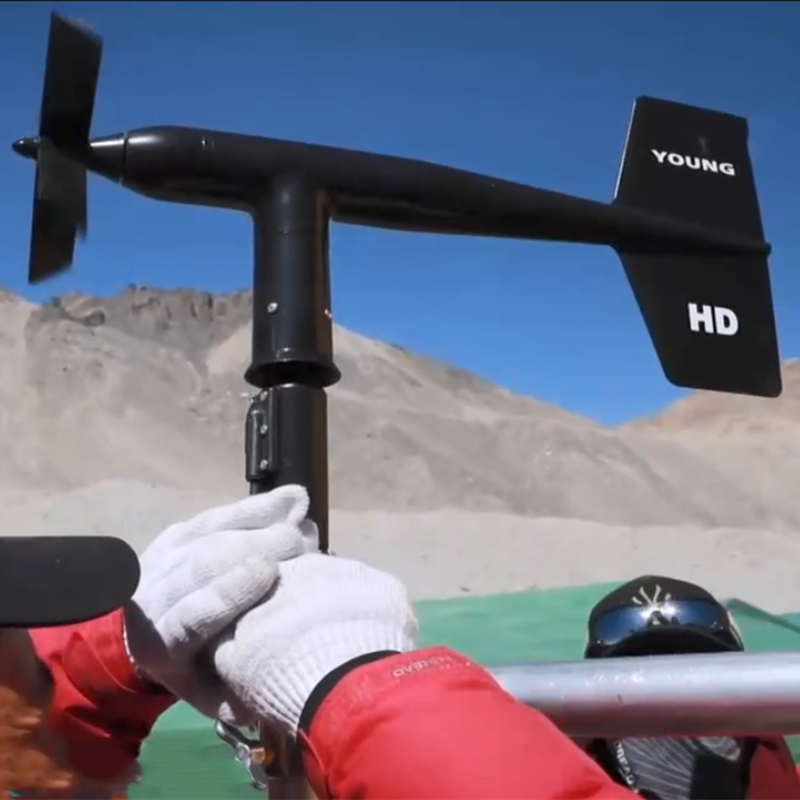
At R.M. Young Company, our instruments are designed to be used for some purposes on EarthlimitRunning in the environment. But even ifgoodDesign may also be pushed to its limits, especially when installed on Mount Everest.
with usAfter deploying the high-altitude wind monitoring instrument (model 05108-45), we sawlimitHow high mountain conditions - strong winds, temperatures below zero, and debris in the air - can cause serious damage to sensitive components such as propellers. That experience inspired a mission: to find a better material that can withstand mountaintops.
Introduction to polycarbonate: specially designed for impact
We have been striving to produce the highest quality and sturdy instruments on the market, so we need to address this weakness. Our conclusion is that it's time to upgrade the propeller.
After extensive testing and research, we have chosenpolycarbonateThis is a high-performance thermoplastic with itsgoodImpact resistance, toughness, and durabilityAnd famousUnlike traditional plastics, polycarbonate does not crack under pressure. It bends, absorbs impact force, and continues to move forward. This makes it an ideal choice for high-altitude applications where flying ice, gravel, or other debris may collide with sensors at high speeds.
Compared with previous materials, the performance of polycarbonate has significantly improved. Its impact resistance is 250 times that of glass, making it more resistant to flying debris and harsh conditions. Its tensile strength is as high as 70 MPa, which can maintain structural integrity under stress, and its dimensional stability in cold climates ensures reliable operation even at freezing temperatures. If handled properly, polycarbonate can also resist UV degradation and its lightweight properties can achieve long-lasting performance without adding unnecessary weight to the sensor.
The science behind the strength of polycarbonate
polycarbonategoodThe toughness is attributed to its molecular structure. At the microscopic level, it is composed of long chains of repeating units derived from bisphenol A (BPA) and phosgene. These chains form a complex, interconnected polymer network that balances rigidity and flexibility.
The main chain of the polymer is made of aromatic rings, which are hexagonal carbon structures that provide stiffness and thermal stability. These rings are connected by carbonate groups, which introduce a certain degree of flexibility and allow the chain to move slightly under stress. This combination produces a viscoelastic material, which means its behavior resembles both viscous fluid and elastic solid, depending on the applied force.
When polycarbonate is impacted by high-speed objects such as wind driven debris, its chain will not break or shatter. On the contrary, they absorb and redistribute energy through molecular motion, causing the material to temporarily deform and then return to its original shape. This is called plastic deformation, which is the key reason why polycarbonate resists cracking and fracture under impact.
In cold mountainous environments, many materials become brittle, and polycarbonate can maintain its dimensional stability and impact resistance. Its glass transition temperature (about 147 ° C) ensures that it can maintain flexibility and strength even under conditions below zero degrees.
In short, the strength of polycarbonate lies not only in its hardness, but also in how it handles stress at the molecular level, making it an ideal choice for robust, high-altitude applications such as high-altitude wind monitoring devices.
Investment Accuracy: A New Mold Tool
In order to make the new polycarbonate propeller come to life, we not only changed the material, but also designed a solution from scratch. This means investing in specialized molds designed specifically for this application. This tool enables us to manufacture propellers with strict aerodynamic tolerances, ensuring consistent performance in strong wind environments. It also ensures uniform material distribution, which is crucial for maintaining strength and balance at high speeds. But more importantly, this investment reflects our broader commitment to exploring innovation in the weather sensing industry. By controlling all aspects of the production process, we can efficiently expand without compromising quality, providing robust and reliable instruments to meet the needs of today's harsh weather monitoring applications. This is a long-term initiative that strengthens our role as precision meteorological instruments, always pushing the boundaries of possibilities in this field.
Reliable performance under adverse weather conditions
Whether you are monitoring the wind conditions of Mount Everest, the Rocky Mountains, or any other mountainous area, the upgraded high-altitude wind monitoring device can now provideBetter survival and prosperityNew propeller:
Reduce downtime caused by damage
Improve data reliability under adverse weather conditions
Enhance customer confidence in remote deployment