-
E-mail
313495677@qq.com
-
Phone
15190668075
-
Address
Chang'an Road, Tongshan New District, Xuzhou City, Jiangsu Province
Xuzhou Liuhe Measurement and Control Technology Co., Ltd
CS-1 Reluctance Speed Sensor is an intelligent sensor designed for monitoring the speed of steam turbines
Date: 2025-10-14Read: 11
The CS-1 reluctance speed sensor is an intelligent sensor designed for monitoring the speed of steam turbines. It uses the principle of electromagnetic induction to achieve non-contact measurement of speed. This principle has the advantages of large output signal, good anti-interference performance, and no need for external power supply. It can work stably in harsh environments such as smoke, oil and gas, and water and gas.
The sensor has a wide measurement range and can cover40~20000rpm(revolutions per minute), suitable for monitoring needs at different speeds. Its triggering form is steel gears, which can sense frequency signals proportional to the rotational speed. If it is an involute gear, the induced voltage is a sine wave. The amplitude of the signal is directly proportional to the rotational speed and inversely proportional to the gap between the probe end face and the tooth tip.
Firstly, the CS-1-G-065-05-01 magneto resistive sensor has a large output signal and good anti-interference performance. This enables sensors to maintain good signal reception and transmission quality in various complex environments, effectively avoiding problems of signal interference and attenuation. This means that even in harsh environments such as smoke, oil and gas, and water vapor, the sensor can provide accurate and reliable speed data.
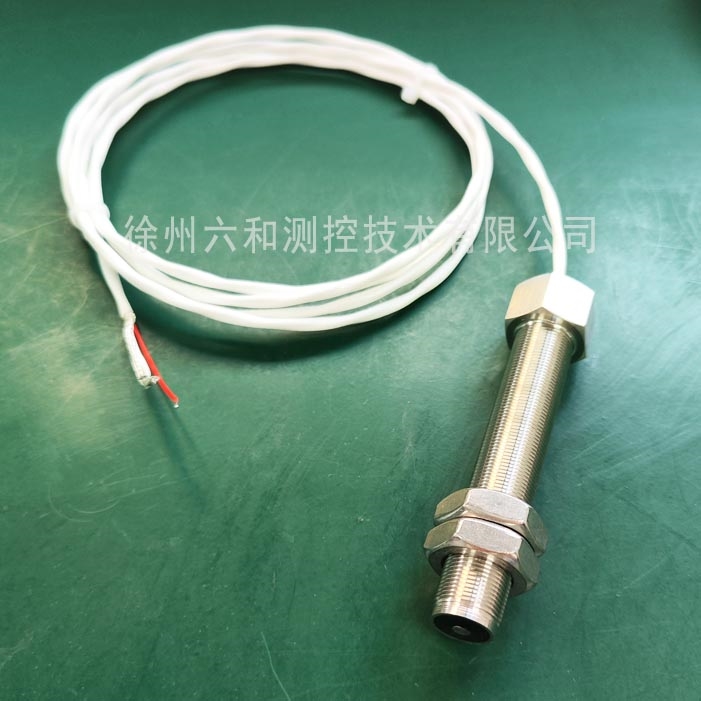
Secondly, this sensor does not require an external power supply, which greatly simplifies the installation and operation process. Users only need to install the sensor on the rotating body that needs to be monitored and ensure that the installation position is correct, and it can be put into use immediately. In addition, the output of the sensor is a two core high-temperature shielded wire, where the shielding layer is connected in parallel with either of the two core wires and then connected to the tachometer magneto electric input“-end”This further enhances the stability and security of data transmission.
CS-1-G-100-03-01The use of magneto resistive sensors is very convenient, but in order to ensure safety and stability, users still need to pay attention to the following usage precautions. Firstly, the metal shielding layer in the sensor output line should be connected to the ground neutral wire to avoid electromagnetic interference and protect equipment safety. Secondly, sensors are not allowed to operate at temperatures of25Use and place in a strong magnetic field environment above ℃ to avoid equipment damage or measurement errors. In addition, during installation and transportation, users should avoid strong impacts to prevent damage to the sensors. Finally, when the measured shaft has a large runout, attention should be paid to appropriately enlarging the gap to avoid damaging the sensor or affecting the measurement accuracy.
During installation, the metal shielding layer in the sensor output line should be connected to the ground neutral wire to ensure accurate signal transmission. In addition, sensors should be avoided from being used and placed in strong magnetic field environments to prevent signal interference. During installation and transportation, strong impacts should be avoided to protect the precision components of the sensor.
CS-1 speed sensorNon contact measurement method ensures that it does not come into contact with the rotating parts being measured, resulting in no wear and a long service life. It adopts an integrated design, with a simple and reliable structure, and has high anti vibration and anti impact characteristics. These characteristics makeCS-1 D-065-05-01Speed sensors have become an ideal choice for measuring the speed of large rotating machinery such as steam turbines.