-
E-mail
1714578587@qq.com
-
Phone
15989761119
-
Address
Room 502, Taiwan Business Association Center, No. 2029 Mingzhu South Road, Zhuhai City
Zhuhai Obert Measurement and Control Technology Co., Ltd
How accurate is the dew point transmitter
Date: 2025-12-11Read: 12
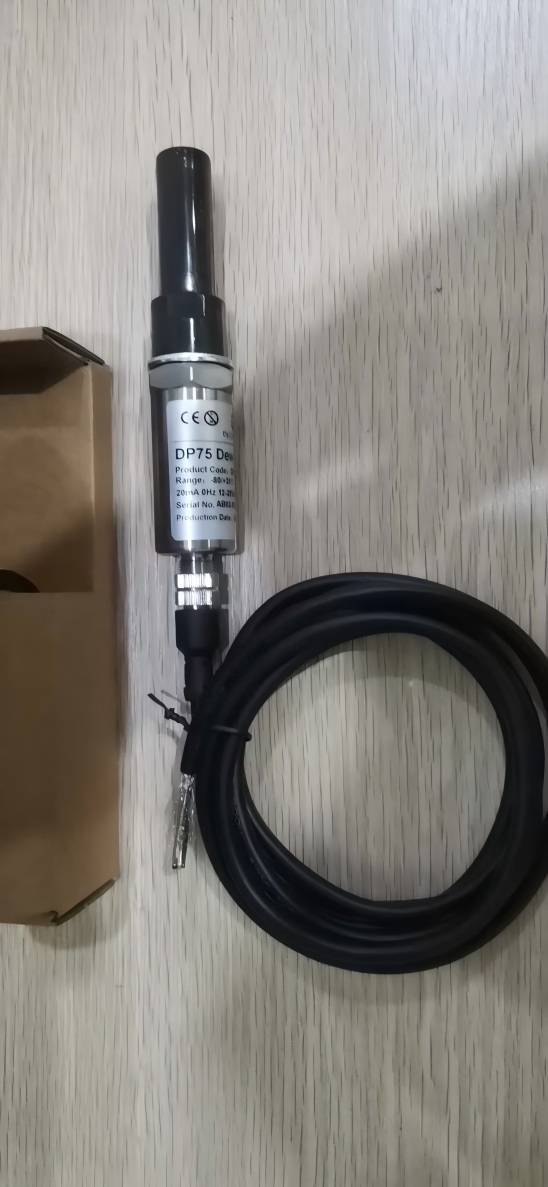
For many industrial micro water measurements, dew point transmitters are an ideal choice. They are low-cost, easy to install, sturdy enough to withstand harsh environments. This includes measuring moisture under pipeline pressure, high temperature, or in hazardous areas.
They are mainly used for applications where measuring the dew point of water in gases is crucial for protecting equipment or ensuring product quality. To achieve optimal accuracy of dew point transmitters, you need to understand how different types of transmitters work and how each transmitter is suitable for specific applications.
How does a dew point sensor work?
Dew point temperature is an important measurement value for many industrial processes, as it tells operators at what temperature liquid water condenses. For example, in applications such as compressed air used for gases, it is very important to keep the gas dry to avoid condensation of liquid water in pipeline systems, thereby avoiding blockages or mold growth.
The dew point transmitter operates through impedance. The sensor consists of layers - two electrodes on both sides of the absorption layer. When gas passes through the sensor, this technology absorbs water vapor onto a porous moisture absorbing medium area located between two conductive layers constructed on a ceramic substrate. Water molecules can alter the dielectric constant (Ke) of the medium, leading to changes in the impedance of the sensor.
Sensors use different materials to provide dew point transmitters with different characteristics. Traditional sensors use alumina as the central absorption layer. The new development of Michell metal oxide ceramic humidity sensor based on this technology. These sensors are capable of measuring moisture under pressure within a wide dew point range of -100 to+20 ° C.
Polymer sensors, such as Micellar SF82, were later developed. They provide faster wet dry response time, but operate within a more limited measurement range, typically at a dew point of -60 to+60 ° C.
Choosing the appropriate humidity sensor for your measurement range is the step to achieving accuracy
From the above differences, you can see why it is important to choose a dew point transmitter that can measure the required range of the process. If it is necessary to measure very low dew points or a wide range of dew points including dew points below -60 ° C, a metal oxide dew point sensor is required. For industrial dryer applications, polymer sensors are a fast response alternative for measuring dew points between -60 and+60 ° C.
Calibration certificate tells you the accuracy
The dew point transmitter data sheet will provide you with accuracy parameters. This is usually a range, such as ± 1 ° C. This means that the accuracy of the transmitter can be expected to be within plus or minus 1 ° C of the actual dew point.
Calibration certificate is also an important indicator of the accuracy of the transmitter within a certain range.
The dew point transmitter has been calibrated to measure dew point at different dew point temperatures within its range using a cold mirror reference hygrometer. More calibration points provided throughout the entire range ensure accuracy within that range. For example, the Michell Easidew series dew point transmitters are equipped with 13 point calibration: this means that each transmitter is calibrated using a cold mirror reference hygrometer at 13 individual points throughout the entire measurement range of -100 to+20 ° C dew point.
Proper sampling and installation are crucial for accurate humidity measurement.
Choosing the appropriate dew point transmitter for your application is just a step in ensuring accuracy. Ensuring that the sampling system is based on best practices will ensure that humidity measurements are as accurate as possible. Avoiding common pitfalls such as dead volume, retained moisture, and the use of incorrect materials will ensure the accuracy and reliability of measurements.
Keep your calibration new
Once the correct sampling and adjustment system is installed and operated correctly, the dew point transmitter will operate reliably. However, like all precision instruments, they are not maintenance free, and we recommend checking them annually to ensure they still provide reliable and accurate measurements.
PST provides two services for recalibration. To maintain traceability, you can send the dew point transmitter to our calibration and service center. Your sensor will be returned to you along with a new calibration certificate, ensuring that you will benefit from accurate measurement of trace moisture for the next 12 months.
PST also provides sensor exchange programs for our Easidew and SF82 series dew point transmitters, ensuring that your process always operates with calibrated dew point transmitters. For complete and detailed information on sensor exchange and calibration services, please refer to the PST Services section.
We also recommend not storing sensors for a long time before installation, as environmental humidity and temperature may have harmful effects on sensitive sensor patches. Our manufacturing system has been optimized to quickly supply a large number of humidity sensors, so there is no need to store a large number of spare parts.
Conduct spot checks on your process to continuously verify its accuracy
Our final recommendation is to use a portable hygrometer to conduct spot checks on your process. When the dew point transmitter is installed online in a fixed position, the portable humidity meter can read readings at different points in the system. This not only helps to confirm online measurements, but also assists in detecting leaks or other issues in other areas during the detection process.
Different models of portable hygrometers are based on Michell metal oxide ceramic humidity sensors and fast response polymer sensors such as SF82 dew point transmitters. A small portable cold mirror dew point meter, such as the Micellar Optidew 401, can provide a basic reference for installed dew point transmitters.
The accuracy of the entire system can be ensured through the Rozhnik monitoring system - RMS. This is a cloud based environmental monitoring system that allows you to combine moisture, oxygen, and many other parameters into one system.
We hope this overview will help explain how to optimize the accuracy of dew point measurement by selecting the appropriate type of sensor for your application, installing the sensor correctly, and ensuring calibration remains new.