Top 10 Chinese Polyacrylamide Brands Worth Knowing: An Industry Overview
09,21,2026 16 views


Improving the data transmission efficiency of Internet of Things (IoT) valves requiresCommunication protocol optimization, network architecture design, data compression processing, edge computingStart from multiple aspects. The following are specific optimization strategies: NoThe same IoT protocol is applicable to different scenarios, and choosing the appropriate protocol can significantly improve data transmission efficiency:
| agreement | Applicable scenarios | feature | recommended scenarios |
|---|---|---|---|
| MQTT | Low bandwidth, high latency network | Lightweight, publish/subscribe mode, supporting QoS grading | Remote valve monitoring |
| CoAP | Restricted devices (low power consumption, low memory) | Based on UDP, supporting resource discovery, suitable for small data packets | Wireless Sensor Network (LoRaWAN) |
| HTTP/HTTPS | Scenarios that require high security | Strong universality, but high cost | Cloud API interaction |
| OPC UA | Industrial automation (high real-time requirements) | Supports complex data structures, suitable for industrial control | SCADA system integration |
| Modbus TCP | Traditional industrial equipment communication | Simple and widely compatible, but with low efficiency | PLC controlled valves |
optimization suggestions:
Low power scenarios (such as battery powered)→CoAP + 6LoWPAN(Reduce packet size)
High real-time requirements (such as hydraulic control)→MQTT + QoS 1/2(Ensure reliable transmission of messages)
Industrial environment (high interference)→OPC UA over TSN(Time sensitive network, ensuring low latency)
Reduce cloud data transmissionPerform data preprocessing (such as filtering and aggregation) at the gateway or local device, and only upload critical data (such as abnormal states and statistical values).
example:
Raw data: Upload valve opening (0-100%) every second.
Optimized: Only upload when the opening changes by more than 5% or exceeds the threshold.
LoRaWAN/NB-IoTSuitable for wide area coverage, but with high latency.
Zigbee/ThreadLow power Mesh network, suitable for multi valve collaborative control in factories.
CBOR(Concise Binary Object Representation)More efficient binary encoding than JSON, reducing transmission volume.
GZIP compressionSuitable for HTTP transmission, can reduce data volume by more than 50%.
Static valve(such as maintaining a fixed opening for a long time) → Reduce the sampling frequency (such as reporting every 10 minutes).
Dynamic valve(such as frequent adjustment) → Adoptevent triggerMode (only reported when the opening change exceeds the threshold).
Example algorithm:
if abs(current_value - last_reported_value) > threshold:
send_data(current_value)
last_reported_value = current_value
local cacheCache data at the gateway or device end, upload in batches according to time windows (such as every minute), and reduce the number of network requests.
example:
Original: Send 1 data every 5 seconds → 12 data per minute.
Optimized: Package and send once per minute (1 message containing 12 data points).
Time Series Database (TSDB)For example, InfluxDB and TimescaleDB optimize storage and query efficiency for time series data.
Separation of hot and cold data:
Hot data(Recent data) → High speed storage (such as Redis).
cold data(Historical data) → Compressed archiving (such as AWS S3 Glacier).
DTLS (CoAP Security Layer)orMQTT over TLSPrevent data tampering.
resume broken transferAfter the network is restored, the device transfers cached data.
scene1000 intelligent valve monitoring systems in a certain water plant
| optimization measures | effect |
|---|---|
| MQTT+QoS1 (alternative to HTTP) | Reduce data volume by 60% and latency by 50% |
| Edge computing (local filtering) | Reduce cloud data traffic by 80% |
| CBOR encoding+GZIP compression | Single data from 200B to 50B |
| Adaptive sampling (threshold 5%) | Daily reporting frequency increased from 8640 to approximately 500 times |
| optimization direction | specific method |
|---|---|
| Protocol optimization | MQTT/CoAP > HTTP, OPC UA > Modbus |
| network architecture | Edge computing+Mesh network+data compression |
| data sampling | Adaptive frequency+event triggering |
| Storage and Query | Time series database+cold and hot separation |
| Safety and reliability | TLS encryption+local caching+network disconnection continuation |
By comprehensively applying these methods, the data transmission efficiency of IoT valves can be significantly improved, network load can be reduced, and system response speed can be enhanced. If optimization solutions are needed for specific scenarios such as water conservancy and oil pipelines, further discussion can be conducted!

Top 10 Chinese Polyacrylamide Brands Worth Knowing: An Industry Overview
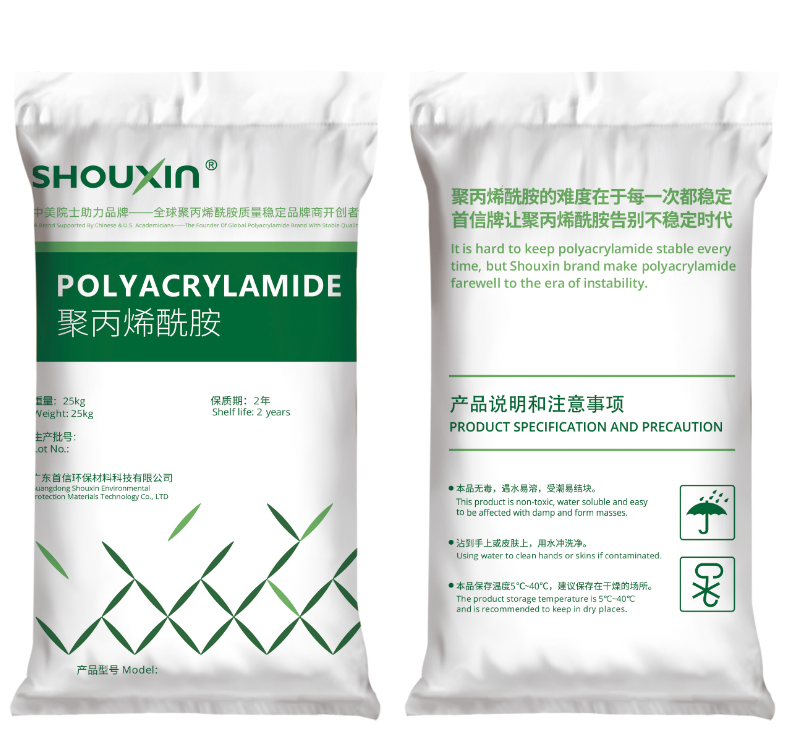
Why Choose Chinese Polyacrylamide Manufacturers for Cost-Effective Industrial Solutions
Shouxin Advanced Polymer Sciences provides high-performance polyacrylamide (PAM) solutions for water treatment, mining, pulp and paper, and industrial applications.