09,18,2026 10 views
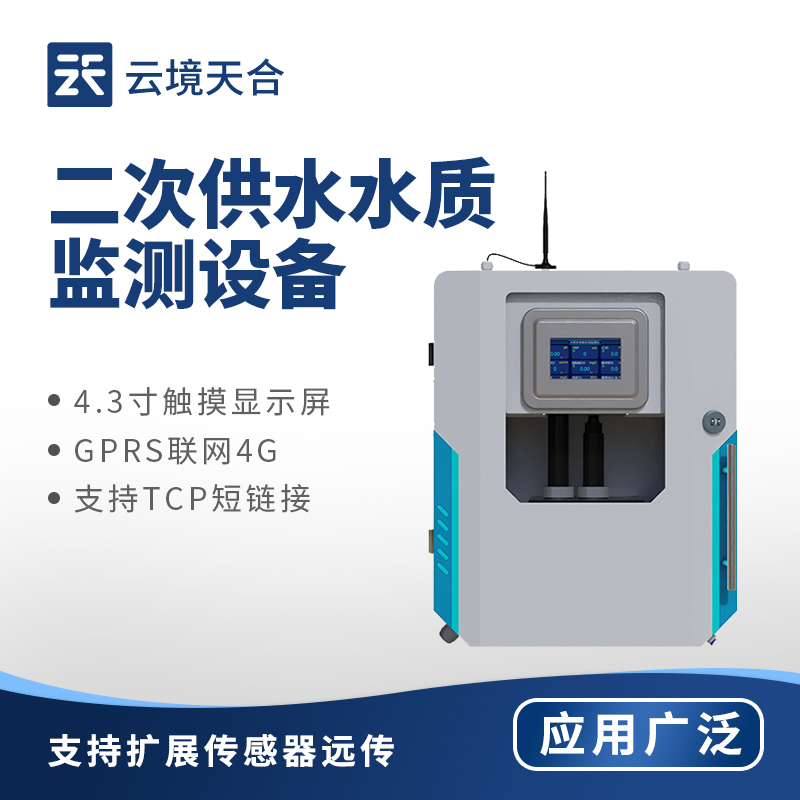
Recently, the technical exchange meeting for the secondary water quality monitoring microsystem developed by Shandong Tianhe Environmental Technology Co., Ltd. was held in Weifang. At the meeting, many industry professionals and customer friends arrived at the scene. After understanding, everyone highly affirmed and fully recognized the product. The microsystem for monitoring the quality of secondary water supply is a comprehensive sensor acquisition, display, and analysis system based on Internet of Things technology, designed specifically for real-time monitoring and control of water quality in secondary water supply systems. The secondary water quality monitoring microsystem usually consists of multiple key units, including a stable flow exhaust unit to ensure stable water flow, eliminate gas interference, and improve monitoring accuracy. The analysis and testing unit mainly consists of residual chlorine pH、 Composed of sensors for water temperature, turbidity, conductivity, etc., they are fixed to the circulation pool through threads or tight fitting fasteners to collect water quality parameters in real time. The system control unit is responsible for data processing, storage, and transmission, as well as overall system control. The remote communication unit supports GPRS networking 4G, expandable networking, enables remote transmission of sensors, supports multiple protocol data forwarding, and facilitates remote monitoring and management.
At the meeting, Manager Yu from Tianhe Environmental Technology Co., Ltd. introduced:“
The system adopts a miniaturized design and modular configuration, with convenient installation and maintenance, and is suitable for use in various secondary water supply facilities. Modular design also allows users to freely combine parameters according to actual needs, improving the flexibility and applicability of the system. Intelligent and automated systems have intelligent features, such as automatic calibration function, which reduces the need for manual intervention and ensures the reliability of data. In addition, the data storage and alarm system can immediately notify relevant personnel when abnormal parameters are detected and handle them in a timely manner. The real-time monitoring and early warning system can monitor water quality parameters in real time and transmit data to the central monitoring platform through wireless or wired communication. Once there is an abnormality in water quality, the system will immediately issue a warning to help users take timely measures to ensure water quality safety. The sensors and acquisition equipment of the durability and anti-corrosion system adopt durability and anti-corrosion design, ensuring stable operation even in high-pressure water environments and extending the service life of the system. The data recording and analysis system can automatically record historical data and generate water quality reports and trend charts for management personnel to refer to and make decisions.
Application scenarios
The microsystem for monitoring the quality of secondary water supply can be widely applied in the following scenarios: monitoring the quality of the effluent water from urban or rural water plants to ensure water supply safety. Monitor the water quality of the tap water supply network to prevent secondary pollution. Monitor the water quality in the secondary water supply tank or pool to ensure the safety of residents' water use. Monitor the water quality of the faucet at the end of the user's home to ensure the safety of drinking water. Indoor swimming pool monitors the water quality to ensure the health of swimmers. Large scale water purification equipment and direct drinking water monitoring equipment ensure that the water quality meets the standard. Technological advantages: Multi parameter monitoring can simultaneously monitor multiple key water quality parameters, comprehensively reflecting the water quality status of secondary water supply, avoiding the problem of only focusing on a single indicator and ignoring other potential water quality hazards. High precision measurement relies on high-precision sensors and scientific data processing and analysis methods to accurately detect and judge various water quality indicators, reducing the probability of false positives and false negatives. Easy to deploy and maintain, with a compact system structure and highly integrated functional modules, making it convenient to install in limited spaces of secondary water supply. At the same time, the system supports remote monitoring and management, reducing operation and maintenance costs.
applied value
Ensuring residents' water safety through real-time monitoring and timely warning can effectively prevent health problems caused by the deterioration of secondary water supply quality, such as intestinal diseases caused by excessive microorganisms and secondary pollution of water bodies caused by insufficient residual chlorine. Auxiliary water supply management decision-making provides detailed and accurate water quality data for water supply units. Based on this data, water supply units can arrange water purification, tank cleaning, equipment maintenance and other work reasonably, improving the scientific and effective management of secondary water supply. Meeting regulatory requirements and complying with relevant national and local regulations on the quality of secondary water supply will help relevant departments better fulfill their regulatory responsibilities and promote the healthy and standardized development of the entire secondary water supply industry. '
The exchange meeting was a complete success. We also welcome customers with such needs to come.