Top 10 Chinese Polyacrylamide Brands Worth Knowing: An Industry Overview
09,21,2026 14 views


02,10,20252From:
Academician of the Chinese Academy of Sciences and researcher at the Institute of Geographic Sciences and Natural Resources, Chinese Academy of Sciences, Lu Dadao, openly pointed out:
Chinese research funding and direction are being dominated by SCI in Western countries, and our researchers are lacking in innovation and ideas! ”
Compared with the increasing investment, the actual achievements of China's scientific and technological community are not as outstanding as people expected, and its actual position in the international arena is also unsatisfactory.
The actual contribution of scientific research to the development of the country has become a question. The huge investment has brought low output, and the limitations and deceptions of quantitative indicators such as SCI based on heroes, talents, and performance have begun to be exposed.
What serious impact does the dominance of SCI papers have on China's scientific and technological development?
1) The values of technology talents are distorted
Now our country has a large number of talents with various titles and halos. The number of papers and the level of publication in journals, especially SCI papers, have become symbols for some scholars to measure their own value, status, and resources.
The paper became the value coordinate system deep in their thoughts. In this coordinate system, more and more scholars are enthusiastic about writing papers, especially SCI papers. The emphasis on harnessing collective power is no longer emphasized, and there is no longer an atmosphere of loving research teams and playing a collective role. No matter how large the project or collective is, it only exists in name, that is, during the application and final acceptance of the project.
Once the project is approved, the person in charge will break it down and split the project fee, but in reality, there is no team and each person will do their own thing. More and more people are playing the leading role, and few people are willing to be supporting role and do auxiliary work.
In recent years, among the large number of talents introduced, some of them (including those introduced from domestic units) are not familiar with the research direction and field of domestic work and work units, have little interest, and do not care about the construction of research teams. But the treatment these talents receive is very unusual. The equality of academic competition may also be disappearing.
For those who are brave enough to undertake national needs and major tasks, we may be losing an honest and trustworthy talent pool. However, scholars have been "kidnapped" by papers and even become slaves to them, how can they have true freedom.
2) The academic ideas of "keeping up with" and copying "international frontiers" are solidified within the framework and model of the West
Many scholars still refer to it as "international" and "international hot topics" to this day. Some scholars openly believe that "we do not yet have the ability to challenge Western science and technology" and "we still need to conduct research according to American thinking and models". Regard the research direction of foreigners as one's own, and the research fields, scientific problems, research ideas, etc. are mostly "introduced" from others. Such research results are also more easily accepted and praised by the Western "international mainstream".
In recent years, the selection of various halo talents, including those with the highest academic titles, has almost always had this logical content as the key materials for candidates. Both the applicant and the expert judges attach great importance to the affirmation of foreigners, without emphasizing whether the applicant's achievements are truly innovative, and do not pay serious attention to their theoretical and practical significance.
Some scholars who are obsessed with SCI are extremely disdainful of those who focus all their energy on national demand research. They belittle their achievements and dismiss them as "three no" scholars (no foreign articles, no international titles, poor English proficiency). Some disciplines are arbitrarily labeled as "three no disciplines", and some are severely suppressed.
For many years, some talents and achievements have been rejected by SCI enthusiastic leaders (scholars) at various award checkpoints due to insufficient quantitative indicators or lack of praise from foreigners. Today, our superstition and worship of SCI, as well as the concept of "determinism" in SCI, are even more profound than Westerners.
3) Research organisms (research institutes) are generally "overweight", with loose internal organization and a lack of innovative vitality
The number of papers and the "grade" of published journals have become the right and tool for research institutes, universities, and their departments to fight for resources. The leadership's view of political achievements has also been adjusted to the direction of talent, papers, resources, and institutional expansion, leading to project, investment, and institutional hunger. Many units continue to expand the size of their existing institutions and increase the number of employees. It is quite common for research organisms to be overweight.
The paper has created a large number of talented individuals with prestigious titles, who have received corresponding honors and status as a result. Naturally, one can gain control over various resources, that is, power. These talents are only competitive and difficult to cooperate with, mostly seeking to establish their own businesses.
Some universities and institutions have numerous small institutions operating independently. Three people per "center", five people per "college". The dean and director are flying everywhere. The team organized in this way is often in a state of change and reorganization, and cannot form a reasonable talent structure.
In most scientific research, there is only a "one-man hall" and it is difficult to have academic democracy. Without close collaboration among everyone, it is difficult to have a collision of academic ideas with only work assignments. Without the collision of academic ideas, how can new scientific ideas be generated?
Some people in the media have commented that in universities and research institutions, 'the government asks the big, the power is big, and the funding is high', and many funds are contracted by 'bosses' at all levels. Without projects and funding, even the highest level of scientific research is useless. This kind of 'golden power' has probably emerged.
Some teams have lost their support staff and are now dominated by "elites" or professors, leaving many secondary or auxiliary tasks unattended. In the past, the contributions of unknown craftsmen were often talked about, but now no one talks about them anymore. These are not research collectives formed through practical scientific research activities and collaborations, how can they have strong innovation capabilities?
4) Out of touch with reality, out of touch with national needs
The purpose of serving the country has been largely abandoned by many people, and the concept of seeking theoretical development and scientific breakthroughs through arduous scientific practice has also been greatly weakened. In the past, some larger and more comprehensive work required longer field investigations, experimental station observations, and other work processes. Nowadays, few people are willing to invest a lot of time and energy in field investigations, verification in practice, and conducting experiments at experimental stations, and focus on networks and new technologies.
Many units are only superficially prosperous. Some countries' urgent development issues are considered by some to lack theory, unable to publish papers, or the problems in this field are not at the forefront of the international community, and therefore do not receive attention, making progress difficult and slow. Scholars are enthusiastic about revealing various mechanisms and enjoy admiring themselves in the microscopic world. They wrote a large number of scientific papers, but ultimately had little to do with the country's socio-economic development.
5) The spirit of focused scientific research is being lost, and academic leaders are running around tirelessly throughout the year
The values of taking pride in serving the country and the spirit of being diligent and down-to-earth, which have been gradually cultivated under the leadership of the Party for decades since the founding of the People's Republic of China, have been seriously corroded. Many excellent ethnic groups have this calm and focused characteristic. However, today, it is extremely common for the scientific and technological community in China to be restless and eager for success. The spirit of focus and composure in research has been almost completely lost. There are fewer and fewer people who can work steadfastly.
The connection between papers and power has made many people nervous and uneasy. Some people are enthusiastic about paper metrics, while others are fearful. Researchers constantly apply for research projects and spend a lot of time running through various departments and committees throughout the year. And once the project was approved by the higher authorities, the task was assigned, and soon it had to deal with the mid-term report review. There are many unfinished projects, and we have to rush to write new applications.
How much time and patience is left to sit down and scientifically design and conduct research, constantly rushing to find leaders, write notebooks, compete for topics, deal with reviews, and summarize and submit accounts?
Research backbones are always under high pressure, especially the first person in charge, with immense pressure and a few experiencing severe physical decline. Even in this situation, one still needs to write a notebook and strive for the project.
6) The national confidence of scientific workers has been seriously damaged
The profound influence of SCI led papers has led many scholars to believe that China's science and technology have not yet had the possibility of independent development. It is said that a few scientists exhaust their enthusiasm and humility in order to receive praise from foreign counterparts. Once it receives positive reviews from foreign experts and returns to China, it will be utilized as "resources" and "capital".
Some institutions and scholars and experts look down upon the inventions and creations of China's own scholars and experts. Without high-frequency SCI articles cited, they cannot be awarded the title of talent or receive awards. Looking down upon one's own achievements and talents is probably a major characteristic of China's academic community in the past decade.
However, can the result of 'keeping up' be considered innovative even in someone else's' international forefront '? Can they recognize you as' international '? Only the nation's is the world's "refers to the original innovation of a country, which can become a true international.
We should acknowledge that many scholars have "adapted" to the environment of writing papers for a long time and feel comfortable in a warm bed. Even there is a strong sense of achievement. But they are not responsible. They were misled and forced to do so.
7) The dominance of academic papers has formed a huge value network
This network covers various levels such as scholars, reviewers (consultants, etc.), leaders of scientific research institutions, government research management agencies, society, and media, leading all aspects of scientific research project initiation, review, approval, implementation, mid-term evaluation, and acceptance.
All evaluation indicators centered around SCI have become the "driving force" for the development of scientific research and the "breeding ground" for talent discovery and appointment. Of course, the high-level scientific and educational management institutions dominate this vast value chain.
Despite the negative consequences brought about by SCI led papers, many scholars also feel the seriousness of the problem. However, due to various practical reasons, the dominance of academic papers has generally gained widespread recognition in China. People feel that this situation cannot be changed anymore. Some leaders also put forward the pseudo proposition of 'What indicators should be used to evaluate without SCI?'.
8) Is the talent selection and funding allocation in China's scientific and technological industry indirectly influenced by SCI?
The transplantation of certain Western scientific research systems and SCI standards has gradually led to the loss of the ability of China's scientific research team to distinguish Western models.
The establishment, acceptance, evaluation, and reward of various projects, as well as the selection of talents with various titles, including the selection and evaluation of the highest academic titles and the establishment and achievement evaluation of numerous major projects, are major events related to the fate of our country's scientific cause. They use the direction, conceptual framework, standards, and evaluations made by some Westerners and foreign experts.
We cannot help but ask: are these talents, including those with the highest academic titles, chosen by us Chinese ourselves?
Doesn't this mean that the editorial departments of SCI and Western journals have remotely and indirectly manipulated our talent selection, and indirectly controlled and manipulated the allocation of large amounts of Chinese funds.
We have undertaken so many "international cutting-edge" projects in the field of technology, have we become internationalized or have we been internationalized?
The objective result of leading papers with SCI as the core is that China's scientific cause is gradually moving away from the direction of "Chinese characteristics, independent innovation". Of course, it inevitably stifles technological creativity, leading to a lack of innovation and ideas in China's scientific and technological community.
9) Papers have become the power and influence of some science and education managers
Papers, especially SCI papers, have even been empowered.
Part of them are paper leaders and implementers, and their worship of Western models and standards has become their ingrained habit.
They strive to promote the importance of SCI papers to scientists and the scientific validity of their achievements, conduct extensive searches and statistics, publish numerous reports and promotional materials introducing the talents and papers of the funding recipients, impact factors, and other indicators.
Widely praise the talents and SCI achievements supported by it, as well as the praise from foreigners; By using projects, funding, and honors as means, we encourage a large number of scholars who apply for funding, and even belittle some scholars and their achievements.
Some managers are indifferent to different voices in the academic community. Academic freedom "and" unleashing the enthusiasm of scientists "are likely to become reasons for them to persist in doing so, as well as a" shield "for them to deal with the central high-level officials.
10) Why have we forgotten "dedication and loyalty": the essence of the spirit of scientists?
In the strong atmosphere of "determinism" in SCI, it is unknown when the "patriotism" of scientists was no longer advocated, and the unity and cooperation of scientific research teams were no longer mentioned. Some leaders and scholars seem to feel that talking about patriotism and unity is no longer appropriate, resulting in unnecessary "psychological barriers".
Today, we particularly need to vigorously promote the spirit of dedication and loyalty. Loyalty and dedication are the most beautiful and glorious aspects of human nature, and also the essence of the spirit of scientists. We should emphasize loyalty to science, pursuit of truth, loyalty to the country and the people, and inspire scholars' national sentiment.
It should be emphasized that scientists devote themselves wholeheartedly to achieving their ideals. Not afraid of hardship, wholeheartedly, become a trustworthy scholar for the country and society.
To promote the glorious tradition of "faithfulness" among the Chinese nation and scientific workers in the Chinese scientific and technological community, and to regard it as a noble morality for scholars to settle down.
We should advocate honesty and trust in ourselves, and promote mutual trust among scholars to strengthen cooperation among research teams.

Top 10 Chinese Polyacrylamide Brands Worth Knowing: An Industry Overview
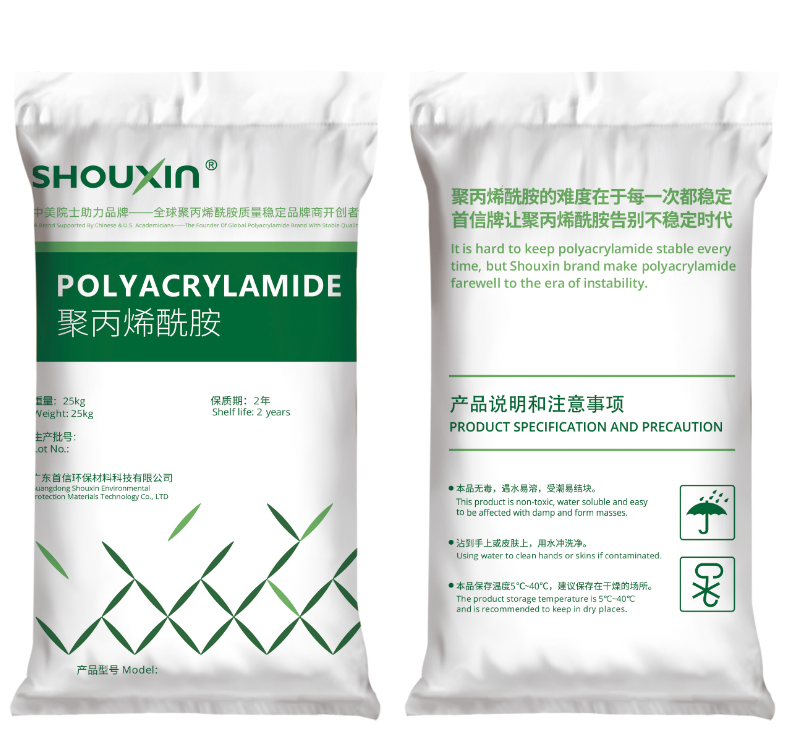
Why Choose Chinese Polyacrylamide Manufacturers for Cost-Effective Industrial Solutions
Shouxin Advanced Polymer Sciences provides high-performance polyacrylamide (PAM) solutions for water treatment, mining, pulp and paper, and industrial applications.