Top 10 Chinese Polyacrylamide Brands Worth Knowing: An Industry Overview
09,21,2026 17 views


11,17,20253From:
Recently, a technical exchange meeting for the micro water quality online automatic monitoring station developed by Shandong Tianhe Environmental Technology Co., Ltd. was held in Weifang. At the meeting, many industry professionals and customer friends arrived at the scene. After understanding, everyone highly affirmed and fully recognized the product. The micro water quality online automatic monitoring station is a high-tech equipment that integrates modern sensing, data acquisition, remote communication, and intelligent analysis technologies. It has the characteristics of miniaturization, intelligence, and efficiency, and is widely used for real-time monitoring and early warning of water quality. The basic five parameters, pH value, dissolved oxygen, conductivity, turbidity, and temperature, reflect the basic physical and chemical properties of water bodies. Chemical indicators include Chemical Oxygen Demand (COD), Ammonia Nitrogen (NH3-N), Total Phosphorus (TP), and Total Nitrogen (TN) to assess the degree of water pollution. Extend parameters such as chlorophyll, permanganate index, heavy metals (such as lead and mercury), flow rate, water level, etc. to meet specific scenario requirements. Wireless transmission is achieved through 4G, NB IoT or satellite communication, and real-time data is uploaded to the monitoring center or cloud platform, supporting remote viewing on mobile apps and computers. Automatic alarm: When the parameters exceed the standard, the system triggers SMS, APP or platform notifications to remind management personnel to handle it in a timely manner. Intelligent control supports remote parameter settings, device start stop, firmware upgrades, reducing on-site maintenance requirements. Data accumulation and analysis: Long term monitoring data supports trend analysis, providing scientific basis for pollution tracing and governance plan formulation. Combining GIS geographic information data display to achieve visual management of "one map of important information".
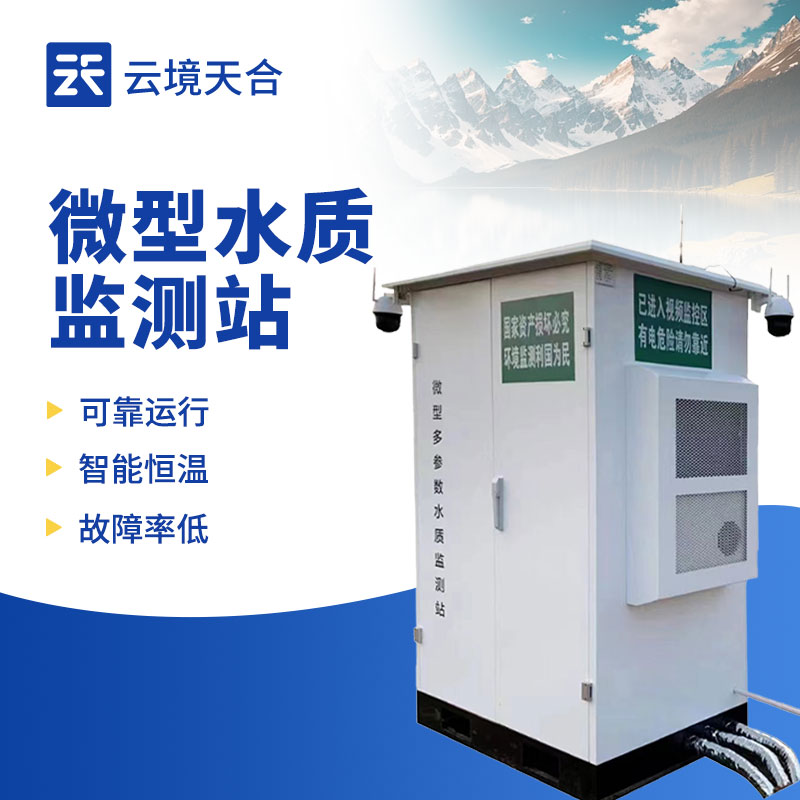
At the meeting, Manager Yu of Tianhe Environmental Technology Co., Ltd. introduced: "The technical features are high efficiency, automated detection process shortens time, key parameters (such as pH, dissolved oxygen) can be measured within a few minutes, and support 24-hour continuous monitoring. High precision sensors with precision (such as pH accuracy of ± 0.01 units) combined with automatic calibration function eliminate accidental errors and ensure data reliability. Integrated design of miniaturization and integration, small footprint (usually ≤ 1 square meter), easy installation, and no need for land acquisition for station construction. Modular design, monitoring elements and communication methods can be selected as needed, making it convenient for later debugging and upgrading. Low power consumption and long battery life adopt a low-power design, supporting solar or battery power supply, suitable for remote areas or long-term continuous monitoring needs. Strong environmental adaptability, high protection level of outdoor cabinets (such as IP65), with functions such as rain and lightning protection, power outage, water immersion, smoke detection, temperature and humidity alarm, etc., and can achieve all-weather unmanned operation.
Application scenarios
Real time monitoring of pH, dissolved oxygen and other indicators in rivers and lakes for water resource protection, to grasp the trend of water quality changes and prevent pollution incidents. Long term continuous monitoring of algae outbreaks, heavy metal pollution, and other issues in the water source area of the reservoir ensures the safety of drinking water. Marine monitoring of nearshore waters to monitor salinity, temperature, and dissolved oxygen, assess changes in marine ecological environment, and support sustainable development of aquaculture. Monitoring stations are installed at the inlet, outlet, and process nodes of water pollution control and sewage treatment plants to evaluate the treatment effect in real time and optimize process parameters. Supervise the discharge of industrial wastewater to ensure that the wastewater discharge of enterprises meets the standards, prevent illegal discharge and leakage, and provide evidence for environmental law enforcement. Monitoring the operation effect of domestic sewage treatment facilities in rural areas and improving the quality of rural water environment. Aquaculture fish ponds and shrimp ponds: Real time monitoring of dissolved oxygen, ammonia nitrogen and other indicators to guide the adjustment of aquaculture density, control of feeding amount, reduce the occurrence of diseases, and improve yield. Research and teaching provide long-term and continuous water quality data to support research on water pollution mechanisms and ecological restoration technologies. '
The exchange meeting was a complete success. We also welcome customers with such needs to come.
NextThe technical exchange meeting for tubular soil temperature and humidity sensors was held in Weifang

Top 10 Chinese Polyacrylamide Brands Worth Knowing: An Industry Overview
Why Choose Chinese Polyacrylamide Manufacturers for Cost-Effective Industrial Solutions
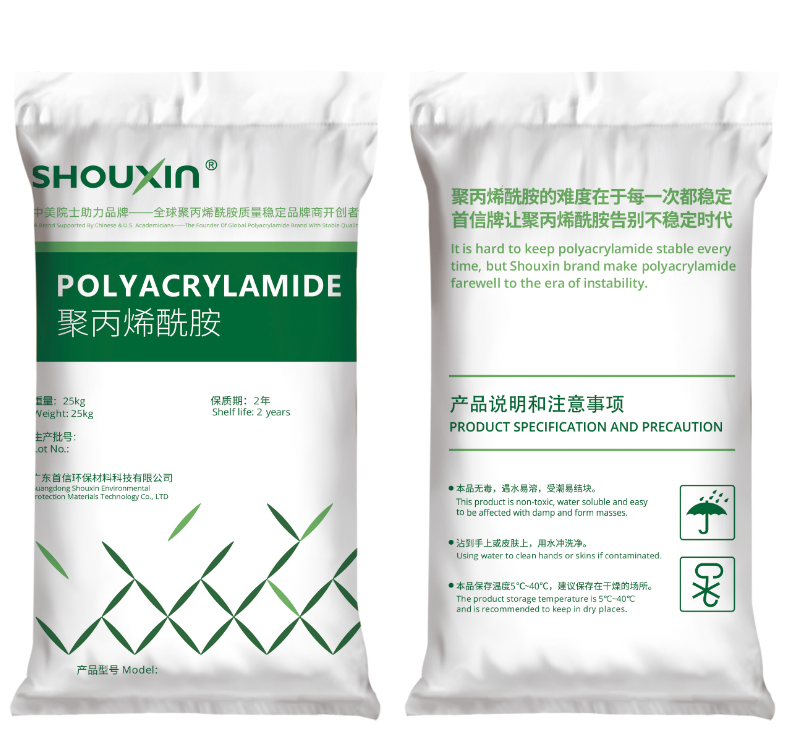
Shouxin Advanced Polymer Sciences provides high-performance polyacrylamide (PAM) solutions for water treatment, mining, pulp and paper, and industrial applications.