09,22,2026 19 views
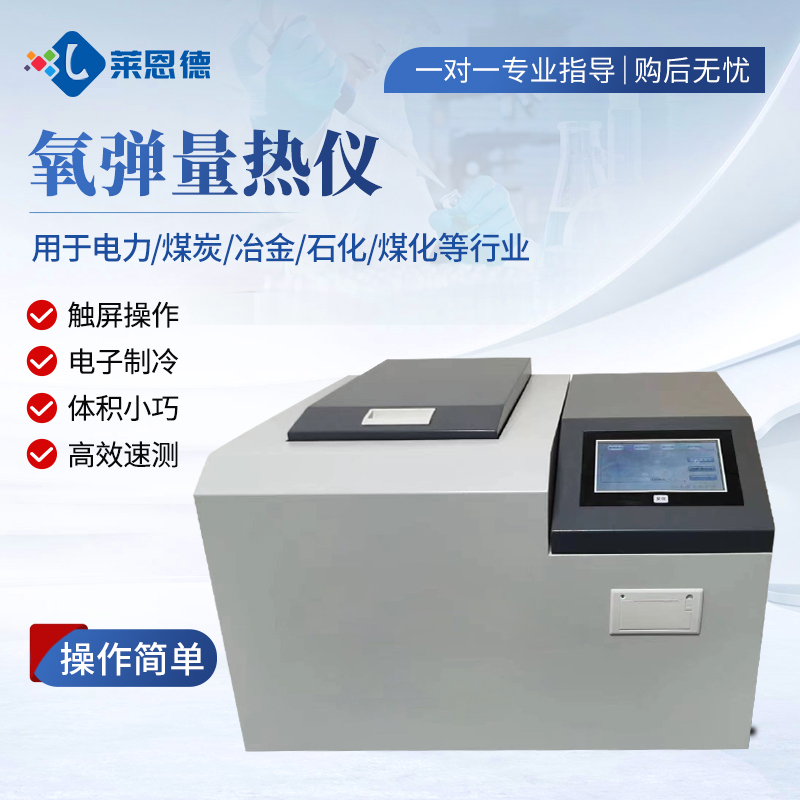
In the wave of energy transformation and industrial intelligence, the oxygen bomb calorimeter, as the core equipment for calorific value detection, is redefining the detection standards in energy, chemical, environmental protection and other fields with a temperature resolution of 0.0001 ℃ and a single sample detection efficiency of 15 minutes. Its technological breakthroughs are not only reflected in hardware upgrades, but also in the integration of AI algorithms and IoT technology to build an intelligent detection network covering the entire industry chain.
1、 Technical principle of oxygen bomb calorimeter: precise practice of energy conservation law
The core of an oxygen bomb calorimeter is based on the first law of thermodynamics. By measuring the heat released by the combustion of a sample in a closed oxygen bomb and combining it with the calibration value of the heat capacity of the calorimeter system, its calorific value (unit: joules/gram or calories/gram) is calculated. Taking coal testing as an example:
1. Sample processing: Grind the coal sample to below 0.2mm, weigh 1g and place it in a crucible, install the ignition wire and connect the electrode;
2. Oxygen bomb pressurization: Fill 3MPa pure oxygen into the pressure resistant stainless steel oxygen bomb to ensure combustion;
3. Combustion reaction: The electronic ignition system ignites the sample, and the center temperature instantly reaches 1200 ℃. Elements such as carbon, hydrogen, and sulfur are oxidized to CO ₂, H ₂ O, and SO3, respectively, and release the heat of sulfuric acid generation and nitric acid generation;
4. Heat transfer: The heat generated by combustion is conducted to the water environment inside the cylinder through the oxygen bomb wall, and the temperature rise is monitored in real-time by a precision platinum resistance temperature sensor (resolution 0.0001 ℃);
5. Data calculation: Based on the heat capacity value calibrated with benzoic acid standard substance, the system automatically calculates the heat generation of the cylinder, high-level heat generation, and low-level heat generation.
Technological breakthrough points:
Dynamic Calorimetry Algorithm: By real-time monitoring of pressure changes and temperature gradients during the combustion process, traditional static model errors are corrected to ensure repeatability error a ≤ 0.1%;
Intelligent temperature control system: using compressor refrigeration and heat pump technology to maintain a stable outer cylinder water temperature of ± 0.1K and eliminate environmental interference;
Explosion proof oxygen bomb design: stainless steel integrated molding process and automatic sealing bayonet technology, capable of withstanding a pressure test of 20MPa to ensure the safety of high-risk samples (such as waste lithium batteries) testing.
2、 Technological iteration of oxygen bomb calorimeter: a leap from automation to intelligence
1. Automation upgrade: process compression and efficiency leap
Traditional calorimeters require manual completion of 12 steps including weighing, loading, and oxygenation, with a single sample detection time exceeding 2 hours. The fully automatic oxygen bomb calorimeter compresses the process within 15 minutes by integrating a robotic arm, an automatic water injection and drainage system, and an electronic ignition device. For example:
Vertical fully automatic calorimeter: After being introduced by a coal enterprise in Shanxi, the number of inspection personnel decreased from 8 to 2, and the number of daily inspection measurements increased from 100 to 400;
High pressure reaction calorimeter: The Leinde LD-LR1 model can simulate conditions from -50 ℃ to 230 ℃ and 0 to 100 bar, synchronously measuring reaction heat and gas product composition, providing data support for fine chemical process design.
2. Intelligent empowerment: AI algorithms and cloud management
AI error correction: Equipped with a built-in machine learning model, it automatically analyzes interference factors such as stirring speed and oxygen bomb sealing. Ningde Times Research Institute uses this technology to determine the calorific value of lithium battery positive electrode materials, with a fluctuation error of less than 0.5%;
Cloud data platform: The Leiente instrument platform connects calorimeter instruments from over 500 enterprises nationwide, forming an industry calorific value database to provide reference for standard setting and process optimization;
Multi parameter joint testing: Models (such as LD-LR2) can simultaneously measure calorific value, sulfur content, moisture content, and ash content, increasing detection efficiency by 50%.
3. Green Design: Dual Optimization of Energy Conservation and Environmental Protection
Waste heat recovery system: equipped with heat pump technology, recovers and detects waste heat, and improves energy efficiency by 30%;
Biodegradable materials: The new generation of equipment casings use biodegradable composite materials to reduce carbon emissions throughout the entire lifecycle.
3、 The oxygen bomb calorimeterApplication scenario: A versatile tool that permeates multiple fields
1. Energy industry: combustion optimization and quality control
In the coal industry, after the deployment of explosion-proof calorimeter in a certain refinery of Sinopec, the frequency of oil calorific value detection has increased from once a day to once an hour, the product qualification rate has increased by 2%, and the annual quality loss has been reduced by more than 10 million yuan;
Power industry: A certain power group uses a fully automatic calorimeter to monitor the real-time calorific value of coal, optimize the boiler combustion ratio, and reduce heat loss by 1.5%.
2. Environmental protection field: waste disposal and carbon emission accounting
Garbage incineration: The Environmental College of a certain university uses a microcomputer fully automatic calorimeter to study the thermal characteristics of mixed combustion of household waste and sludge, providing theoretical basis for the optimization of incineration plant processes;
Carbon footprint tracking: By measuring the calorific value of industrial waste and combining it with the LCA (Life Cycle Assessment) model, carbon emissions can be accurately calculated to help companies achieve their "dual carbon" goals.
3. Research Frontiers: New Material Development and Safety Assessment
Lithium battery materials: The fully automatic calorimeter accurately measures the combustion heat and reaction heat of materials such as LiFePO ₄ and NCM, providing key data for optimizing battery cycle life;
Explosive detection: The enhanced oxygen bomb can withstand a pressure of 4MPa and is suitable for thermal stability testing of high-risk samples such as propellants.
4、 Market pattern of oxygen bomb calorimeter: China's global breakthrough in intelligent manufacturing
1. Localization substitution: Breakthrough technology in core components
Sensor accuracy: The platinum resistance temperature sensor developed by Leiente Technology has a resolution of 0.001 ℃, a lifespan of over 100000 times, and better performance than similar imported products;
Environmental adaptation: The RC series reaction calorimeter developed by Anyu Technology can simulate conditions from -50 ℃ to 230 ℃ and 0 to 100 bar.
2. Global market expansion: dual advantages of cost-effectiveness and service
Domestic market: In industries such as electricity, coal, and metallurgy, domestic equipment accounts for over 60%;
International market: the products are exported to more than 30 countries such as India, Indonesia, Türkiye, etc., reaching 12% in the world in 2025.
3. Policy driven: standard setting and financial support
National Plan: The 14th Five Year Plan for Science and Technology Innovation has listed "Research and Development of High Precision Calorimeters" as a key special project, with a cumulative investment of over 500 million yuan;
Standard system: Develop national standards such as "General Technical Conditions for Fully Automatic Calorimeters" to regulate market order and enhance international recognition.
5、 Future prospects of oxygen bomb calorimeter: dual drive of green and intelligent
1. Intelligent prediction: Using machine learning models to predict material thermal behavior trends, providing forward-looking guidance for process optimization;
2. Scenario expansion: Develop specialized equipment such as explosion-proof calorimeter and low-temperature calorimeter for mining to meet environmental detection needs;
3. IoT integration: Build an intelligent network of "device cloud terminal" to achieve real-time data sharing and collaborative analysis of global calorimeter.
The oxygen bomb calorimeter has evolved from a single detection tool to an "intelligent hub" that connects industrial production, scientific research innovation, and environmental governance. Its technological iteration and scenario expansion not only promote the improvement of industry efficiency and accuracy, but also provide key support for global energy transformation and sustainable development.