-
E-mail
386030259@qq.com
-
Phone
13673617114
-
Address
Zhenxing Road, Mazhai Industrial Park, Erqi District, Zhengzhou City
Product Categories
- Sludge treatment equipment
- Household waste pyrolysis equipment
- Biomass fuel molding machine
- Biomass pyrolysis equipment
- Industrial solid waste treatment equipment
- Sludge pyrolysis equipment
- Biomass gasification combustion machine
- Household waste treatment equipment
- Biomass pyrolysis burner
- Medical waste disposal equipment
- Industrial solid waste pyrolysis equipment
Zhengzhou Xindi Machinery Equipment Co., Ltd

Biomass gasification combustion machine
NegotiableUpdate on 04/15
- Model
- Nature of the Manufacturer
- Producers
- Product Category
- Place of Origin
Overview
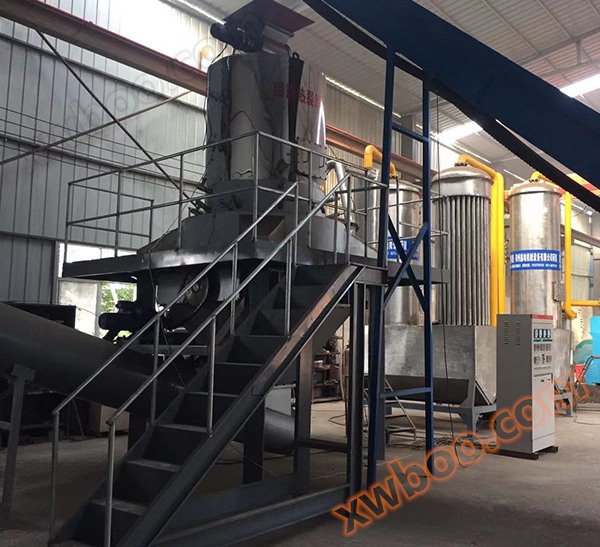
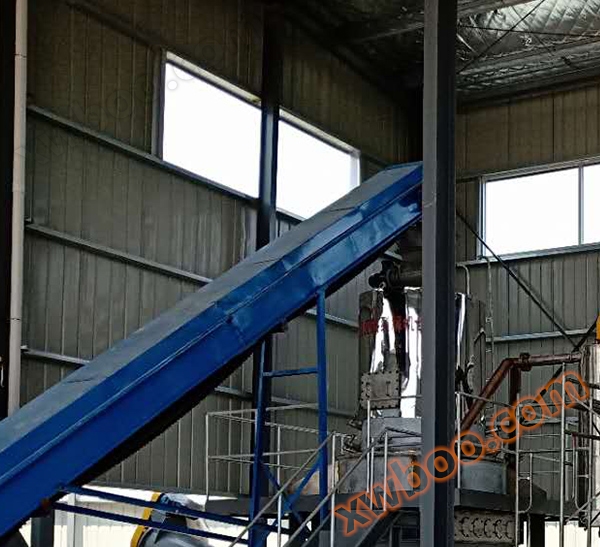
The biomass gasification combustion machine uses particles made by compressing waste materials such as straw, sawdust, and sawdust as fuel. The automatic feeding machine adds them to the silo and adopts intelligent numerical control. It has the advantages of high automation, clean and environmentally friendly structure, and high thermal efficiency, which not only saves fuel but also reduces costs. The combustion process has zero pollutants and meets environmental requirements
Product Details
Biomass gasification combustion machineThe pellets made by compressing waste materials such as straw, sawdust, and sawdust are used as fuel, and are automatically fed into the silo by an automatic feeding machine. The use of intelligent numerical control has the advantages of high operational automation, clean and environmentally friendly structure, and high thermal efficiency, which not only saves fuel but also reduces costs. The combustion process has zero pollution and meets environmental requirements. This product has excellent quality and can withstand high temperatures continuously, and is protected by water cooling. Widely applicable to industries such as boiler renovation, die-casting machines, incinerators, melting furnaces, food drying, baking paint, road construction, etc.

Any organic polymer, whether it is "meat", "vegetable" or "artificial", is synthesized from basic organic molecules, but their synthesis conditions and environments are not the same. According to the basic synthesis reaction laws of organic substances, there should be inverse conditions for synthesis reactions. If such inverse conditions can be effectively found, then organic macromolecules should be able to be degraded. Therefore, how to find the reverse conditions and establish a reverse engineering system is the key to achieving the ability to send organic matter back home (pyrolysis reduction) from sludge. After years of research and development, we have discovered the inverse condition and invented a reverse engineering system for generating this inverse condition. This reverse engineering system realizes the recycling of resource-based substances: retaining the resource value of sludge, returning it to its original physical state before it was formed, and then recycling and utilizing these resource-based substances. This should be a higher level of human integration and realization of material recycling.
Household waste belongs to biomass waste, and the volatile matter in household waste is particularly high, accounting for about 70% of the calorific value, while coal is relatively low, with anthracite accounting for less than 10%. Volatile matter is mainly composed of high calorific value hydrogen, oxygen, methane, and hydrocarbons. Coal mainly generates heat during combustion, while household waste releases a large amount of volatile matter at 225-500 ℃ during combustion. It is difficult to completely burn it with a single gas supply, so household waste is not suitable for direct combustion. The way to burn household waste is to use medium temperature and oxygen deficient pyrolysis to extract the volatile components from the waste and convert them into biomass combustible gas, which can be burned like natural gas. That is to say, household waste is a good raw material for producing combustible gases.
Compared with traditional pyrolysis of household waste, thermal cracking with low temperature and oxygen in household waste can produce combustible gases, but there is a qualitative difference.
Traditional household waste pyrolysis
Traditional household waste pyrolysis is high-temperature pyrolysis, which produces combustible gases and ash from waste under thermal conditions of partial carbon combustion and partial carbon reduction.
The traditional pyrolysis of household waste produces combustible gases mainly through the oxidation-reduction and cracking reactions of the waste raw materials. Oxidation reaction: It is a combustion reaction between a portion of carbon in garbage and air, generating a large amount of carbon dioxide and releasing heat at a temperature of up to 1000-1300 ℃. This heat provides a heat source for reduction and cracking reactions.
Reduction reaction: Carbon dioxide and residual carbon generated in the oxide layer undergo a reduction reaction with water vapor, producing carbon monoxide and hydrogen gas.
Cracking reaction: At a temperature of 225-500 ℃, combustible gases, carbon, tar, and water vapor are released.
The combustible gases produced by traditional household waste pyrolysis are carbon monoxide (15-20%), nitrogen (about 50%), and volatile gases (only 30-35%), so their calorific value is relatively low. The calorific value of combustible gas per cubic meter of waste is about 1000 kcal, and about 3 cubic meters of gas can be generated per kilogram of waste; Due to the complete consumption of charcoal, only residual ash remains (some municipal solid waste pyrolysis furnaces advertise that they also produce charcoal, but this is also because the slag discharge is too fast, and the charcoal is not completely burned out. If there is charcoal, it is not good charcoal). At present, the thermal decomposition performance of small traditional household waste in China is extremely unstable and cannot be widely applied, while the thermal decomposition of large traditional household waste has extremely unsafe factors and is trapped by ash, floating ash, and tar.
Principle of Thermal Cracking of Low Temperature and Oxygen in Household Waste
Thermal cracking of household waste with low or no oxygen content is the process of producing combustible gases, charcoal, wood vinegar, and tar from the waste under thermal conditions that isolate oxygen.
The process of producing combustible gases during the thermal cracking of municipal solid waste is only a part of the cracking reaction in the thermal cracking furnace. The carbon in the waste does not participate in the reaction, as long as it can provide a cracking reaction temperature of 225-600 ℃. The reaction mechanism is as follows: hemicellulose mainly precipitates volatile components at 225-350 ℃; Cellulose mainly releases volatile components at 325-375 ℃; Lignin releases volatile components at 250-570 ℃,
The combustible gas produced by the thermal cracking of household waste with low temperature and oxygen content is mainly volatile gas, so its calorific value is relatively high. The calorific value of combustible gas per cubic meter of garbage is about 2000 kcal, and about 1.5 cubic meters of combustible gas can be produced per kilogram of garbage; The ash content of charcoal is very low, and its calorific value is generally around 8000 kcal/kg. It has a wide range of uses and a high price; The quality of wood vinegar and tar is also good. A reasonable garbage pyrolysis furnace has stable performance and good safety.