-
E-mail
13901257022@126.com
-
Phone
18106760128,13296709520
-
Address
No. 460 Jinhai 1st Road, Wenzhou Economic and Technological Development Zone, Zhejiang Province
Product Categories
Zhejiang Xinlan Technology Co., Ltd

Coriolis mass flowmeter
NegotiableUpdate on 11/20
- Model
- Nature of the Manufacturer
- Producers
- Product Category
- Place of Origin
Overview
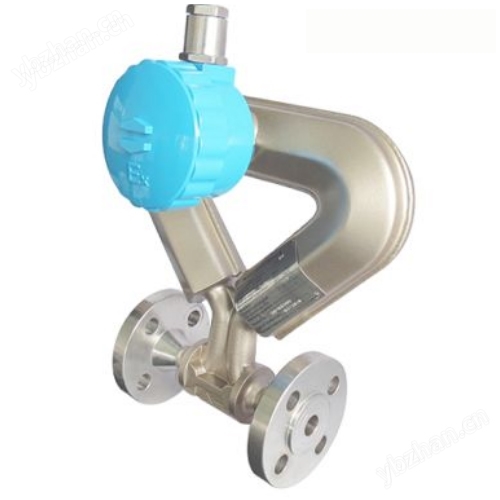
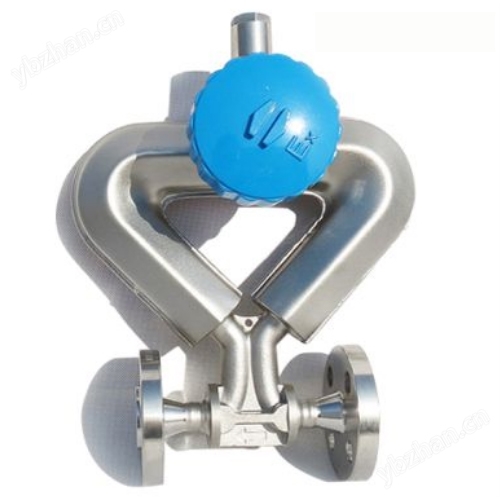
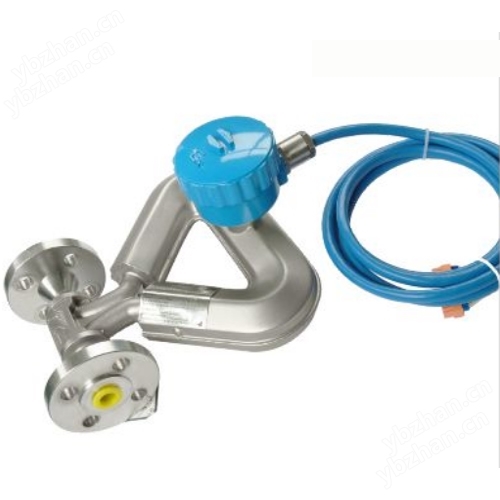
The CG-80 Coriolis mass flowmeter is a flowmeter that measures fluid mass based on the Coriolis force principle. The installation requirements are not high (generally there are no requirements for the upstream and downstream straight pipe sections); Characteristics of reliable operation and low maintenance rate.
Product Details
1Coriolis mass flowmeterProduct Features:
1. No movable parts, low maintenance rate
2. At the same time, it can provide multiple parameter measurements, such as mass flow rate, temperature, density, etc
3. Not affected by flow conditions, saving installation design and costs
4. Wide applicability, the same sensor can be used for measuring multiple media
2、 The main parameters are shown in the table below:
| Measurement accuracy | Level 0.2 |
| Temperature measurement accuracy | ±1℃ |
| Zui high flow Kg/min | 30000 |
| The biggest work pressure | 4MPa |
| fluid temperature | -200℃~200℃ |
| ambient temperature | -50℃~200℃ |
| Specification mm | 80 |
| Sensor interface | DN80 flange |
| Measurement tube material | 316L |
| Explosion-proof rating | Ex ibⅡBT3Gb |

3、 Measurement principle:
The CG-80 Coriolis mass flowmeter is manufactured based on the Coriolis force principle. Under the action of driving current, by applying a certain vibration frequency to the measuring tube, the magnetic field force and Coriolis force inside the tube will cause corresponding vibrations in the two measuring tubes (as shown in Figure 1-1). When the fluid is diverted to two parallel measuring tubes through the inlet flange splitter, the measuring tubes will undergo slight bending (phase difference) due to the Coriolis force, and the degree of bending of the pipeline is only related to the mass flow rate of the fluid flowing through it. By detecting the degree of curvature of the pipe wall, we can directly measure the mass flow rate.
4、 Working principle
The CG-80 Coriolis mass flowmeter measures fluid mass based on the Coriolis force phenomenon. When the measured medium flows through a pipeline at a velocity v and the pipeline rotates around an axis perpendicular to the direction of flow angular velocity, the force generated is called Coriolis force.
When the medium leaves the axis of rotation, it must accelerate to a higher and higher circumferential velocity (the required force is named Coriolis force after its discoverer), at which point the Coriolis force decreases in rotation; When the flow direction of the medium is in the same direction as the axis of rotation, the opposite effect occurs, and the Coriolis force amplifies the rotation.