-
E-mail
75046748@qq.com
-
Phone
17317784455
-
Address
Room 508, Lane 133, Shengang Avenue, Lingang New Area, China (Shanghai) Pilot Free Trade Zone
Product Categories
- Online monitoring system
- High purity germanium (HPGe) radiation detector
- Micro Detective HX Advanced Handheld Radiation Detection and Identification RIID
- Multi channel analyzer
- Delay, gates and delay generators, logic modules and linear gates
- Time amplitude converter and calibrator
- DataMaster Spectral File Format Converter
- Silicon charged particle radiation detector
Jiarui (Shanghai) Technology Co., Ltd

DSPEC Pro Digital Signal Processing Gamma Ray Spectrometer
NegotiableUpdate on 11/20
- Model
- Nature of the Manufacturer
- Producers
- Product Category
- Place of Origin
Overview
The versatility of DSPECPro, such as numerous functions and operating modes, means it is an ideal solution for various applications
Product Details

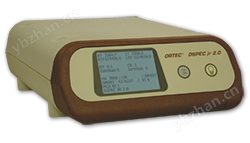
The versatility of DSPEC Pro, such as numerous features and operating modes, means it is an ideal solution for various applications. Its neat and compact packaging design further enhances its applicability.
The digital spectrometer itself is more stable than analog models, and since the introduction of the initial DSPEC, ORTEC has gained a good reputation for its stability related to temperature and counting rate.
-
data+
-
 DSPEC PRO brochure
- DSPEC PRO brochure (A4)
- DSPEC Pro Manual
-
-
More information+
Suitable for high-speed spectral applications
'No loss' or' Zero dead time '(ZDT)
The common method used to calculate counting loss at high rates is to extend the acquisition time. The basic assumption must be that the sample will not change during the extended period. But this assumption does not hold when encountering short half lives or non-stationary samples (such as flowing through pipelines). ORTEC has perfected lossless counting technology in the digital field. In this method, the spectrum itself is calibrated pulse by pulse, and the ZDT method also provides accurately calibrated spectra and correctly calculated statistical uncertainties.Increase processing capacity mode
The accuracy at high input count rates may be limited by the speed at which the spectrometer stores data in memory. This is called 'processing capacity limitation'. Pulse stacking means that beyond a certain point, the data rate stored in memory decreases as the input count rate further increases, thereby reducing the quality of the results. ORTEC has developed a new digital peak detection algorithm that eliminates some dead time related to the determination of pulse peak amplitude, thereby increasing processing capacity by 30%.Suitable for samples in motion
List Mode
For the case where the sample moves relative to the radiation detector, it is usually necessary to measure the activity curve as a function of time. Examples of such applications include aerial and land measurements, as well as entrance and exit monitoring. It is usually required that there is no "dead zone" associated with the "collect store clear restart" cycle. In the list operation mode, data is streamed directly to the computer one by one according to events. There are no related 'dead zones'. In DSPEC Pro, the timestamp of each event is accurate to 200 nanoseconds. By using programmer toolkits, data can be reprogrammed into spectra for offline analysis through ORTEC's various analysis software products or user developed code.Suitable for harsh environments and mechanical coolers
Low frequency noise suppressor (LFR)
The performance of HPGe radiation detectors is not very ideal in environments with mechanical vibrations. Trembling noise reduces energy resolution by adding low-frequency periodic electrical noise to the main signal. The electrical grounding circuit is also a source of low-frequency electrical noise. More and more HPGe detectors are using mechanical coolers to eliminate the demand for LN2, and more and more HPGe detectors are being taken out of laboratory environments.DSPEC Pro has a low-frequency noise suppressor (LFR) function, which can reduce the impact of such noise sources. Combined with the high-performance list mode, DSPEC Pro is an instrument for mobile vehicle measurement systems.
Used to improve the resolution of large or neutron damage detectors
Ballistic loss and charge capture correction
The trapezoidal digital filter in DSPEC Pro is the same as all other ORTEC DSPEC series products. It can adjust the filter to optimize the resolution performance of large HPGe radiation detectors, which typically exhibit low-energy tailing when there is ballistic loss. These large detectors are increasingly being used for low-level counting applications.The adjustment is mainly carried out automatically through the "optimization" function, and can also be monitored through InSIGHT digital oscilloscope mode.
DSPEC Pro provides more functions in the form of a charge capture corrector, which can be used to reduce peak attenuation of neutron damage radiation detectors. The damage of neutrons to the lattice produces a "capture" center, which can "retain" some of the charges generated by gamma ray interactions. This will result in low side trailing resembling ballistic losses, although the reasons may vary. The charge capture corrector is calibrated or 'trained' to enable it to add back pulse height losses on an event by event basis.
-
Specifications+
display
240 x 160Pixel backlightLCDProvide status information and instrumentsIDBias voltage information, active time, and real time.
number of concurrent connections
Supported by computers and softwareUSBLimitations of the hub. On each computerORTEC CONNECTIONSThe software supports at most127ThroughUSBConnected devices.
System gain setting
• Coarse gain adjustment:1、2、4、8、16or32.
•Fine tuning gain:0.45to1.
•The available gain setting range supports all types ofHPGeDetector. Specifically, using standardsOrtecThe preamplifier (gain to minimum gain) can achieve the following energy values:COAX
187 keVto12 MeV
LO-AX
94 keVto6 MeV
GLP/SLP
16.5 keVto1 MeV
Iglet-x
8 keVto500 keV
preamplifier
Computers can choose to use it as a resistor orTRPPre amplifier.
System conversion gain
The system conversion gain can be determined by software512to16kControl between channels.
Digital filter shaping time constant
•Rise time:0.8 Msto23 MsThe step size is0.2 Ms.
• flat roof:0.3to2.4The step size is0.1 Ms.Dead time correction
according toGedcke-HaleMethod for extended live time correction.
precision
The peak value of the reference area is at every second0to50,000Changes within the counting range<±3%.
Low frequency suppressor
set toONAt this time, low frequencies in the spectrum will be eliminated(<3 kHz)Input noise.
linear
•Integral nonlinearity: using mixed sources(55Fe @ 5.9keVto88Y @ 1836keV)Measurement, before the spectrum99.5%<±0.025%.
•Differential nonlinearity: before the range99%<±1%(Using)BNCPulse generator and ramp generator measurement).
•Digital stabilizer: Controlled by a computer to stabilize gain and.System temperature coefficient
•Gain:<50 ppm/°C.[usually<30 ppm/°C.]
•Offset:<Full range3 ppm/°CThe rise and fall times are12 MsThe flat top is1 Ms. (Similar to simulation)6 MsPlastic surgery. )System processing capacity
LFRWhen closed>100,000 cps.LFRWhen opened>34,000 cpsIt depends on the shaping parameters.
Pulse Stacking Discarder
Automatically set threshold.
Pulse to resolution
usually<500 ns.
Automatic zero adjustment
Controlled by computer. It can be set automatically or manually. passInSightOscilloscope mode for remote diagnosis. ()。
Digital Gated Baseline Restorer
Computer controlled recovery rate adjustment (high, low, and automatic). ().
LLD
Set up a digital low-level discriminator in the channel.LLDSet hard truncation of data in the following channels.
ULD
Set up a digital high-level discriminator in the channel.ULDSet hard truncation of data in the above channels.
Counting rate meter
MCAand/orPCThe counting rate is displayed on the screen.
battery
The built-in battery is used for memory backup and can save settings in case of power interruption.
Input and output terminalsdetector
Multi pin connector(13W3)It has the following functions:
•Pre amplifier power:1 W(+12 V,-12 V,+24 V,-24 V,2 GND).
•Amp InNormal amplifier input.
•TRPinhibition.
•SMART-1orDIMThe power supply.
•HVandSMART-1Detector controls(2Line).USB
forPCUniversal Serial Bus for communication.
power supply
Powered by wall mounted DC power supply.(+12 V dc <1.25 A).
Electrical and Mechanical
Change the sample output terminal
rear panelBNCConnectors, andTTLCompatible.
Sample ready input terminal
rear panelBNCConnector, accepts samples from the converterTTLLevel signal. The software can choose polarity.
size
8.1tallx 20.3widex 24.9Depth in centimeters(3.2tallx 8widex 9.8Depth inches
weight
1.0Kilogram(2.2Pound)
Working temperature range
0to50°C, includingLCDdisplay.
High voltage power supply for radiation detectorSMART-1
HVThe module and radiation detector themselves are integrated structures.
notSMART-1
For 'traditional' or 'non traditional'SMART-1”Detector,HVThe power supply adopts detector interface module or with2The rice cable“DIM”Form.DIMThere is a matching connector for traditional detector cable kits:9needleDType preamplifier power line, analog input, turn off input, bias output, and disable input.
notSMART-1The detector'sDIMSThe following high-voltage options can be equipped:
•DIM-POSGE: Used for any nonSMART-1positive biasHPGeDetector interface module of the detector.
•DIM-NEGGE: Used for any nonSMART-1Negative bias voltageHPGeDetector interface module of the detector.
•DIM-POSNAI: Used for any positive bias voltageNaIDetector interface module of the detector.
•DIM-296: With296typeScintiPacksocket/preamplifier/Detector interface module with bias power supply, designed for use with14needle10The level of photomultiplier tubeNaIDetector.Front panel display screen
In all cases, the bias voltage and turn off polarity are set from the computer.DSPEC ProCan monitor output voltage and shutdown status; Detector high voltage value (read-only); High voltage state of the detector (on)/Close (Read)/All of these are displayed on the front panelLCDUp there. In addition,SMART-1The detector provides additional "health status" information by monitoring the following functions: detector temperature (read-only); Detector overload status; Detector verification code (read)/Write); And the detector serial number (read-only).
-
Order Information+
model
description
DSPEC PRO
beltMAESTROSoftware, noneDIMofDSPEC Pro, used for equipping withSMART-1The detector.
DSPEC PRO-POSGE
beltMAESTROsoftware andDIM-POSGEofDSPEC Pro, used for nonSMART-1Detector.
DSPEC PRO-NEGGE
beltMAESTROsoftware andDIM-NEGGEofDSPEC Pro, used for nonSMART-1Detector.
DSPEC PRO-POSNA
beltMAESTROsoftware andDIM-POSNAIofDSPEC Pro, used forNaIDetector.
DSPEC PRO-296
beltMAESTROsoftware andDIM-296ofDSPEC Pro, used forNaIDetector.
DSPEC PRO-PKG-1
beltMAESTROandGammaVisionSoftware, noneDIMofDSPEC Pro, used for equipping withSMART-1The detector.
DSPEC PRO-PTK
beltMAESTROandA11Software, noneDIMofDSPEC Pro, used for equipping withSMART-1The detector.
otherDIM
DIM-POSGE
Used for any nonSMARTpositive biasHPGeDetector interface module of the detector
DIM-NEGGE
Used for any nonSMARTNegative bias voltageHPGeDetector interface module of the detector
DIM-POSNAI
Used for any positive bias voltageNaIDetector interface module of the detector
DIM-296
with296typeScintiPacksocket/preamplifier/Detector interface module with bias power supply, designed for use with14needle10The level of photomultiplier tubeNaIDetector.
Similar Product Recommend