-
E-mail
75046748@qq.com
-
Phone
17317784455
-
Address
Room 508, Lane 133, Shengang Avenue, Lingang New Area, China (Shanghai) Pilot Free Trade Zone
Product Categories
- Online monitoring system
- High purity germanium (HPGe) radiation detector
- Micro Detective HX Advanced Handheld Radiation Detection and Identification RIID
- Multi channel analyzer
- Delay, gates and delay generators, logic modules and linear gates
- Time amplitude converter and calibrator
- DataMaster Spectral File Format Converter
- Silicon charged particle radiation detector
Jiarui (Shanghai) Technology Co., Ltd
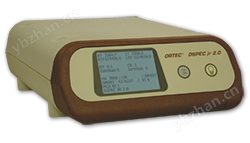
DSPEC jr 2.0 Digital Signal Processing Gamma Ray Spectrometer
NegotiableUpdate on 11/20
- Model
- Nature of the Manufacturer
- Producers
- Product Category
- Place of Origin
Overview
Innovative ZDT non-destructive counting correction
Product Details

- Innovative ZDT ™ Non destructive counting correction, including uncertainty related to ZDT spectra
- Using Low Frequency Noise Suppressor (LFR) technology to improve spectral quality
- Automation - Improve laboratory work efficiency through integrated sample changer interface controls
- Easy to set features include automatic zero, automatic baseline recovery, and "optimization" functionality
- Front panel displays detector status and "health status" information - SMART-1 ™ Intelligent HPGe support
- Easy to install, truly USB plug and play
- Excellent temperature and counting rate stability
- Each function can be controlled by a computer
- Support HPGe and NaI radiation detectors
-
data+
-
 DSPEC JR 2.0 brochure
- DSPEC JR 2.0 brochure (A4)
- DSPEC JR 2.0 手册
-
-
More information+
Zero Dead Time (ZDT) - Non Destructive Counting Correction
Is the counting rate changing too fast? Need to calculate uncertainty? ZDT is yours!ZDT is an alternative to traditional live time extension that can correct dead time. It is particularly suitable for applications where the counting rate significantly decreases during the acquisition period (such as neutron activation analysis), or for applications where activity surges during prolonged acquisition processes (such as thermal particle situations in stack monitoring).
A live time clock can extend the counting time of electronic devices to compensate for dead time. Non destructive counting methods, such as our ZDT, correct the actual count count count in the "lost" spectrum when processing other pulses in the system. The ZDT method uses ORTEC's highly accurate Gedcke Haile clock to determine how many events should be added during the "dead" time of electronic devices.
In ZDT mode, DSPEC jr 2.0 automatically stores corrected spectra and variance spectra. These two spectra can also be stored in the file structure of ORTEC SPC format for future comparison. Users can easily switch between calibrated and uncorrected spectra through simple menu commands in GammaVision and MAESTRO.
The ORTEC ZDT model includes uncertainty estimation algorithms, further improving our ZDT method. Other 'lossless counting' methods are unable to calculate the uncertainty associated with counting (added to this part of the spectrum), while the ZDT mode in DSPEC jr 2.0 can simultaneously generate corrected spectra and collect data uncertainty. For more information about ZDT, please refer to Application Note 56, "Non destructive Counting for Uncertainty Analysis Using ORTEC's Innovative Zero Dead Time Technique".
Low frequency noise suppressors and digital filters can improve the resolution of mechanical cooling systems!
LFR aims to eliminate chattering noise in the output signal of high-purity germanium detectors. What kind of results do you expect? If the resolution of your mechanical cooling system is low, LFR can significantly improve its resolution.Ballistic loss correction
By using ORTEC's digital signal processing DSPEC product line, there is no need to worry about ballistic losses. In larger HPGe detectors, the so-called ballistic depletion effect sometimes occurs. This usually leads to poor resolution, especially for high-energy peaks. In simulation systems, ballistic losses are usually corrected using gated integrator amplifiers or through resolution enhancer modules. However, in digital systems, simple adjustments to the flat top width of the digital filter are sufficient.Using the InSight mode in DSPEC jr 2.0, operators can adjust the flat top width (and tilt) and immediately see the effect of signal processing. In most cases, for very large detectors (such as the detector with an efficiency of 207% used in this example!), a flat top setting of 0.8 μ s is sufficient to restore excellent resolution.
Simple shaping parameter settings
DSPEC jr 2.0 can help you maintain control over digital systems. The rising time and flat top width adjustment function allows you to "fine tune" the performance of the spectrometer according to your application. Optimizing resolution and processing power has never been so simple!In DSPEC jr 2.0, in addition to the tilt parameter, there are 112 rise times (from 0.8 to 23 μ s, in increments of 0.2) and 22 flat top widths (from 0.3 to 2.4 μ s, in increments of 0.1), providing you with over 2000 parameter combinations.
Please rest assured. We still provide automatic "optimization" function in the control panel for you to choose the most suitable parameters! This means that with just a few clicks of the mouse, the resolution and processing capacity of the detector can be improved.
SMART-1 ™ Support quality data
ORTEC's SMART-1 detector is very intelligent. They monitor and store the "health status" of the detector (detector temperature, preamplifier power, bias over range, bias on/off status). The single inspection of DSPEC jr 2.0 will verify whether the detector is ready and ready for acquisition. During the collection process, the SMART-1 detector continuously monitors the State of Health (SOH) to ensure the integrity of the collected data. At the end of the collection, the SOH marker in the SMART-1 detector will be quickly checked, and then displayed whether there are any parameters deviating from the specification during the measurement period. This is crucial for environmental samples that require long-term counting and regulatory samples that require data integrity.Another major advantage is that the SMART-1 detector is pre-set with recommended bias values at the factory. You no longer need to check the manual or label on the detector to set the correct bias value. As long as DSPEC jr 2.0 is turned on, the SMART-1 detector will automatically detect the detector temperature, determine the correct high voltage bias, and turn it on.
Convenient single cable connection with the detector
The ORTEC DIM (Detector Interface Module) used in DSPEC jr 2.0 is connected to the detector using only one cable. DIM provides bias voltage close to the detector to carry only signals and low voltage power in the cable. The potential danger caused by long cables carrying high voltage has now been eliminated.Display important parameters
DSPEC jr 2.0 displays important system parameters on the front panel LCD screen. DSPEC jr 2.0 will display instrument ID, name, serial number, pre design condition, current active and real time, dead time percentage, input count rate, HV status and value, as well as the serial number of SMART-1 detector.petite
The footprint of DSPEC jr 2.0 is comparable to that of a desk calendar and can be directly placed on a desktop. Lightweight and sturdy multiple DSPEC jr 2.0 can be stacked together, with their shells interlocked, so you don't have to worry about sliding or tilting.Combine with existing MCBs at will
ORTEC Connections software supports connecting to any combination and number of USB devices on any computer. For example, two digiDART can be connected to the same PC using a USB hub along with two DSPEC jr 2.0. Any number of other ORTEC MCBs can be connected to the same system via network, printer ports, RS-232, or dual port memory.Add a sample changer
If you are planning to use an integrated sample changer to automate your process, DSPEC jr 2.0 can meet your needs due to its built-in sample changer interface and controls.... It's still easy to set up as usual!
DSPEC instruments are easy to set up and use. Adopting intelligent MCA control, there is no need for manual configuration or even a so-called wizard. You only need to install software (such as GammaVision or MAESTRO), and the software "knows" the control panel that needs to be displayed. The table format design of the panel logically grouped the available controls and functions on DSPEC jr 2.0.DSPEC jr 2.0 includes ORTEC's digital automatic pole zero circuit, digital automatic baseline recovery, and optimization functions, which can select flat top/tilt settings for detectors currently connected to DSPEC jr 2.0, making the setup and optimization of spectral measurement systems exceptionally simple.
Of course, one of the innovative features of our product is InSight ™, It is equipped with a built-in virtual digital oscilloscope. With the InSight feature, you can easily view the effects of changing the flat top width, baseline restoration settings, or checking the effectiveness of trajectory loss correction (see sidebar). No longer need a heavy and cumbersome external oscilloscope. No special software is required. Just open the control panel and activate InSight mode.
-
Specifications+
display
240 x 160Pixel backlightLCDProvide status information and instrumentsIDBias voltage information, active time, and real time.
number of concurrent connections
Supported by computers and softwareUSBLimitations of the hub. On each computerORTEC CONNECTIONSThe software supports at most127ThroughUSBConnected devices.
System gain setting
• Coarse gain adjustment:1、2、4、8、16or32.
•Fine tuning gain:0.45to1.
•The available gain setting range supports all types ofHPGeDetector. Specifically, using standardsOrtecThe preamplifier (gain to minimum gain) can achieve the following energy values:COAX
187 keVto12 MeV
LO-AX
94 keVto6 MeV
GLP/SLP
16.5 keVto1 MeV
Iglet-x
8 keVto500 keV
preamplifier
Computers can choose to use it as a resistor orTRPPre amplifier.
System conversion gain
The system conversion gain can be determined by software512to16kControl between channels.
Digital filter shaping time constant
•Rise time:0.8 Msto23 MsThe step size is0.2 Ms.
• flat roof:0.3to2.4The step size is0.1 Ms.Dead time correction
according toGedcke-HaleMethod for extended live time correction.
precision
The peak value of the reference area is at every second0to50,000Changes within the counting range<±3%.
Low frequency noise suppressor
set toONAt this time, low frequencies in the spectrum will be eliminated(<3 kHz)Input noise.
linear
•Integral nonlinearity: using mixed sources(55Fe @ 5.9keVto88Y @ 1836keV)Measurement, before the spectrum99.5%<±0.025%.
•Differential nonlinearity: before the range99%<±1%(Using)BNCPulse generator and ramp generator measurement).
•Digital stabilizer: Controlled by a computer to stabilize gain and.System temperature coefficient
•Gain:<50 ppm/°C.[usually<30 ppm/°C.]
•Offset:<Full range3 ppm/°CThe rise and fall times are12 MsThe flat top is1 Ms. (Similar to simulation)6 MsPlastic surgery. )System processing capacity
LFRWhen closed>100,000 cps.LFRWhen opened>34,000 cpsIt depends on the shaping parameters.
Pulse Stacking Discarder
Automatically set threshold.
Pulse to resolution
usually<500 ns.
Automatic zero adjustment
Controlled by computer. It can be set automatically or manually. passInSightOscilloscope mode for remote diagnosis. ()。
Digital Gated Baseline Restorer
Computer controlled recovery rate adjustment (high, low, and automatic). ().
LLD
Set up a digital low-level discriminator in the channel.LLDSet hard truncation of data in the following channels.
ULD
Set up a digital high-level discriminator in the channel.ULDSet hard truncation of data in the above channels.
Counting rate table
MCAand/orPCThe counting rate is displayed on the screen.
battery
The built-in battery is used for memory backup and can save settings in case of power interruption.
Input and output terminalsdetector
Multi pin connector(13W3)It has the following functions:
•Pre amplifier power:1 W(+12 V,-12 V,+24 V,-24 V,2 GND).
•Amp InNormal amplifier input.
•TRPinhibition.
•SMART-1orDIMThe power supply.
•HVandSMART-1Detector controls(2Line).USB
forPCUniversal Serial Bus for communication.
power supply
DC power supply.+12 V DC, <1.25 A. 115 V/60 Hz, 220 V/50 Hz.
Electrical and Mechanical
Sample signal output terminal
rear panelBNCConnectors, andTTLCompatible.
Sample ready input terminal
rear panelBNCConnector, accepts samples from the sample changerTTLLevel signal. The software can choose polarity.
size
8.1tallx 20.3widex 24.9Depth in centimeters(3.2tallx 8widex 9.8Depth inches
weight
1.0Kilogram(2.2Pound)
Working temperature range
0to50°C, includingLCDdisplay.
High voltage power supply for radiation detectorSMART-1
HVThe module and radiation detector themselves are integrated structures.
notSMART-1
For 'traditional' or 'non traditional'SMART-1”Detector,HVThe power supply adopts detector interface module or with2The rice cable“DIM”Form.DIMThere is a matching connector for traditional detector cable kits:9needleDType preamplifier power line, analog input, turn off input, bias output, and disable input.
notSMART-1The detector'sDIMSThe following high-voltage options can be equipped:
•DIM-POSGE: Used for any nonSMART-1positive biasHPGeDetector interface module of the detector.
•DIM-NEGGE: Used for any nonSMART-1Negative bias voltageHPGeDetector interface module of the detector.
•DIM-POSNAI: Used for any positive bias voltageNaIDetector interface module of the detector.
•DIM-296: With296typeScintiPacksocket/preamplifier/Detector interface module with bias power supply, designed for use with14needle10The level of photomultiplier tubeNaIDetector.Front panel display screen
In all cases, the bias voltage and turn off polarity are set from the computer.DSPEC jr 2.0Can monitor output voltage and shutdown status; Detector high voltage value (read-only); High voltage state of the detector (on)/Close (Read)/All of these are displayed on the front panelLCDUp there. In addition,SMART-1The detector provides additional "health status" information by monitoring the following functions: detector temperature (read-only); Detector overload status; Detector verification code (read)/Write); And the detector serial number (read-only).
-
Order Information+
model
description
DSPEC jr 2.0
beltMAESTROSoftware, noneDIMofDSPEC jr 2.0, used for equipping withSMART-1The detector.
DSPEC jr 2.0-POSGE
beltMAESTROsoftware andDIM-POSGEofDSPEC jr 2.0, used for nonSMART-1Detector.
DSPEC jr 2.0-NEGGE
beltMAESTROsoftware andDIM-NEGGEofDSPEC jr 2.0, used for nonSMART-1Detector.
DSPEC jr 2.0-POSNA
beltMAESTROsoftware andDIM-POSNAIofDSPEC jr 2.0, used forNaIDetector.
DSPEC jr 2.0-296
beltMAESTROsoftware andDIM-296ofDSPEC jr 2.0, used forNaIDetector.
otherDIM
DIM-POSGE
Used for any nonSMARTpositive biasHPGeDetector interface module of the detector
DIM-NEGGE
Used for any nonSMARTNegative bias voltageHPGeDetector interface module of the detector
DIM-POSNAI
Used for any positive bias voltageNaIDetector interface module of the detector
DIM-296
with296typeScintiPacksocket/preamplifier/Detector interface module with bias power supply, designed for use with14needle10The level of photomultiplier tubeNaIDetector.
Similar Product Recommend