-
E-mail
DeepSmart@163.com
-
Phone
15927117440
-
Address
No. 1515, 15th Floor, Lingyu Building, 107-2 Zhongbei Road, Wuchang District, Wuhan City, Hubei Province
Product Categories
- Service industry member consumption management software
- Non contact IC card, RF card, non-standard card, ID card
- Contact IC card reader, medical insurance card reader
- 915M Passive RFID Tag and Reader/Writer
- RFID intelligent anti-counterfeiting electronic ticket system
- Non contact RF IC card RFID reader/writer
- 2.4G active RFID tag device and system
- Security Monitoring, Inspection, and Patrol Series
- NFC tag and anti-counterfeiting authentication recognition system
Wuhan Shenrui Intelligent Technology Co., Ltd
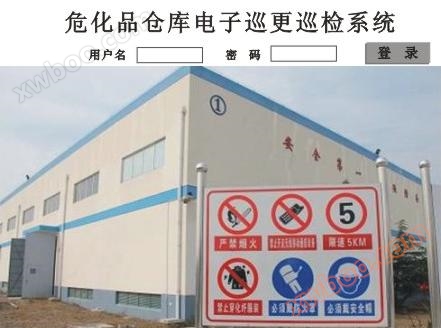
Electronic patrol inspection system for hazardous chemical warehouse
NegotiableUpdate on 04/12
- Model
- Nature of the Manufacturer
- Producers
- Product Category
- Place of Origin
Overview
Our electronic patrol inspection system is based on smartphone apps and mobile communication technology. Compared to traditional patrol systems based on patrol sticks, it has the following overwhelming advantages: (1) Due to the widespread use of smartphones among the general public, this greatly saves the procurement and after-sales maintenance costs of patrol sticks and other equipment
Product Details
Our electronic patrol inspection system is based on smartphone apps and mobile communication technology, and has the following overwhelming advantages compared to traditional patrol systems based on patrol sticks:
(1) Due to the widespread use of smartphones among the general public, this has greatly reduced the procurement and after-sales maintenance costs of equipment such as patrol sticks;
(2) The mobile app of the patrol system integrates the function of taking photos and collecting evidence. In case of abnormal events, equipment failures, and other situations on site, even if the patrol officer does not have the ability to judge the severity of the abnormal situation, they can immediately take photos and collect evidence through the app and automatically upload them to the background for experienced higher-level management personnel in the office to identify and judge;
(3) The mobile APP of the patrol system integrates positioning and trajectory tracking functions, enabling real-time visual queries of the actual route and current location of the patrol officers in the background, greatly facilitating the management and monitoring of the daily work of the patrol officers by higher-level management personnel;
(4) The mobile app of the patrol system enables the process of on-site inspection, photography and evidence collection, and abnormal reporting to be synchronized and submitted to the backend for processing in the first time. There is no need to wait until the patrol officer returns to the office to upload data through the traditional patrol stick or enter data on the computer while recalling, which greatly improves the efficiency and accuracy of the abnormal event processing process.
Based on the above reasons, our patrol and inspection system based on smartphone APP technology is a breakthrough subversion of traditional patrol systems.
1. Introduction to the Electronic Patrol Inspection System for Hazardous Chemical Warehouses
1.1 Operating principle
Following the principle of "PDCA cycle management", a monitoring method of "planning, implementation, inspection, and feedback" is implemented on the site of hazardous chemical warehouses.
Plan: Based on the grid and unit management mode of the hazardous chemical warehouse area, set up inspection plans, inspection routes, and inspection points for each area;
Implementation: Conduct inspections of the area according to the established inspection plan and route;
Inspection: If any abnormal issues are found, they will be reported through a unified platform. After the responsible departments receive the abnormal information and handle it, they will record the handling situation through the platform and provide feedback to the on-site property manager;
Feedback: Conduct on-site acceptance of the handling of abnormal issues and upload the acceptance results to the system (if the acceptance is qualified, the abnormal item will be closed; if the acceptance is unqualified, it will be returned to the responsible department for reprocessing), thus ultimately forming a closed-loop management.
System features: standardization, visualization, intelligence, and refinement.
1.2 Introduction to backend operating system
1.2.1 Account Management
Usually, a large number of login accounts are set up based on the actual situation of the on-site management department in the jurisdiction of the hazardous chemical warehouse, among which multiple accounts are exclusively used by the responsible supervisors of the security inspection department, business management department, and superiors, and have different high-level management permissions for the system; The majority of the remaining accounts are used by various on-site business personnel.
1.2.2 Plan Management
① Setting up teams: The system comes with 6 default team settings, and users can adjust the required shifts according to their needs;
② Setting up patrol points: Users can set up multiple patrol units (patrol routes) and a large number of on-site patrol points based on the network management mode of the hazardous chemical warehouse area;
③ Set inspection frequency: The system defaults to 3 inspections per shift, and users can adjust the inspection frequency at any time according to the actual situation.
1.2.3 Standardized Management
According to the actual situation of the hazardous chemical warehouse area, the on-site target management of the hazardous chemical warehouse area is divided into five categories and 96 sub items, including "infrastructure equipment", "weak current facilities and equipment", "public environmental sanitation", "safety services and fire protection", and "construction site management". Detailed on-site inspection standards are also developed for each project.
1.2.4 Customization/reengineering of management processes
Based on the actual situation of on-site management in the jurisdiction of hazardous chemical warehouses, the system process can be customized according to the safety related business characteristics of users, and the original safety related business process of users can be combined with new inspection requirements for process reengineering. Thus, the security inspection department, management department, and service providers will be organically connected, coordinated, unified, and efficiently managed.
Note:
① According to the established repair standards, if the security department discovers abnormal situations, they will directly report them to the responsible department for disposal through the front-end mobile system. The responsible department shall identify whether it falls within the scope of its own disposal, and if so, handle it quickly (or through downstream service providers); If not, proceed with a 'refund' and have the backend management platform reassign the task;
② After the handling of abnormal information is completed, the property manager conducts on-site inspection. If the inspection is qualified, the abnormal information will be closed normally; If the acceptance is not qualified, the system will return it to the responsible department for reprocessing;
③ Throughout the entire process of handling abnormal events, the management platform monitors the entire process, communicates, coordinates, and handles any issues with information flow in a timely manner to ensure that all abnormal information is handled promptly.
1.2.5 Layered Management
In the table of abnormal information, each abnormal information is managed in layers with different colors at different processing stages, making it clear to people at a glance. Among them, "red" represents projects to be collected, "blue" represents projects to be completed (processed), "yellow" represents projects to be closed (accepted), and "green" represents projects that have been closed; If the submitted information is not processed within 3 days, the system will automatically display a warning triangle.
1.2.6 Report Management
Through the backend patrol inspection system, the following 16 types of report functions can be implemented:
① Statistics of repair issues, divided into 7 types of reports: problem categories, problem sub items, processing cycles, processing results, east area problems, west area problems, and middle area problems;
② Process statistics, divided into 5 types of reports: pending issues, pending issues, pending closure issues, repetitive issues, and accepted issues;
③ Inspection statistics are divided into two types of reports: inspection point attendance and shift handover attendance;
④ Check and register the statistical report of external personnel;
⑤ Statistical report during work hours.
2. The electronic patrol inspection system for hazardous chemical warehouses mainly realizes the functions
With the establishment of on-site inspection teams in the hazardous chemical warehouse area and the implementation of electronic patrol inspection systems, the on-site management department of the hazardous chemical warehouse area will combine with the backend management platform to reshape and optimize the on-site management process, in order to ultimately achieve the goal of "process reengineering, information sharing, process monitoring, and result assessment", effectively improving resource utilization and work efficiency.
2.1 Implement a "dual drive wheel" control mode for on-site hazardous chemical warehouse jurisdiction
Implement a dual drive wheel management model of "backend management platform+on-site control" for hazardous chemical warehouse areas. Through on-site inspection and supervision, relevant data such as equipment and facility repair reports, key project supervision (including construction sites and pipeline gas, etc.), emergency event handling, VIP flight security, and comprehensive management of buildings are collected and input into the backend management platform using an electronic patrol inspection system for analysis, induction, and summary, forming useful reports for company leaders' decision-making reference.
2.2. Realize the sharing of on-site control information resources in the jurisdiction of hazardous chemical warehouses
Currently, the on-site management department of the hazardous chemical warehouse has set up electronic patrol and inspection backend operating systems for all business departments in the front area. Each department can log in to the system at any time to view the repair business related to their own department, as well as the on-site abnormal information summary table of the hazardous chemical warehouse management department (such as on-site unsafe information), and be informed of the on-site operation situation in a timely manner. At the same time, combined with the regular analysis of operational data reports by the backend management platform, the resource sharing of on-site control information in the hazardous chemical warehouse jurisdiction is ultimately achieved.
2.3. Realize uninterrupted process monitoring of information disposal
The abnormal information within the jurisdiction of the hazardous chemical warehouse is uploaded to the backend operation interface through the mobile APP of the electronic patrol inspection system by the patrol officer, and various business departments log in to the system for order processing. During this process, the backend management platform continuously monitors the entire process of handling abnormal information in real-time, especially for departments' "returns" and difficult abnormal information. It is necessary to coordinate and follow up on the handling in a timely manner to avoid delaying the disposal progress and affecting the overall operational efficiency of the hazardous chemical warehouse area.
2.4 Implement business assessment of various service providers
At present, there are many equipment and facility maintenance providers on site in the hazardous chemical warehouse area, responsible for the daily maintenance and upkeep of various equipment and facilities in the area. The on-site management department of the hazardous chemical warehouse area assesses the maintenance efforts of each service provider based on the handling of abnormal information in the electronic patrol inspection system and the operation data reports regularly analyzed by the backend management platform. This effectively supervises the timely maintenance of on-site equipment and facilities in the hazardous chemical warehouse area, ensuring the normal operation of the hazardous chemical warehouse area.
Similar Product Recommend