-
E-mail
sales@kingfar.cn
-
Phone
13021282218
-
Address
4th Floor, Building 16, Guanghua Entrepreneurship Park, No. 18 Qinghe Anningzhuang East Road, Haidian District, Beijing
Product Categories
- Vision and Eye Tracking
- ErgoSIM Building Lighting and Light Environment Simulation Laboratory
- Industry Solutions
- BCI Brain Computer Interface and Brain Computer Interaction
- FNIRS near-infrared brain functional imaging
- Telemetry based eye tracking
- High speed eye tracking
- Wearable Eye Tracking
- ErgoAI Intelligent Product Human Computer Interaction Evaluation Laboratory
- Cognitive and Brain Function Testing
Beijing Jinfa Technology Co., Ltd
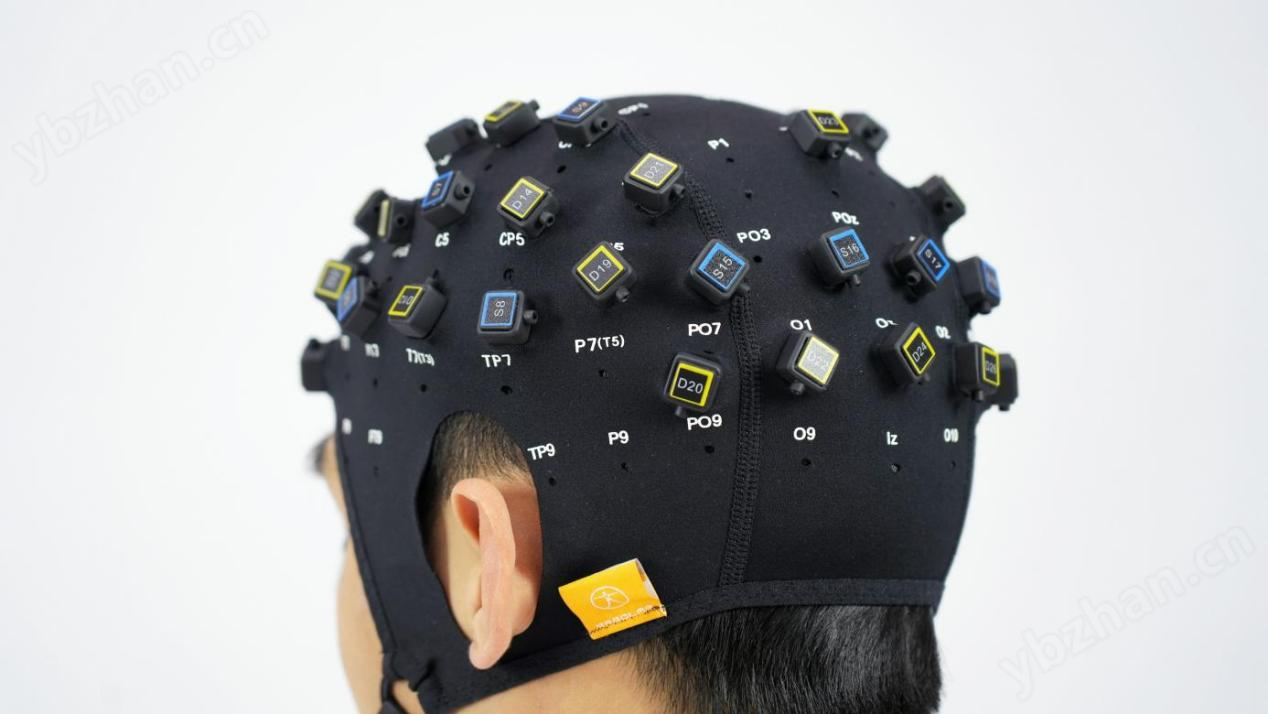
ErgoLAB fNIRS Wearable Near Infrared Brain Imaging System
NegotiableUpdate on 11/19
- Model
- Nature of the Manufacturer
- Producers
- Product Category
- Place of Origin
Overview
The wearable near-infrared brain imaging device, with lightweight design as its core, breaks through the limitations of traditional equipment on experimental scenes and achieves high-precision tracking of blood oxygen metabolism dynamics in the entire brain area. Its modular sensor array supports flexible layout, combined with wireless free activity mode and multimodal data synchronization capability, which can accurately capture cognitive, emotional, and motor related brain functional activities in natural behavioral states. Through intelligent edge computing and open source interface, the device not only supports real-time cerebral blood oxygen map generation and status analysis (such as fatigue and load)
Product Details
The ErgoLAB wearable near-infrared brain imaging device, with lightweight design as its core, breaks through the limitations of traditional equipment on experimental scenes and achieves high-precision tracking of blood oxygen metabolism dynamics in the entire brain region. Its modular sensor array supports flexible layout, combined with wireless free activity mode and multimodal data synchronization capability, which can accurately capture cognitive, emotional, and motor related brain functional activities in natural behavioral states. Through intelligent edge computing and open source interface, the device not only supports real-time cerebral blood oxygen map generation and state analysis (such as fatigue and load), but also can seamlessly dock with third-party algorithm platforms, provide one-stop solutions for neural mechanism exploration, rehabilitation evaluation and human-computer interaction optimization, and reshape the free boundary of brain science research.
Product Features:
Multi channel coverage
High precision signal acquisition
Multi modal data synchronization testing
Product Parameters:
measurement items |
Oxygenated hemoglobin in cerebral cortex area(HbO)、 Changes in deoxyhemoglobin (HbR) and total hemoglobin (HbT) concentrations, integrated with 9-axis posture data from ACC, GYRO, and COMP |
Technical Type |
Based on improvementBeer Lambert Law Near Infrared Continuous Waveform Spectral Analysis Technology |
Collection Method |
Time-sharing collection method |
Channel configuration |
32、48、64通道 |
spatial resolution |
≥10-40mm |
Application direction:
The system can be widely applied to scientific research in cognitive neuroscience, psychology, education science, human factors engineering, and other fields. It conducts research on inter brain cognitive synchronization from the aspects of perception, movement, information exchange, social decision-making, emotional communication, and emotion regulation in social interaction. It also applies research such as the relationship between multi person inter brain cognitive synchronization characteristics and behavioral performance in team tasks.
ErgoLAB multimodal synchronization scheme:
Overall Overview
The ErgoLAB human-machine environment synchronization platform adopts multimodal data clock synchronization technology, which can complete the complete experimental and evaluation process, including project management, experimental design, synchronous acquisition, signal processing, data analysis, human factors intelligence evaluation, and visual reporting. It supports group testing and big data management based on cloud architecture technology.
ErgoLAB human-computer environment synchronization platform adopts the method of subjective and objective combination of multimodal data synchronous acquisition and multi-dimensional verification. The types of data real-time synchronization include brain cognitive data (EEG/BCI EEG and brain computer interface edge computing equipment, fNIRS/BCI near-infrared brain imager), visual data (Eyetracker eye tracker and line of sight interaction system), physiological data (physiological instrument includes: GSR/EDA、EMG、ECG、EOG、HRV、RESP、TEMP/SKT、PPG、SpO2), Behavioral observation, body movements and facial expressions (basic emotions, emotional valence, micro expressions, etc.) data, biomechanical data (tension, grip, pinch, pressure, etc.), human-computer interaction data (including human-computer interface interaction behavior data and corresponding keyboard operations, mouse clicks, hovering, entering and exiting, etc.; mobile terminal human-computer interaction behavior data and corresponding finger trajectory operation behaviors such as clicking, zooming, sliding, etc.; VR terminal interface human-computer interaction behavior data and corresponding two handed operation picking, discarding, and controlling, etc.), Objective quantitative data such as VR space walking trajectory, as well as multi type spatiotemporal behavior trajectory data collection (including real-time synchronized collection of indoor, outdoor, and VR environment walking trajectory, driving trajectory, access status, visual interaction, emotional response, interactive operation behavior, etc.), and workspace and workspace environment data (temperature, humidity, noise, lighting, atmospheric pressure, humidity, dust, etc.); Provide complete data indicators for scientific research and application.
ErgoAI Human Factors Intelligence:
Introducing artificial intelligence technology into human factors engineering research tools deepens the human factors engineering industry, allowing experimental environments to be unrestricted by a single device or data indicator, and collecting and analyzing people from different typical industries or disciplines-Obtain human behavior data in the natural state during the interaction process between the machine and the environment system, and obtain data that is closer to the real human state. The platform also provides functional modules covering the whole process of scientific research and experiments, including project management, experimental design, synchronous collection, data analysis, comprehensive statistics and visual reports, and provides a one-stop human factors+artificial intelligence solution for multimodal human-machine environment research in combination with ErgoAI human factor intelligence edge computing platform. The multimodal synchronous human factor intelligence solution with ErgoLAB human-computer environment synchronization platform and ErgoAI human factor intelligence edge computing platform as the core has greatly improved the reliability and validity of the experimental results, while saving research manpower, material resources and time, and improving the overall efficiency of research and evaluation.
based onThe ErgoAI Human Factors Intelligence Multi temporal Algorithm Base and Human Factors Engineering Human Machine Environment Database are used to construct pre training models for specific personnel states. Combined with highly flexible training program management functions, users can efficiently build and optimize models in a unified environment. Thus achieving accurate real-time assessment and warning of personnel status, such as load status, stress status, fatigue status, situational awareness, and attention ability.
Kingfar Company Introduction:
Beijing Jinfa Technology Co., Ltd. is a specialized and innovative key small giant, an intellectual property advantage enterprise, a high-tech enterprise, and a technology-based small and medium-sized enterprise; It includes technology research and development institutions such as Beijing Human Factors Intelligent Engineering Technology Research Institute and Beijing Human Factors Engineering Design Institute, and jointly builds multiple technology innovation platforms including Beijing Enterprise Technology Center, Beijing Undergraduate University Industry Research Deep Collaborative Education Platform, Suzhou Key Laboratory, Hunan Engineering Laboratory, Shandong Engineering Research Center, etc.
Jinfa Technology has undertaken and participated in multiple national key research and development programs, high-quality development projects of the Ministry of Industry and Information Technology, and national natural science foundations. Serving as the National Beacon CommitteeThe deputy leader unit of XR Extended Reality Standardization Group and the joint leader unit of Key Technology Group of Metaverse Standardization Working Group of the Ministry of Industry and Information Technology; Jinfa Science and Technology has innovated and developed home-made, autonomous and controllable human factor engineering and human factor intelligent edge computing series of information and innovation products and technologies, and has won a number of provincial and ministerial science and technology awards; Jinfa Technology has hosted and participated in the compilation of more than 20 international/national, industry/group standards, won more than 30 provincial and ministerial level new technology and product certifications, applied for over 500 international and national registered trademarks globally, and obtained over 130 national software copyrights; We have served as a demonstration application for higher education institutions and equipment technology industry research institutes across the country, and have supported domestic researchers and technology workers to publish over 1000 academic papers in both Chinese and English.
Similar Product Recommend


