-
E-mail
HS87605838@163.com
- Phone
-
Address
Building 9, Global Financial City, No. 2 Wenchang East Road, Guangling District, Yangzhou City
Product Categories
Yangzhou Husu Electric Power Technology Co., Ltd

HS-106 Transformer Winding Deformation Tester
NegotiableUpdate on 03/07
- Model
- Nature of the Manufacturer
- Producers
- Product Category
- Place of Origin
Overview
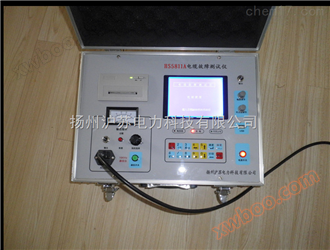
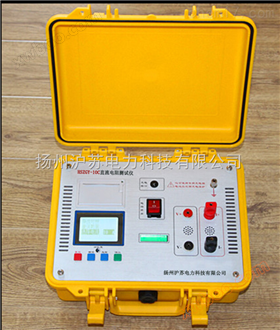
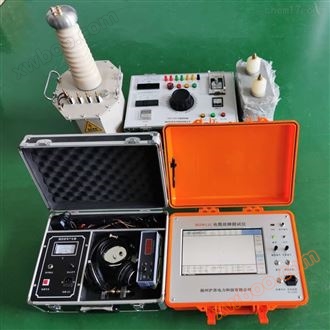
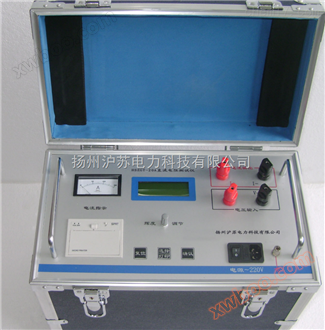
Brief description: The HS-106 transformer winding deformation tester uses the internal fault frequency response analysis (FRA) method, which is currently being developed and improved in developed countries, to accurately diagnose internal faults in transformers based on the measurement of characteristic parameters of the transformer winding.
Product Details
1HS-106 Transformer Winding Deformation TesterInstrument Overview
HS-106Transformer winding deformation testerBased on the measurement of the characteristic parameters of the internal winding of the transformer, the internal fault frequency response analysis (FRA) method, which is currently being developed and improved in developed countries around the world, can be used to make accurate judgments on internal faults of the transformer.
After the completion of transformer design and manufacturing, its coil and internal structure are determined. Therefore, for a multi winding transformer coil, if the voltage level is the same and the winding method is the same, the corresponding parameters (Ci, Li) for each coil should be determined. Therefore, the frequency domain characteristic response of each coil is also determined, and the corresponding frequency spectra between the three-phase coils have a certain comparability.
During the testing process, if a transformer experiences inter turn or inter phase short circuits, or if it collides during transportation, causing relative displacement of the coil, and if the coil deforms due to electromagnetic tension during short circuits and fault states during operation, the distribution parameters of the transformer winding will change. Furthermore, it affects and alters the original frequency domain characteristics of the transformer, such as amplitude changes in frequency response and harmonic frequency point shifts. And developed based on response analysis methodsTransformer winding testerThis is a novel non-destructive testing device for internal faults in transformers. It is suitable for internal structural fault detection of 63kV~500kV power transformers.
Transformer winding deformation testerIt is to quantify the response changes of the internal winding parameters of the transformer in different frequency domains, and determine the degree of change in the internal winding of the transformer based on the magnitude of the change, the amplitude and region of the frequency response change, and the trend of the frequency response change. Based on the measurement results, it is possible to determine whether the transformer has been severely damaged and whether major repairs are needed.
For transformers in operation, regardless of whether frequency domain feature maps have been saved in the past, the degree of fault can also be determined by comparing the differences in feature maps between faulty transformer coils. Of course, if a set of original winding characteristic maps of the transformer is saved, it is easier to provide more accurate and powerful basis for the operation status, post accident analysis, and maintenance of the transformer.
Transformer winding deformation testerThe high-precision measurement system is composed of a laptop and a microcontroller, with a compact structure, simple operation, and complete testing and analysis functions. It can be operated and used by referring to the user manual or after short-term training.
IIHS-106 Transformer Winding Deformation TesterMain technical features
1. The acquisition control adopts high-speed and highly integrated microprocessors.
2. USB interface for communication between laptop and instrument.
3. Wireless Bluetooth interface for communication between laptops and instruments.
4. The hardware movement adopts DDS digital high-speed sweep technology (USA), which can accurately diagnose faults such as winding distortion, bulging, displacement, tilting, inter turn short circuit deformation, and phase to phase contact short circuit through testing.
5. High speed dual channel 16 bit A/D sampling (on-site test changes the tap changer, and the waveform curve shows obvious changes).
6. Signal output amplitude software adjustment, maximum amplitude peak ± 10V.
7. The computer generates electronic documents (Word) of the detection results
8The instrument has dual measurement system functions of linear sweep frequency measurement and segmented sweep frequency measurement, and is compatible with the measurement modes of two current domestic technology schools
9. The amplitude frequency characteristics comply with the technical specifications of the national amplitude frequency characteristic tester. The horizontal axis (frequency) has two types of divisions: linear division and logarithmic division, so the printed curve can be a linear division curve or a logarithmic division curve, and users can choose according to their actual needs.
10. Automatic data analysis system for detection,
Compare the winding similarity between phases A, B, and C horizontally,
The analysis result is:
① Good sex
② Good sexual performance
③ Poor sexual performance
④ Poor sex,
Vertically compare A-A, B-B, C-C to retrieve the original data and compare the winding deformation with the current data in phase,
The analysis result is:
① Normal winding
② Mild deformation
③ Moderate deformation
④ Severe deformation
11. Automatically generate Word electronic documents for saving and printing.
12. This instrument fully meets the technical requirements of the power standard DL/T911-2004 "Frequency Response Analysis Method for Winding Deformation of Power Transformers".
IIIMain technical parameters
3.1 Scanning method:
1. Linear scanning distribution
Sweep frequency measurement range: (1kHz) - (2MHz), 2000 sweep frequency points, resolution of 0.5kHz and 1kHz
2. Segmented sweep frequency measurement distribution
Sweep frequency measurement range: (0.5kHz) - (1MHz), 2000 sweep frequency points;
(0.5kHz)-(10kHz)
(10kHz)-(100kHz)
(100kHz)-(500kHz)
(500kHz)-(1000kHz)
3.2 Other technical parameters:
1. Range of amplitude measurement: (-100dB) to (+20dB)
2. Amplitude measurement accuracy: 0.1dB
3. Scanning frequency accuracy: 0.01%
4. Signal input impedance: 1M Ω
5. Signal output impedance: 50 Ω
6. Same phase test repetition rate: 99.9%
7. Measuring instrument dimensions (length, width, height) 300X340X120 (mm)
8. Instrument aluminum alloy box size (length, width, height) 310X400X330 (mm)
9. Overall weight: 10Kg