-
E-mail
info@conasen.com
-
Phone
15810054208
-
Address
2-1702, New Era Building, No. 13 Beiyuan Road, Chaoyang District, Beijing
Product Categories
Beijing Kangansen Instrument Technology Co., Ltd
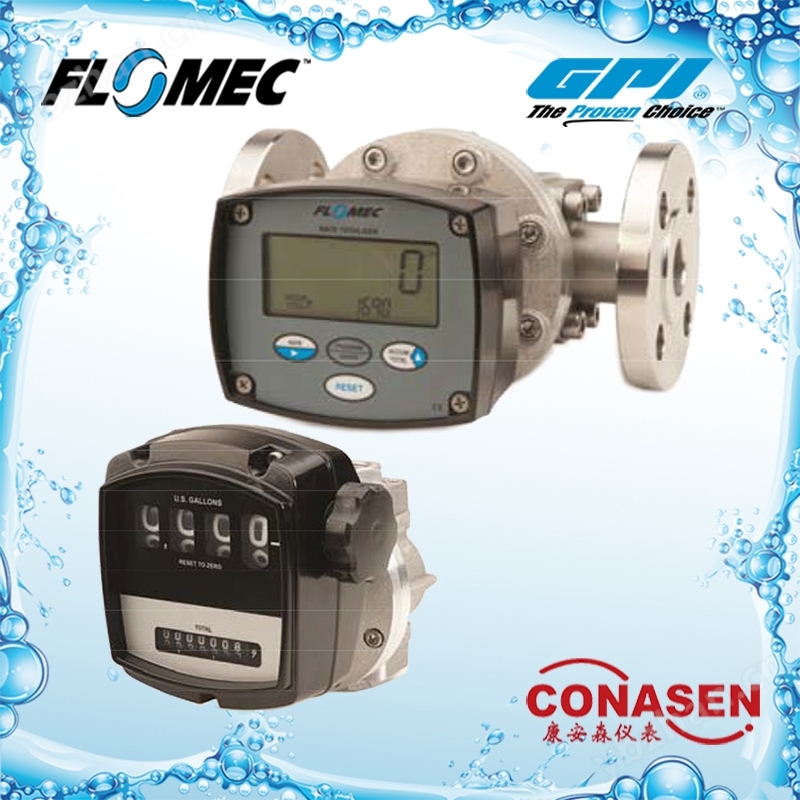

Imported elliptical gear flowmeter
NegotiableUpdate on 11/20
- Model
- Nature of the Manufacturer
- Producers
- Product Category
- Place of Origin
Overview
The core of the imported elliptical gear flowmeter lies in its dual elliptical gear meshing system. When fluid flows through the instrument, the pressure difference between the inlet and outlet drives a pair of interlocking elliptical gears to rotate synchronously. Every rotation of the gear can transport a fixed volume of fluid from the inlet to the outlet, forming a cycle of "volume division quantitative discharge". This mechanical method of dividing fluids ensures that the measurement results are independent of physical properties such as fluid viscosity and density, and only depend on the geometric dimensions and rotational frequency of the gears.
Product Details
In industrial fields such as petrochemicals, food processing, and pharmaceutical manufacturing, accurate measurement of liquid flow rate is the core link to ensure production safety and improve product quality. As a typical representative of volumetric flow meters, imported elliptical gear flow meters have become the "gold standard" for flow measurement of high viscosity media due to their mechanical structure and measurement principles. Its application scenarios cover the entire chain from crude oil pipelines to liquid proportioning systems, providing reliable metrological support for industrial production.
1、 Mechanical Intelligence: Precise Measurement of Gear Mesh
The core of the imported elliptical gear flowmeter lies in its dual elliptical gear meshing system. When fluid flows through the instrument, the pressure difference between the inlet and outlet drives a pair of interlocking elliptical gears to rotate synchronously. Every rotation of the gear can transport a fixed volume of fluid from the inlet to the outlet, forming a cycle of "volume division quantitative discharge". This mechanical method of dividing fluids ensures that the measurement results are independent of physical properties such as fluid viscosity and density, and only depend on the geometric dimensions and rotational frequency of the gears.
Taking the heavy oil transportation scenario as an example, traditional turbine flow meters are prone to impeller jamming due to high medium viscosity, while elliptical gear flow meters can stably measure fluids with a viscosity range of tens of thousands of centipedes through dynamic compensation of gear clearance. The measuring chamber adopts a special curved surface design to ensure that the gear maintains the minimum clearance with the housing during rotation, reducing leakage errors and mechanical wear.
2、 Versatile adaptation for industrial scenarios
Petrochemical industry
In the atmospheric and vacuum distillation unit of a refinery, the elliptical gear flowmeter can accurately measure the flow rate of high viscosity media such as crude oil and residual oil, providing data support for temperature control of the distillation tower. Its high temperature resistance characteristics (up to 300 ℃) can cope with the high temperature conditions of catalytic cracking units, while its explosion-proof structural design meets the safety requirements of flammable and explosive environments.
Food and pharmaceutical industry
In the chocolate slurry conveying system, the sanitary design of the flow meter (such as 316L stainless steel material, polished inner wall) can avoid metal ion precipitation and contamination of the product. For the scenario of drug formula ratio, its ± 0.2% measurement accuracy can ensure the stability of each batch of drug ingredients and meet GMP certification standards.
Environmental Protection and Energy Management
In sewage treatment plants, the pre filtration device at the front end of the flow meter can intercept suspended solids and prevent gear jamming. By linking with the SCADA system, real-time monitoring of chemical dosage can be achieved, optimizing the cost of sewage treatment. In the production of biodiesel, its bidirectional measurement function can simultaneously record the flow rates of raw material feed and finished product discharge, achieving material balance throughout the entire process.
3、 The Golden Rule of Installation and Maintenance
Rigid requirements for horizontal installation
The gear shaft must be kept horizontal, and the dial must be perpendicular to the ground. If installed at an angle, it will cause uneven friction between the gear and the housing, leading to measurement errors and mechanical wear. A certain chemical enterprise once neglected this requirement, resulting in the error of the flowmeter expanding to 3% after six months of use. After reinstallation, it was restored to within ± 0.5%.
Pre filtering protective barrier
In asphalt conveying pipelines, particles with a diameter of 0.2 millimeters or more can cause gear jamming. Therefore, it is necessary to install a Y-shaped filter at the front end of the flowmeter and regularly clean the filter screen. A certain refinery has extended the equipment maintenance cycle from once a month to once a quarter by installing self-cleaning filters.
Accurate control of fluid state
The flow meter must be filled with liquid for operation, as two-phase flow of gas and liquid can cause gear slippage. In the scene of unloading oil tank trucks at gas stations, it is necessary to install an air purifier in front of the flow meter to separate the air mixed in the oil. A logistics company has reduced the measurement error from 1.2% to 0.3% by adding a degassing device.
4、 Technological Evolution and Future Trends
With the advancement of Industry 4.0, imported elliptical gear flow meters are upgrading from a single measuring tool to intelligent sensors. The new generation product integrates a wireless communication module, which can upload real-time traffic data to the cloud platform and support AI algorithms for fault prediction. In the hydrogen energy industry, a cold resistant flow meter made of titanium alloy material has been developed to address the low-temperature characteristics of liquid hydrogen, which can operate stably in an environment of -253 ℃.
From deep-sea oil fields to space laboratories, elliptical gear flow meters continue to expand the boundaries of industrial measurement with the reliability of their mechanical structures. Its development process confirms a truth: in the field of flow measurement, mechanical designs based on classical physics principles are often more dynamic than complex systems that rely on electronic signals. When every rotation of gears carries the precise requirements of industrial production, this century old mechanical wisdom will still play an irreplaceable role in future industrial transformation.