-
E-mail
info@conasen.com
-
Phone
15810054208
-
Address
2-1702, New Era Building, No. 13 Beiyuan Road, Chaoyang District, Beijing
Product Categories
Beijing Kangansen Instrument Technology Co., Ltd
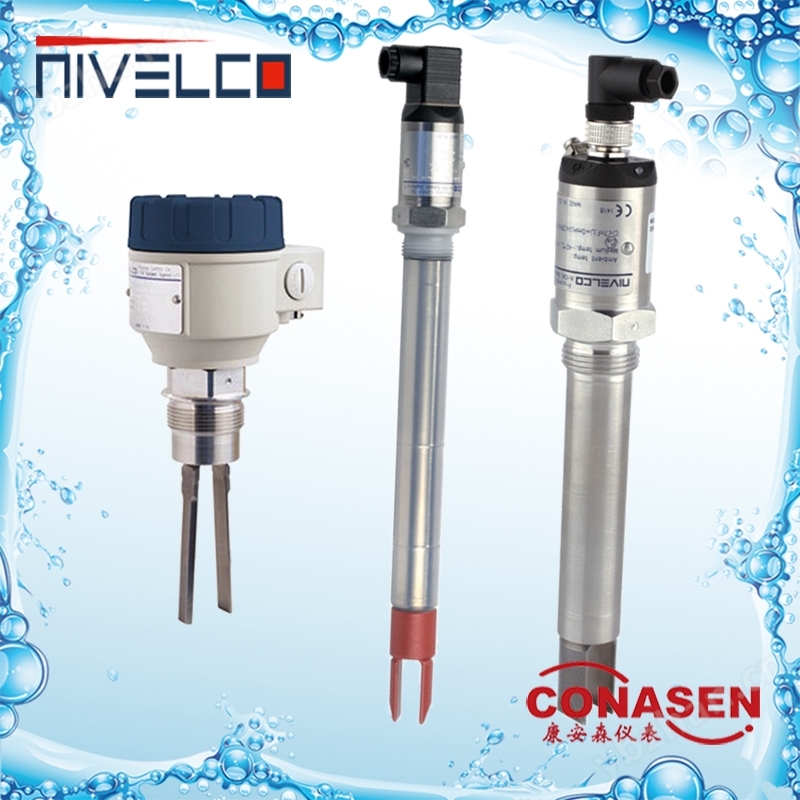


Imported tuning fork switch
NegotiableUpdate on 11/20
- Model
- Nature of the Manufacturer
- Producers
- Product Category
- Place of Origin
Overview
Imported tuning fork switch is a level detection device based on mechanical vibration principle, and its core technology lies in using piezoelectric effect to achieve accurate measurement. The core component of this switch is a tuning fork body made of a special alloy, usually designed with a double fork to improve measurement sensitivity and stability.
Product Details
As a precision level detection device, the tuning fork switch occupies an important position in the field of industrial automation due to its measurement principle and performance. Imported tuning fork switches are widely favored worldwide due to their craftsmanship and reliable quality. This article will comprehensively introduce the working principle, significant features, and application scenarios of tuning fork switches in different industries, helping readers to gain a deeper understanding of the technical advantages and practical value of this efficient measurement tool.
Basic working principle of imported tuning fork switch
The tuning fork switch is a level detection device based on the principle of mechanical vibration, and its core technology lies in using the piezoelectric effect to achieve accurate measurement. The core component of this switch is a tuning fork body made of a special alloy, usually designed with a double fork to improve measurement sensitivity and stability. During normal operation, the tuning fork body is driven by built-in piezoelectric ceramic components to continuously vibrate at a specific resonance frequency, typically between 100Hz and 1200Hz, depending on the design characteristics of different models.
When the tuning fork body is in a free vibration state in the air, the system will maintain a stable vibration frequency and amplitude. Once the measured medium (liquid or solid material) comes into contact with the vibrating tuning fork body, it will produce a significant damping effect on the vibration. This damping effect immediately changes the vibration characteristics of the tuning fork - reducing frequency and amplitude. The built-in precision electronic circuit can monitor these small vibration changes in real time. When the changes reach a preset threshold, the circuit will quickly convert this mechanical signal into an electrical signal output, thereby achieving level detection and control.
The characteristic of a tuning fork switch is its non-contact measurement method. Although tuning forks require contact with the measured medium to function, their detection principle does not rely on the conductivity, dielectric constant, or other electrical properties of the medium, but is purely based on changes in mechanical vibration characteristics. This feature enables the tuning fork switch to adapt to various complex working conditions, including conductive and non-conductive media, viscous liquids, foam prone materials, etc., showing strong environmental adaptability.
Significant technical features of imported tuning fork switches
The tuning fork switch is highly regarded in the field of industrial measurement, mainly due to its outstanding technical features. The first thing that stands out is its ability to adapt to the environment. Unlike other types of level switches, tuning fork switches are almost unaffected by the physical properties of the medium, and changes in conductivity, density, or dielectric constant do not interfere with their measurement accuracy. This makes it able to work stably under the harsh conditions of foam, vortex, bubble, adhesion and even strong external vibration, and becomes an ideal alternative to traditional float switches and capacitive switches.
Maintenance free design is another major advantage of tuning fork switches. Due to the absence of mechanical moving parts in the entire detection system and relying solely on electronic circuits for signal processing, there is almost no need for subsequent maintenance once installed and put into operation. This design not only reduces the cost of use, but also greatly improves the long-term reliability of the equipment. At the same time, the tuning fork switch has been precisely calibrated before leaving the factory, and users do not need to perform tedious on-site calibration after installation, truly realizing the convenient operation of 'installation and use', significantly saving installation and debugging time and human resources.
In terms of structural design, tuning fork switches exhibit a high degree of flexibility. To meet the needs of different application scenarios, there are various structural forms available in the market, including compact, suspended cable, and extended types. Compact design is particularly suitable for installation environments with limited space, such as narrow pipelines; The extended type can be used for measuring deep tanks or special containers. The tuning fork body itself has undergone special processing and has excellent wear resistance and corrosion resistance. Even if it works in a medium with severe scaling for a long time, its measurement performance will not be affected.
Safety and reliability are the core values of tuning fork switches. Many imported products use sturdy stainless steel shells (such as 316L material) that can withstand harsh environmental conditions. The working temperature range can cover -40 ° C to+250 ° C, and the process pressure can reach up to 64 bar. In addition, there are hygiene, anti-corrosion, and explosion-proof designs available for special industry needs, meeting the safety standards of demanding applications such as food, pharmaceuticals, and hazardous areas. This comprehensive safety guarantee makes tuning fork switches a trusted choice in industrial process control.
Diversified application areas of imported tuning fork switches
The tuning fork switch, with its technological advantages, has found extensive application space in many industrial fields. In terms of liquid level detection, it is particularly suitable for complex media that are difficult to cope with by traditional measurement methods, such as beer and beverages that are prone to foam, high viscosity syrup and glue, corrosive acid and alkali solutions, and industrial wastewater that is easy to crystallize or precipitate. The short fork body design of about 40mm makes it easy to install in pipelines for liquid flow monitoring, while the high-temperature resistant model can be used for detecting high-temperature liquids such as hot oil and molten salt.
In the field of solid material management, tuning fork switches also perform well. It can reliably detect the material level of various powders and granular solids, including but not limited to food raw materials such as flour, milk powder, coffee powder, chemical products such as plastic particles and rubber powder, as well as building materials such as cement and fly ash. The double fork design effectively prevents the 'rat hole' phenomenon (false detection caused by material forming holes around the single fork), while the adjustable sensitivity function allows it to adapt to densities as low as 0.4g/cm? Lightweight powder. These characteristics make tuning fork switches an ideal level monitoring device in silos, hoppers, and dust removal systems.
The petrochemical industry has special needs and dependencies on tuning fork switches. In this field, tuning fork switches are not only used for conventional tank level control, but also capable of performing special tasks such as detecting interfacial stratification between crude oil and water, monitoring safe liquid levels of flammable solvents, and process control in highly corrosive environments. The explosion-proof design enables it to operate safely in hazardous areas, while high-precision measurement ensures the stability and safety of the production process. In addition, tuning fork switches are often used as reliable devices for overflow protection or dry running protection in filtration systems, lubrication systems, and cooling systems.
The food and pharmaceutical industry has high hygiene requirements for measuring equipment, and specialized hygiene type tuning fork switches have emerged. These types of products usually use polished tuning forks and easy to clean connection designs, with no corners at the connection points during the process, meeting strict hygiene standards. They are widely used for liquid level control of hygiene sensitive media such as dairy products, soy sauce, and medicinal liquids, ensuring that the production process is both safe and efficient. At the same time, in modern production lines with increasing automation, intelligent tuning fork switches with digital interfaces (such as IO Link) can be seamlessly integrated into control systems, achieving higher levels of automation management and data exchange.
Selection and installation points of tuning fork switch
Proper selection and installation are key factors in ensuring optimal performance of tuning fork switches. In practical applications, users need to consider multiple factors comprehensively to choose the appropriate product model. The characteristics of the medium are the primary consideration factor - for highly corrosive liquids, fork bodies with anti-corrosion coatings should be selected; For viscous media, it is necessary to ensure that the vibration of the tuning fork can penetrate the material; Lightweight powder requires switches to have higher sensitivity. Process conditions are equally important, including operating temperature, pressure range, and the presence of vibration interference, all of which can affect the selection of the model.
The installation position and method have a direct impact on the performance of tuning fork switches. Vertical installation at the top is the most common method, suitable for detecting most liquid and solid materials; For special containers or situations with limited space, side installation or 90 ° angled design can also be used. In solid material detection, the installation position should avoid the direct impact area of the feed inlet to reduce the possibility of false alarms. At the same time, for environments that may generate strong mechanical vibrations, considering the use of a split design to separate and install the electronic unit from the sensing unit can effectively extend the service life of the equipment.
The intelligence level of modern tuning fork switches is increasing, providing users with more convenient functions. The adjustable delay function (usually 1-50 seconds adjustable) can effectively filter out temporary level fluctuations and avoid unnecessary misoperations; The fault self diagnosis function can monitor the status of the tuning fork in real time and promptly detect any damage or other abnormal situations in the fork body; The high and low position failure alarm mode ensures safe status indication even in the event of equipment failure. These intelligent features greatly enhance the practical value and reliability of tuning fork switches.
Environmental protection and energy efficiency requirements are driving the development of tuning fork switches towards a greener direction. Low power design not only reduces energy consumption, but also lowers the device's own heat generation, improving reliability in high-temperature environments. The application of recyclable materials and environmentally friendly processes makes products more environmentally friendly throughout their entire lifecycle. These innovations not only respond to the call for global sustainable development, but also bring lower total cost of ownership and better corporate social responsibility performance to users.