-
E-mail
386030259@qq.com
-
Phone
13673617114
-
Address
Zhenxing Road, Mazhai Industrial Park, Erqi District, Zhengzhou City
Product Categories
- Sludge treatment equipment
- Household waste pyrolysis equipment
- Biomass fuel molding machine
- Biomass pyrolysis equipment
- Industrial solid waste treatment equipment
- Sludge pyrolysis equipment
- Biomass gasification combustion machine
- Household waste treatment equipment
- Biomass pyrolysis burner
- Medical waste disposal equipment
- Industrial solid waste pyrolysis equipment
Zhengzhou Xindi Machinery Equipment Co., Ltd

Industrial solid waste treatment machine
NegotiableUpdate on 04/15
- Model
- Nature of the Manufacturer
- Producers
- Product Category
- Place of Origin
Overview
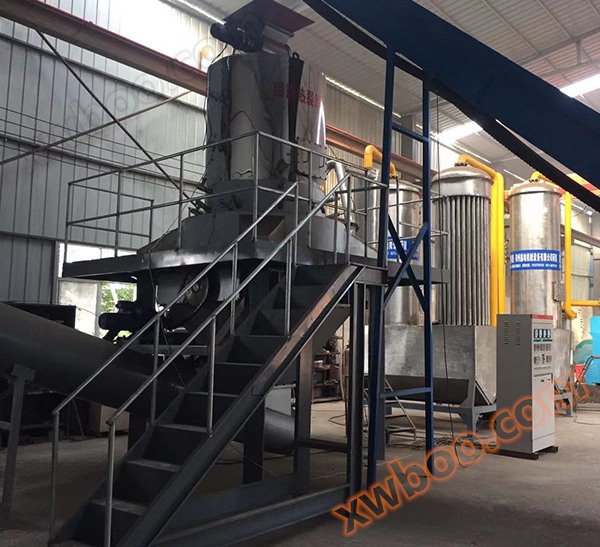
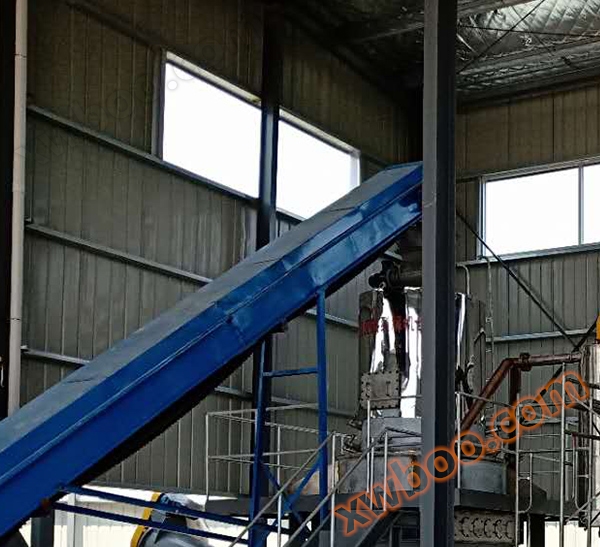
After crushing and air selection, the material is conveyed to the drying drum through a conveying system. During the conveying process inside the drying drum, the surface moisture of the material is carried away by the hot air flow, ensuring the dryness of the material. A dust removal system is installed at the back
Product Details
After crushing and air selection, the material is conveyed to the drying drum through a conveying system. During the conveying process inside the drying drum, the surface moisture of the material is carried away by the hot air flow, ensuring the dryness of the material. A dust removal system is installed at the back.

The theoretical formation of medium temperature cracking technology originates from the traditional Chinese natural and worldview of "Dao follows nature" and "nine nine returns to one". This technology does not use technological means to forcibly change the form of garbage (which inevitably leads to secondary pollution and the generation of new toxic substances), but creates conditions to guide substances to naturally undergo thermal decomposition and reduction according to their original properties (this way of harmoniously coexisting with nature allows garbage to return to its harmless physical state before forming garbage through harmless means). This technology excavates wisdom from ancient human civilization and creatively combines it with modern technological achievements for practical application, successfully achieving a breakthrough in cutting-edge science and technology.
Traditional household waste pyrolysis
Traditional household waste pyrolysis is high-temperature pyrolysis, which produces combustible gases and ash from waste under thermal conditions of partial carbon combustion and partial carbon reduction.
The traditional pyrolysis of household waste produces combustible gases mainly through the oxidation-reduction and cracking reactions of the waste raw materials. Oxidation reaction: It is a combustion reaction between a portion of carbon in garbage and air, generating a large amount of carbon dioxide and releasing heat at a temperature of up to 1000-1300 ℃. This heat provides a heat source for reduction and cracking reactions.
Reduction reaction: Carbon dioxide and residual carbon generated in the oxide layer undergo a reduction reaction with water vapor, producing carbon monoxide and hydrogen gas.
Cracking reaction: At a temperature of 225-500 ℃, combustible gases, carbon, tar, and water vapor are released.
The combustible gases produced by traditional household waste pyrolysis are carbon monoxide (15-20%), nitrogen (about 50%), and volatile gases (only 30-35%), so their calorific value is relatively low. The calorific value of combustible gas per cubic meter of waste is about 1000 kcal, and about 3 cubic meters of gas can be generated per kilogram of waste; Due to the complete consumption of charcoal, only residual ash remains (some municipal solid waste pyrolysis furnaces advertise that they also produce charcoal, but this is also because the slag discharge is too fast, and the charcoal is not completely burned out. If there is charcoal, it is not good charcoal). At present, the thermal decomposition performance of small traditional household waste in China is extremely unstable and cannot be widely applied, while the thermal decomposition of large traditional household waste has extremely unsafe factors and is trapped by ash, floating ash, and tar.
Principle of Thermal Cracking of Low Temperature and Oxygen in Household Waste
Thermal cracking of household waste with low or no oxygen content is the process of producing combustible gases, charcoal, wood vinegar, and tar from the waste under thermal conditions that isolate oxygen.
The process of producing combustible gases during the thermal cracking of municipal solid waste is only a part of the cracking reaction in the thermal cracking furnace. The carbon in the waste does not participate in the reaction, as long as it can provide a cracking reaction temperature of 225-600 ℃. The reaction mechanism is as follows: hemicellulose mainly precipitates volatile components at 225-350 ℃; Cellulose mainly releases volatile components at 325-375 ℃; Lignin releases volatile components at 250-570 ℃,
The combustible gas produced by the thermal cracking of household waste with low temperature and oxygen content is mainly volatile gas, so its calorific value is relatively high. The calorific value of combustible gas per cubic meter of garbage is about 2000 kcal, and about 1.5 cubic meters of combustible gas can be produced per kilogram of garbage; The ash content of charcoal is very low, and its calorific value is generally around 8000 kcal/kg. It has a wide range of uses and a high price; The quality of wood vinegar and tar is also good. A reasonable garbage pyrolysis furnace has stable performance and good safety.