-
E-mail
kefu@dm89.cn
-
Phone
177-6801-1972
-
Address
Room 203, Building 1, Gusu Credit Industry Park, 338 Shizi Street, Suzhou City
Product Categories
- Traceability plan for production process
- Implementation Plan of MES in Copper Smelting Company
- Electronic barcode warehouse management solution
- Workshop Production Equipment Management Plan
- Working hour management system
- MES solution for the electronics industry
- Suzhou Machinery MES Integrated Application Solution
- Barcode Traceability System Solution
- Production safety inspection system
- Industry standard solution for temperature and humidity monitoring system
- Electronic Kanban Scheme for Production Safety Operation Violations
- Suzhou Dianmai Clothing Production Management Software Solution
- Automatic winding machine winding monitoring system
- Workshop electronic signage solution
- Production traceability management system
- Software solution for equipment maintenance work orders in the wire and cable industry
- Production time management system
- MES Data Collection Plan
- On site warehouse positioning management system
- Material Management System
Suzhou Dianmai Software System Co., Ltd

Industry standard solution for temperature and humidity monitoring system
NegotiableUpdate on 10/01
- Model
- Nature of the Manufacturer
- Producers
- Product Category
- Place of Origin
Overview
The temperature and humidity monitoring system is of great significance in manufacturing enterprises. The system can monitor the temperature and humidity situation in real time during the production process, thereby ensuring the smooth progress of the production process and the quality and stability of the products
Product Details
The temperature and humidity monitoring system is of great significance in manufacturing enterprises. The system can monitor the temperature and humidity situation in real time during the production process, thereby ensuring the smooth progress of the production process and the quality and stability of the products. The temperature and humidity monitoring system mainly consists of sensors, data collectors, data processing units, and monitoring platforms.

Sensor selection
When choosing sensors, the following aspects need to be considered:
Accuracy: Temperature and humidity sensors need to have high precision in order to monitor real-time changes in temperature and humidity during the production process;
Stability: Temperature and humidity sensors need to have high stability in order to maintain stable output over a long period of time;
Anti interference: Temperature and humidity sensors need to have high anti-interference ability in order to work properly in complex production environments;
Based on the above considerations, the temperature and humidity monitoring system can use the following types of sensors:
Temperature and humidity sensors: used to monitor temperature and humidity, can choose to use thermocouples, thermocouples, contact sensors, etc;
Single temperature sensor: used for monitoring temperature, can choose to use thermocouples, thermistors, radiation temperature sensors, etc;
Single humidity sensor: used for monitoring humidity, can choose to use humidity sensors, capacitive sensors, etc;
Selection of Data Collectors
The data collector is the core part of the temperature and humidity monitoring system, responsible for transmitting the data collected by the sensors to the data processing unit. The data collector needs to have the following characteristics:
High speed acquisition: The temperature and humidity monitoring system requires real-time data acquisition, so the data collector needs to have high-speed acquisition capabilities;
Data stability: The data of the temperature and humidity monitoring system needs to be stable, so the data collector needs to have high stability;
Anti interference: The environment of the temperature and humidity monitoring system is complex, so the data collector needs to have high anti-interference ability;
Based on the above considerations, the temperature and humidity monitoring systems in the industry currently use the following types of data collectors:
Single chip microcontroller/industrial computer data collector: Using a microcontroller as the core of data acquisition, it can achieve high-speed, stable, and anti-interference data acquisition.
Embedded data collector: Using an embedded system as the core of data collection, it can achieve high-speed, stable, and anti-interference data collection.
Selection of data processing units
The data processing unit is a unit that converts the raw data collected by sensors into readable and analyzable data. The data processing unit needs to have the following characteristics:
Data conversion: converting raw data into readable and analyzable data, such as converting physical unit values;
Data storage: Store the converted data in a database for subsequent queries, statistics, summarization, and analysis;
Data analysis: Analyze the data stored in the database to discover abnormal temperature and humidity conditions, and provide corresponding solutions.
Based on the above considerations, the temperature and humidity monitoring system can adopt the following types of data processing units:
Single chip microcontroller data processing unit: using a microcontroller as the core of data processing, it can achieve functions such as data conversion, storage, and data analysis.
Embedded data processing unit: using an embedded system as the core of data processing, it can achieve functions such as data conversion, storage, and data analysis.
Selection of Monitoring Platform
The monitoring platform is a unit that combines various parts of the temperature and humidity monitoring system together for real-time monitoring and data analysis. The monitoring platform needs to have the following characteristics:
Real time monitoring: It can monitor the operation of the temperature and humidity system in real time and display temperature and humidity data in real time.
Data analysis: Able to analyze data stored in databases and provide corresponding solutions.
User Interface: Able to provide a user-friendly interface for users to view and analyze data.
Based on the above considerations, the temperature and humidity monitoring system can adopt the following types of monitoring platforms:
Web monitoring platform: Using Web technology as the underlying technology of the monitoring platform, it can achieve real-time monitoring and data analysis functions, and provide a user-friendly interface.
Mobile monitoring platform: Using mobile technology as the underlying technology of the monitoring platform, it can achieve real-time monitoring and data analysis functions, and provide a user-friendly interface.
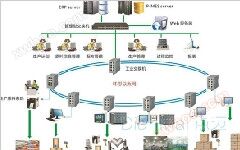
With the development of technology and the miniaturization of products, the boundaries between sensor selection, data collector selection, data processing unit selection, and monitoring platform selection are becoming increasingly blurred. For example, today's sensors are always equipped with communication functions, and do not need professional function collectors and data processing units. Suzhou Dianmai directly collects, processes and stores data through the collection function module of the monitoring platform using Ethernet or industrial Internet. In practical applications, it is necessary to select and adjust according to specific situations to ensure that the insulation and humidity monitoring system has good stability and scalability, thereby providing effective guarantees for the production processes of various industries.
Similar Product Recommend