-
E-mail
ebauto18@126.com
-
Phone
13361831617
-
Address
No. 1909 Cao'an Road, Jiading District, Shanghai
Product Categories
Shanghai Yibi Automation Instrument Co., Ltd
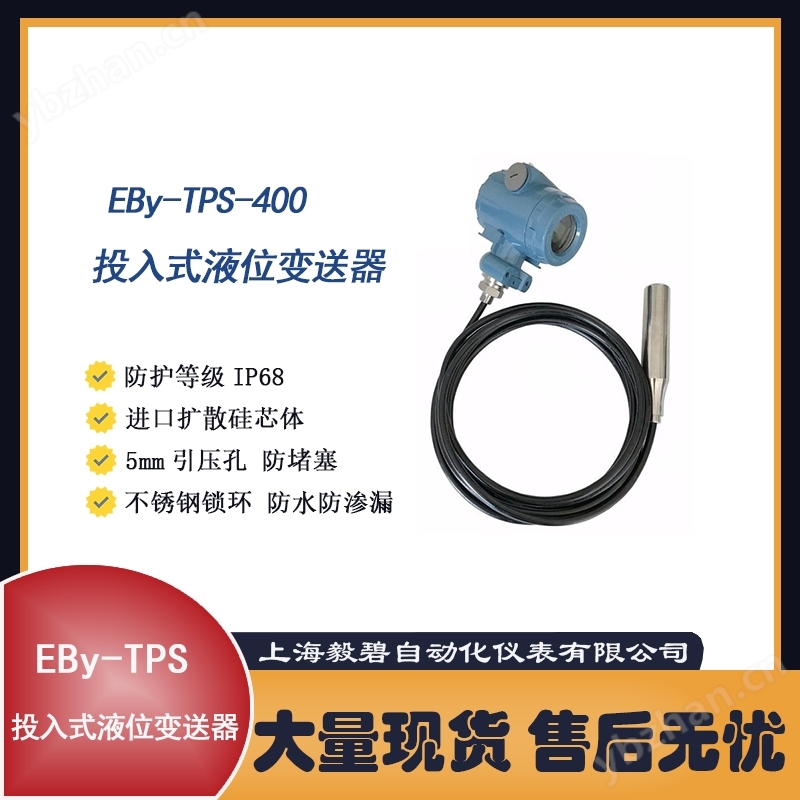
Input type liquid level transmitter
NegotiableUpdate on 11/19
- Model
- Nature of the Manufacturer
- Producers
- Product Category
- Place of Origin
Overview
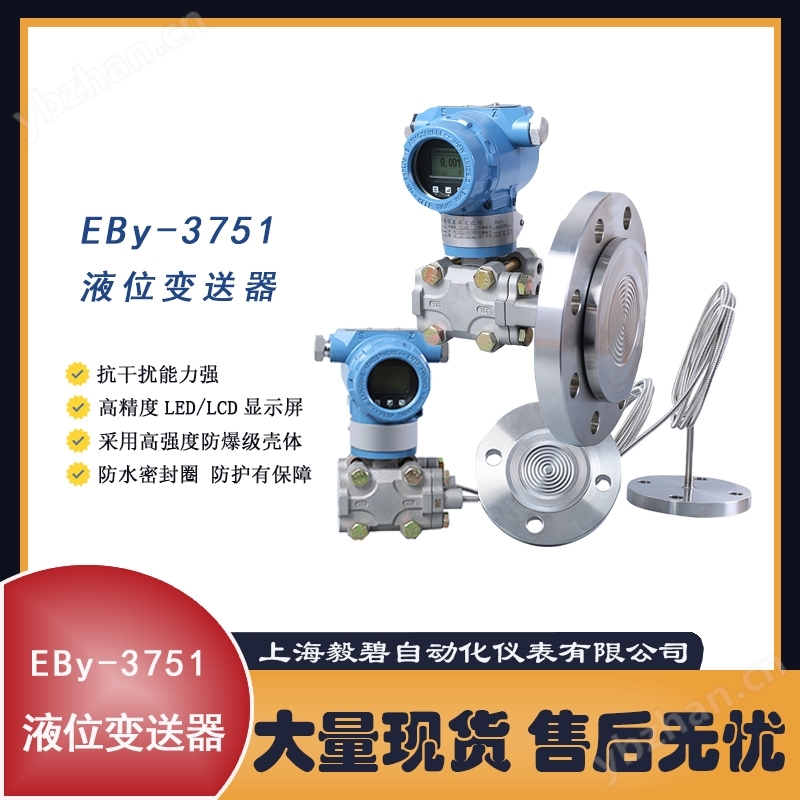
Input type liquid level transmitter is a commonly used instrument for measuring liquid level based on static pressure principle, widely used in liquid level monitoring and control of water tanks, water pools, storage tanks, water wells and other scenarios. With the advantages of easy installation, stable measurement, and adaptability to various media (such as clean water, sewage, oil), it is frequently used in industrial, municipal, agricultural and other fields.
Product Details
In the fields of industrial production, municipal water supply, agricultural irrigation, environmental monitoring, etc., precise monitoring and control of liquid level is a key link to ensure production safety, optimize resource utilization, and achieve efficient operation and maintenance.Input type liquid level transmitterAs a high-precision liquid level measurement device based on static pressure principle, it has become an important choice to replace traditional floating ball and ultrasonic level gauges due to its advantages of easy installation, stable measurement, and adaptability to multiple media. It is widely used in liquid level monitoring scenarios of various liquid containers (such as water tanks, storage tanks, water wells, sewage tanks), providing reliable data support for automation management in various industries.
1、 Product Definition and Working Principle: Precise Measurement Logic Driven by Static Pressure
Input type liquid level transmitterIt is an automated instrument that converts liquid static pressure signals into standard electrical signals. Its core function is to collect real-time liquid level data and convert it into transferable and controllable signals (such as 4-20mA current signals, RS485 digital signals), which are fed back to the control system or display terminal. Its working principle is based onLaw of hydrostatic pressure of liquidThe static pressure at a certain point inside a liquid is proportional to the density of the liquid and the height from that point to the liquid surface (liquid level). The formula can be expressed as "P=ρ gh" (where P is the static pressure, ρ is the liquid density, g is the gravitational acceleration, and h is the liquid level height).
From a structural perspective,Input type liquid level transmitterIt mainly consists of three parts:Pressure sensor probe、signal processing unitandCable (or flange)In practical applications, the probe part needs to be inserted into the measured liquid, directly in contact with the liquid and feel the static pressure; Pressure sensors (mainly diffusion silicon sensors) convert static pressure signals into weak electrical signals; The signal processing unit amplifies, filters, and compensates for temperature on the electrical signal to eliminate the influence of environmental factors (such as temperature changes) on measurement accuracy, and finally outputs a standard signal; Cables are responsible for transmitting signals and supplying power, and some models are also equipped with anti-corrosion and anti-interference protective jackets to adapt to complex working conditions.
Compared with traditional liquid level measurement equipment,Input type liquid level transmitterWithout relying on external auxiliary equipment (such as the mechanical transmission of the floating ball and the reflected signal of the ultrasonic wave), the measurement is realized directly through the hydrostatic pressure, and is not affected by factors such as the fluctuation of the liquid surface, foam, impurities, etc. The measurement stability and reliability are significantly improved.
2、 Core technological advantage: Performance highlights that adapt to multiple scenarios
Input type liquid level transmitterThe reason why it stands out among many liquid level measurement devices is due to its outstanding performance in accuracy, adaptability, and installation convenience, which can be summarized as the following five advantages:
1. High measurement accuracy and strong environmental adaptability
Thanks to *'s pressure sensor and signal processing technology,Input type liquid level transmitterThe measurement accuracy can reach ± 0.1% FS (full range), which can meet the needs of high-precision monitoring scenarios such as chemical tank level control and food processing raw material tank level management. At the same time, the device has a comprehensive temperature compensation function (usually within the range of -20 ℃ -80 ℃), which can eliminate the impact of temperature changes on liquid density and sensor performance; Some models also support custom settings for medium density, adapting to liquids of different densities such as water, oil, and acid-base solutions, further improving measurement accuracy.
2. Simple and durable structure, low maintenance cost
Input type liquid level transmitterThe probe adopts an integrated sealing design, with no mechanical moving parts (such as gears and impellers), avoiding the risk of wear, jamming and other faults. The service life can reach 5-8 years. The probe material is often made of corrosion-resistant and high-temperature resistant materials, such as 316L stainless steel (suitable for neutral and mildly corrosive liquids), Hastelloy alloy (suitable for strongly corrosive liquids such as hydrochloric acid and sulfuric acid), PTFE (polytetrafluoroethylene, suitable for strong acid-base and high-temperature liquids), which can adapt to complex working conditions from room temperature water to high temperature (up to 200 ℃) and strongly corrosive liquids, reducing daily maintenance frequency. In addition, some products are equipped with detachable probes, which can be cleaned or replaced without dismantling the entire equipment, greatly reducing maintenance difficulty and costs.
3. Flexible installation method, adaptable to various containers
The device supports multiple installation methods and can be flexibly selected based on container type and installation space:
Cable hanging typeHanging the probe on the top of the container through a cable is suitable for scenarios such as large water tanks and wells without fixed installation interfaces. During installation, there is no need to modify the container, only the cable needs to be fixed, making construction convenient;
Flange installation typeConnected through the interface between the flange and the top or side of the container, suitable for high-pressure and high sealing requirements scenarios (such as chemical high-pressure storage tanks), ensuring the sealing performance between the equipment and the container and avoiding liquid leakage;
Threaded installation typeDirectly screw into the reserved installation hole of the container through the threaded interface, suitable for small storage tanks and pipeline containers, with fast installation speed and good sealing performance.
Whether it is a small water tank with a diameter of less than 10cm or a deep well with a depth exceeding 100 meters,Input type liquid level transmitterAll can be customized with cable lengths (up to several hundred meters) and installation accessories to meet different scene requirements.
4. Strong anti-interference ability and stable signal transmission
In industrial sites, factors such as electromagnetic interference and cable loss can easily cause signal distortion, affecting the reliability of measurement data.Input type liquid level transmitterSolving this problem through multiple anti-interference designs: the signal processing unit adopts shielding technology to reduce the impact of external electromagnetic signals (such as interference generated by motors and frequency converters) on the internal circuit; Select specialized cables with shielding layers to reduce losses and interference during signal transmission; Some digital products (RS485 interface) support industrial communication protocols such as Modbus and HART, which can achieve distortion free transmission over long distances (up to 1000 meters) and meet the liquid level monitoring needs of large factories, long-distance pipelines, and other scenarios.
5. Rich functional expansion and adaptation to intelligent systems
With the development of industrial automation and IoT technology,Input type liquid level transmitterThe functions are constantly expanding and can be deeply integrated with intelligent systems. For example, some models haveOn site display functionEquipped with an LCD display screen, it can directly view real-time liquid level, temperature, fault codes and other information without the need to connect external terminals; supportalarm functionWhen the liquid level exceeds the preset upper or lower limit (such as when the water tank is full or the storage tank is low), the equipment can output an alarm signal (such as a relay switch signal), trigger an audible and visual alarm or automatic control (such as starting the water pump or closing the valve); Some IoT models also support wireless communication (such as LoRa, NB IoT), which can upload data to cloud platforms for remote monitoring, data storage, trend analysis, and provide data support for intelligent management of enterprises.
3、 Industry Application Scenarios: Comprehensive Coverage from Industrial Production to Livelihood Areas
Input type liquid level transmitterIts excellent performance makes it play a key role in multiple industries. The following is a specific introduction to typical application scenarios:
1. Industrial production field: Ensuring production safety and efficiency
In industrial production, the stable control of liquid level is directly related to the continuity and safety of the production process. For example, in the chemical industry,Input type liquid level transmitterCan be used to monitor the liquid level of reaction vessels and solvent storage tanks, provide real-time feedback on the remaining amount of raw materials, and avoid equipment idling due to low liquid level or leakage caused by high liquid level; In the petrochemical industry, equipment can be used for liquid level measurement of oil tanks and crude oil storage tanks. Due to the use of corrosion-resistant materials (such as 316L stainless steel), it can adapt to the high viscosity and slight corrosiveness of crude oil, ensuring stable measurement; In the power industry, equipment can monitor the liquid level of boiler feedwater tanks and condensers, adjust the feedwater volume in conjunction with control systems, ensure safe operation of boilers, and avoid dry burning or full water accidents.
2. Municipal and livelihood sectors: supporting infrastructure operation and maintenance
In the field of municipal administration and people's livelihood,Input type liquid level transmitterIt is a key equipment to ensure the stable operation of water supply and drainage systems. In terms of municipal water supply, the equipment can be used for liquid level monitoring of clean water tanks and secondary water supply tanks in water plants, real-time monitoring of water supply reserves, and dynamic adjustment of water supply pump operation based on water consumption to avoid water resource waste; In terms of drainage and sewage treatment, the equipment can monitor the liquid level of the regulating tank and sedimentation tank in the sewage treatment plant. When the liquid level is too high, the lifting pump will be automatically started to transport the sewage to the treatment unit to prevent sewage overflow; In residential areas, the equipment can be used for liquid level monitoring of fire water tanks and domestic water tanks, and can be used in conjunction with the property management system to achieve automatic water replenishment, ensuring sufficient fire water supply and stable domestic water supply.
3. Agriculture and Water Conservancy: Optimizing Resource Utilization
In the fields of agriculture and water conservancy,Input type liquid level transmitterAssist in the efficient utilization and scientific management of water resources. In terms of agricultural irrigation, equipment can be used for monitoring the liquid level of irrigation ponds and reservoirs. Based on the liquid level data, the adequacy of water volume can be determined, and the irrigation time and intensity can be adjusted according to crop water demand to avoid excessive irrigation or water shortage; In terms of water monitoring, the equipment can be used for water level monitoring of rivers, lakes, and wells, providing real-time water level data for hydrological stations, assisting in flood prevention warning (such as issuing warning signals when the water level is too high), and groundwater protection (such as monitoring changes in water level in wells to prevent overexploitation); In terms of aquaculture, the equipment can monitor the water level of the breeding pool, cooperate with aerators and water exchange systems, maintain a stable breeding environment, and improve the survival rate of aquaculture.
4. Environmental Protection and New Energy Sector: Supporting Green Development
In the field of environmental protection and new energy,Input type liquid level transmitterProvide data support for pollutant treatment and clean energy production. In the field of environmental protection, equipment can be used to monitor the liquid levels of sewage tanks and sludge concentration tanks in sewage treatment plants, ensuring that the sewage treatment process proceeds in sequence. At the same time, the liquid level of the leachate collection tank can be monitored to prevent leachate leakage and soil pollution; In the field of new energy, equipment can be used for monitoring the liquid level of electrolyte storage tanks in the production process of lithium batteries. Due to its anti-corrosion and high-precision design, it can adapt to the strong corrosiveness and high-precision control requirements of electrolytes, ensuring the quality of lithium battery production; In photovoltaic sand control and wind solar complementary projects, the equipment can monitor the liquid level of the reservoir, provide water volume data for the cooling system of the power generation equipment and the irrigation of surrounding vegetation, and achieve the coordinated development of ecological protection and energy production.
4、 Selection and installation maintenance suggestions: Ensure long-term stable operation of the equipment
1. Key parameters for selection
in the selectionInput type liquid level transmitterWhen selecting, it is necessary to focus on the following parameters based on actual working conditions to avoid measurement errors or equipment damage caused by improper selection:
measurement rangeDetermine the range based on the maximum depth of the container. It is recommended to choose a model with a range ratio (the ratio of the maximum measured value to the minimum measured value) greater than the actual range of liquid level changes, ensuring that the liquid level is between 20% -80% of the range and improving measurement accuracy;
medium characteristicsClarify the density, corrosiveness, temperature, and viscosity of the tested liquid, select the appropriate probe material (such as Hastelloy alloy for highly corrosive liquids and heat-resistant stainless steel for high-temperature liquids) and sealing method (such as welding sealing for high-temperature scenarios);
Accuracy and Signal TypeSelect the accuracy level according to the scenario requirements (such as selecting ± 0.5% FS for general monitoring and ± 0.1% FS for high-precision control), and the signal type needs to match the existing control system (such as analog signal 4-20mA adapted to traditional PLC, digital signal RS485 adapted to intelligent system);
Installation environmentIf it is an explosion-proof scenario (such as oil storage tanks, chemical workshops), a model with explosion-proof certification (such as Ex d IIB T4 Ga) should be selected; If it is an outdoor scene, it is necessary to choose a model with waterproof and dustproof functions (protection level IP68 or above) to prevent rainwater and dust from entering the interior of the equipment.
2. Key points for installation and maintenance
Installation precautionsThe probe should be inserted into the liquid to avoid measurement errors caused by partial exposure; The installation position should be far away from the inlet and outlet of the container to prevent water flow from impacting the probe and affecting measurement stability; The cable should be firmly fixed to avoid shaking, damaging the probe or affecting signal transmission due to liquid fluctuations;
routine maintenanceRegularly (every 3-6 months) clean the surface of the probe to remove attached impurities and scale, and avoid affecting static pressure sensing; Perform precision calibration once a year, and adjust equipment accuracy through standard pressure sources or on-site comparisons (such as comparing with containers with known liquid levels); Check the sealing of cables and interfaces. If damaged cables or loose interfaces are found, they should be replaced or repaired in a timely manner to prevent liquid from seeping into the interior of the equipment;
troubleshootingIf there is abnormal measurement data, you can first check whether the power supply is normal (such as whether the voltage is within the rated range of the equipment) and whether the cable is in good contact; If there is no signal output, check whether the signal processing unit is faulty, and if necessary, contact the manufacturer's technical personnel for repair or replacement of parts.