-
E-mail
xaslck@163.com
-
Phone
18802933690,18829593940
-
Address
Xi'an High tech Zone New Industrial Park
Product Categories
Xi'an Sanlian Measurement and Control Technology Co., Ltd


Insertion type power bar uniform velocity flowmeter
NegotiableUpdate on 11/19
- Model
- Nature of the Manufacturer
- Producers
- Product Category
- Place of Origin
Overview
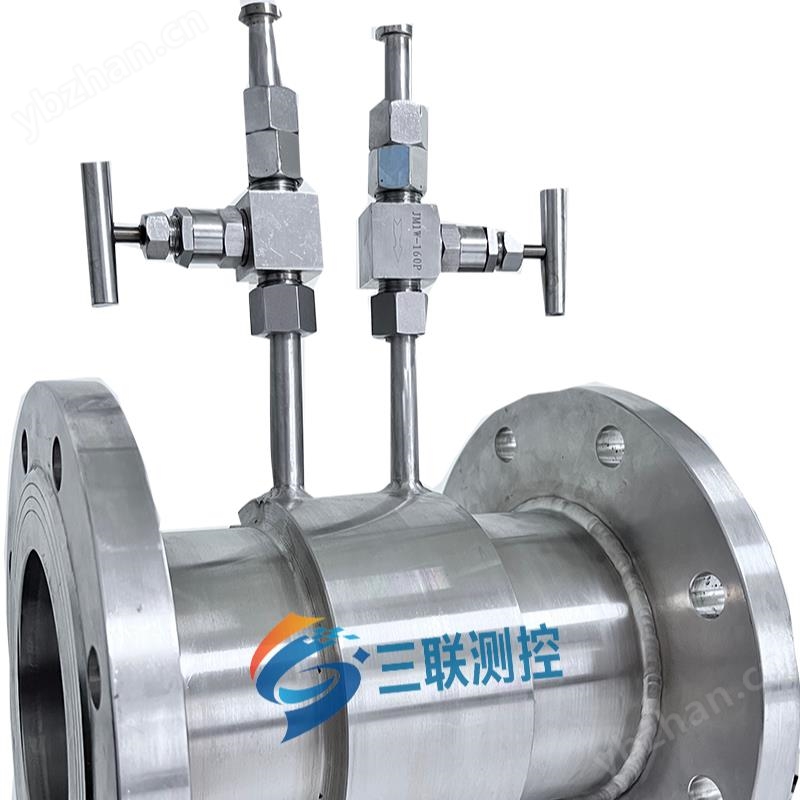
Weiliba adopts innovative cross-sectional design, which reflects the advanced achievements of the averaging tube flow sensor. The plug-in Velbar flowmeter can accurately reflect the gas, steam, and liquid flow rates (volume flow or mass flow) inside a closed pipeline, and generate a very stable and pulsation free signal.
Product Details
The Weiliba flow device achieves a new level of measurement accuracy, repeatability, and reliability for a single source. The Weiliba flow device, differential pressure transmitter, accumulator and other secondary instruments, as well as other peripheral auxiliary connecting components, constitute the world's high-level differential pressure flow measurement system at that time
Weiliba can still perform outstandingly under conditions of strong corrosiveness, ultra-high temperature, ultra-high pressure, and insufficient straight pipe sections.
When the fluid flows through the Velbar probe, a high-pressure zone is formed on the upstream side of the probe. When the fluid accelerates along the probe, a low-pressure zone is formed on both sides and the back of the probe. Paired pressure tapping holes on both sides of the probe can sense and output an average differential pressure. According to Bernoulli's principle, the true average flow velocity inside the pipeline can be obtained.

2、 Measurement principle
The Weiliba flowmeter adopts a differential pressure flow probe, and its calculation model is the same as the mathematical model of other differential pressure flow meters (such as orifice flow meters [7-8]). The working principle of the Velbar flowmeter is shown in Figure 1. The calculation model is:

In the formula, qm represents mass flow rate, kg/h
K - Traffic Constant
ρ - Density of medium operating conditions, kg/m3
△ p - the differential pressure before and after the probe (i.e. the differential pressure between the high pressure area and the low pressure area in Figure 1), kPa
The accurate measurement of Δ p should not be limited to the use of a high-precision differential pressure transmitter. In fact, whether the differential pressure transmitter can receive the true differential pressure also depends on a series of factors, among which the correct selection of probes and the correct installation and use of probes and pressure pipes are the key to ensuring the acquisition of the true differential pressure value.
3、 Measurement characteristics
High strength structure: The Velbar flowmeter adopts an integrated dual chamber stainless steel, wear-resistant, and corrosion-resistant all metal structure, which avoids inter chamber leakage and fracture caused by the multi piece structure of other types of averaging tube flowmeters, improves the overall strength of the sensor, reduces the possibility of sensor fracture, ensures accuracy, and helps to improve the upper limit of the sensor's measurement range.
Multi point pressure collection method: The Velbar flow sensor has multiple pairs of pressure collection holes arranged according to certain criteria in the high and low pressure areas. The spacing between the pressure collection holes is determined by area integration, which can truly detect the average differential pressure generated by the average velocity of the fluid; Even when the straight pipe section is insufficient or the fluid fluctuates greatly, the true flow rate can be accurately measured.
Special cross-sectional shape: The Velbar flow probe is manufactured using a special process with a special cross-sectional shape that experiences minimal traction and can generate precise pressure distribution, fixing the separation point between the fluid and the sensor.
Rough surface treatment on the front surface: The metal surface in front of the Velbar flow probe has been roughened. According to aerodynamic principles, fluid flows through the rough surface to form a stable turbulent boundary layer, which is conducive to improving the measurement accuracy of low flow velocity states. This allows the probe to obtain stable and accurate differential pressure signals even at low flow velocities, thereby extending the lower limit of the sensor's measurement range and maintaining the stability of the flow coefficient.
Inherent anti blocking design: The inherent anti blocking design of the high and low pressure tapping holes at the flow rate of the power bar has brought the anti blocking level of the averaging tube flowmeter to a new level.
When the Weiliba flowmeter was first put into operation, the fluid began to enter the high-pressure tapping hole cavity in the front of the probe (upstream direction) under the action of static pressure in the pipeline. It was like a bottle with a neck being filled with water in a pool, quickly forming a pressure equilibrium state. A high-pressure distribution area was created in the front of the probe. The fluid and its particles and impurities no longer entered the high-pressure tapping hole when encountering the high-pressure area, but instead diverted and flowed away towards both sides of the probe, forming a vortex at the back of the probe. Generally, the particles and impurities were concentrated at the back of the probe under the traction force of the vortex street, just like fallen leaves always falling in the leeward direction. Due to the low-pressure tapping hole on the side and back of the probe, the fluid separation point and impurities The front part of the gathering area essentially prevents signal fluctuations caused by blockage and eddy currents, And thus generate a very stable low-voltage signal. Analysis diagram of Weiliba flowmeter manufacturer:
4、 Application medium:
The manufacturer of the Weiliba flowmeter has summarized its wide range of applications, which are widely used for measuring various gases, liquids, and vapors. The following are typical application media:
1. Gas/liquid/vapor;
2. Natural gas/cooling water/saturated steam;
3. Compressed air/boiler water/superheated steam;
4. Gas/desalinated water;
5. Gas hydrocarbons/liquid hydrocarbons;
6. Hot air/low-temperature liquid;
7. Furnace gas/heat transfer liquid.
5、 Application Fields
1. Industrial production process
Weiliba is one of the major categories of instruments and devices in process automation. It is widely used in various fields of the national economy, such as metallurgy, power, coal, chemical, petroleum, transportation, construction, textiles, food, medicine, agriculture, environmental protection, and people's daily lives. It is an important tool for developing industrial and agricultural production, saving energy, improving product quality, and enhancing economic efficiency and management level. It occupies an important position in the national economy. In process automation instruments and devices, flow meters have two main functions: as detection instruments for process automation control systems and as total quantity meters for measuring material quantities.
2. Energy metering
Energy is divided into primary energy (coal, crude oil, coalbed methane, petroleum gas, and natural gas), secondary energy (electricity, coke, artificial gas, refined oil, liquefied petroleum gas, steam), and energy carrying working fluids (compressed air, oxygen, nitrogen, hydrogen, water), etc. Energy metering is an important means of scientifically managing energy, achieving energy conservation and consumption reduction, and improving economic efficiency. Flow meters are an important component of energy metering instruments. Commonly used energy sources such as water, artificial gas, natural gas, steam, and oil all use an extremely large number of flow meters, which are tools for energy management and economic accounting.
3. Environmental Protection Engineering
The discharge of smoke, waste liquid, sewage, etc. seriously pollutes the atmosphere and water resources, posing a serious threat to the human living environment. The country has made sustainable development a national policy, and environmental protection will be the biggest issue of the 21st century. To control air and water pollution, it is necessary to strengthen management, and the basis of management is quantitative control of pollution levels.
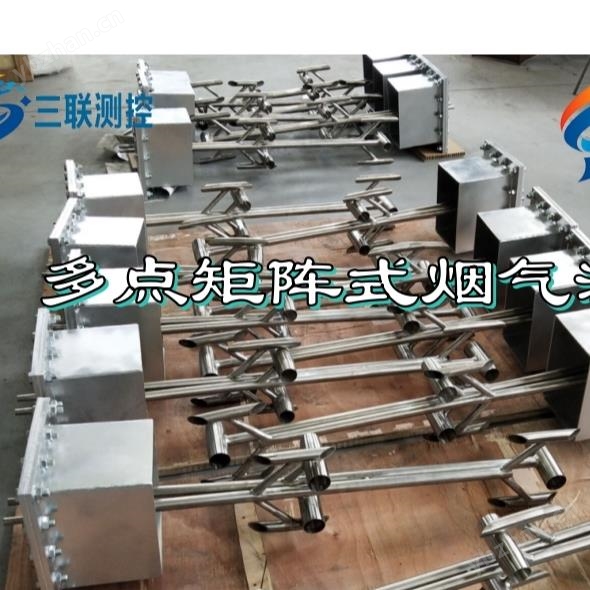
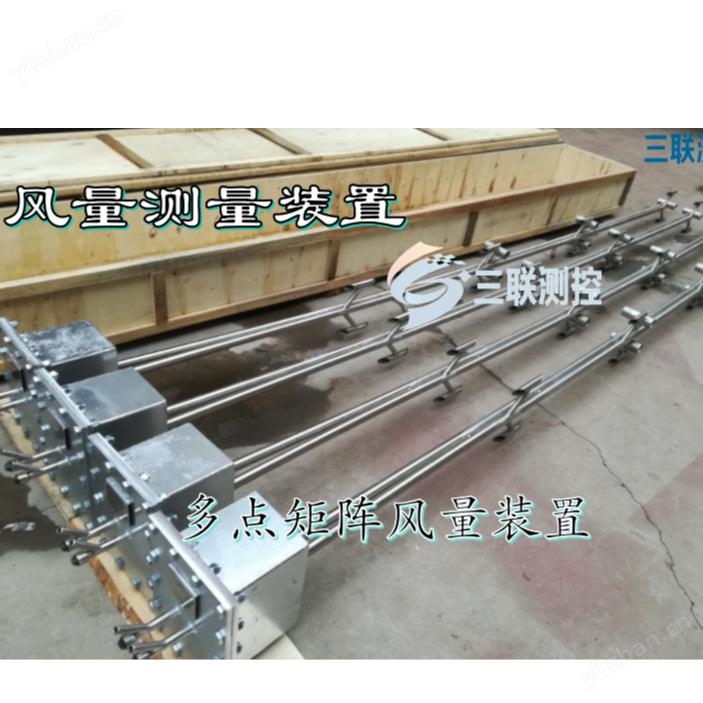
China is a country that relies mainly on coal as its energy source, with millions of chimneys continuously emitting smoke into the atmosphere. Smoke emission control is an important pollution project, and each chimney must be equipped with smoke analysis instruments and flow meters to form a continuous emission monitoring system. The flow rate and volume of flue gas pose significant challenges, including large and irregular chimney sizes, variable gas composition, wide flow velocity ranges, dirt, dust, corrosion, high temperatures, and the absence of straight pipe sections.
4. Transportation and Communications
There are five ways: railway, road, water transportation, and pipeline transportation. Although pipeline transportation has long existed, its application is not widespread. With the prominent environmental issues, the characteristics of pipeline transportation have attracted people's attention. Pipeline transportation must be equipped with flow meters, which are the eyes of control, distribution, and scheduling, as well as the tools for safety monitoring and economic accounting.
5. Biotechnology
The 21st century will usher in the century of life sciences, and industries characterized by biotechnology will experience rapid development. There are many substances that need to be monitored and measured in biotechnology, such as blood, urine, etc. The difficulty of instrument development is high, with a wide variety of products.
6. Scientific experiment
The flow meters required for scientific experiments are not only numerous, but also extremely diverse in variety. According to statistics, a large part of the over 100 types of flow meters are for scientific research purposes. They are not mass-produced and are sold on the market. Many research institutions and large enterprises have dedicated teams to develop flow meters.
7. Marine meteorology, Rivers and Lakes
These fields are open channels that generally require detecting flow velocity and then calculating flow rate. The physical principles and fluid mechanics foundations on which flow meters and flow meters are based are common, but there are significant differences in instrument principles, structures, and usage conditions.