-
E-mail
386030259@qq.com
-
Phone
13673617114
-
Address
Zhenxing Road, Mazhai Industrial Park, Erqi District, Zhengzhou City
Product Categories
- Sludge treatment equipment
- Household waste pyrolysis equipment
- Biomass fuel molding machine
- Biomass pyrolysis equipment
- Industrial solid waste treatment equipment
- Sludge pyrolysis equipment
- Biomass gasification combustion machine
- Household waste treatment equipment
- Biomass pyrolysis burner
- Medical waste disposal equipment
- Industrial solid waste pyrolysis equipment
Zhengzhou Xindi Machinery Equipment Co., Ltd
Intermediate temperature pyrolysis furnace for sludge
NegotiableUpdate on 04/15
- Model
- Nature of the Manufacturer
- Producers
- Product Category
- Place of Origin
Overview
Based on the actual situation of sewage treatment plants, the following conclusions are drawn for the treatment of domestic sludge: Production process introduction: Sludge with a moisture content of about 96% is added and pressurized through pipelines → Plate and frame filter press (sludge moisture content is reduced to about 70%) → Pipeline pressurized transportation → Pressure forming machine → Vacuum dryer (sludge moisture content is reduced to 25-30%) → Drying of sludge particles (various component calorific value detection) → Closed transportation system → Medium temperature pyrolysis unit of sludge → Cracking gas, domestic hot water, biological acid and ash residue
Product Details
Based on the actual situation of sewage treatment plants, the following conclusions are drawn regarding the treatment of domestic sludge:
Introduction to Production Process:
The sludge with a moisture content of about 96% is pressurized and transported through pipelines after being treated with chemicals → plate and frame filter press (reducing the sludge moisture content to about 70%) → pipeline pressurized transportation → pressure forming machine → vacuum dryer (reducing the sludge moisture content to 25-30%) → drying of sludge particles (detecting the calorific value of various components) → closed transportation system → sludge mesophilic pyrolysis unit → cracking gas, domestic hot water, biological acid, and ash residue.
After being purified by the purification system, a portion of the cracked gas is used as a heat source for sludge drying through a gas burner, while another portion can be used as fuel for boiler systems or gas generators. Domestic hot water can be used for the daily lives of surrounding residents, and bio acids can be developed for useful component extraction to generate economic benefits. The ash residue is subjected to different treatments after component detection, and the ash residue that does not contain heavy metals or other pollutants can be used to make building materials such as road tiles.

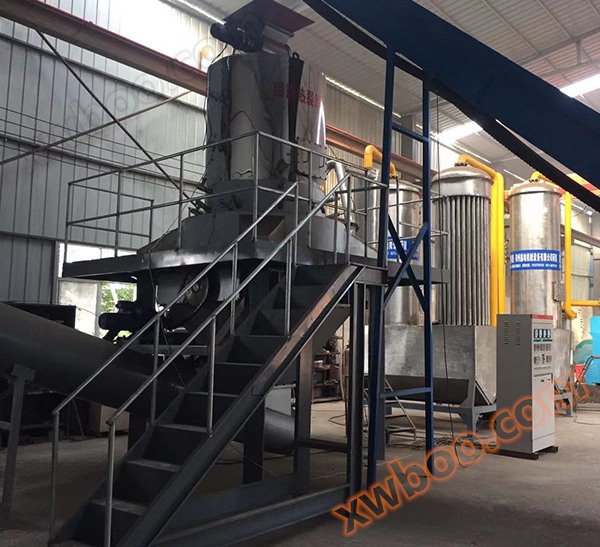
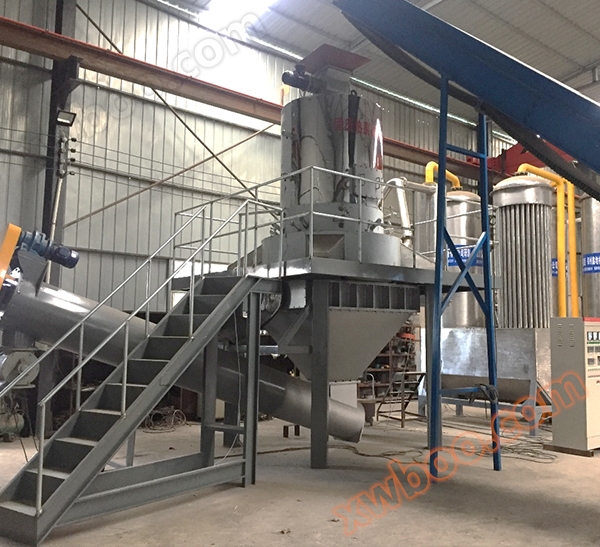
The sludge medium temperature cracking unit adopts a downward suction fixed bed furnace type, with a central gas outlet and a mechanical roller crushing slag discharge structure. The high-temperature zone of the furnace body is made of heat-resistant stainless steel material and has an external insulation structure; The high-temperature exhaust pipeline of the furnace body is made of stainless steel material; The bottom of the furnace adopts a fully enclosed water-cooled spiral slag extractor; The entire gas purification device is made of stainless steel material; Safe and reliable operation of the unit: The production process is fully enclosed, with five "running, emitting, dripping, and leaking" phenomena, and a high degree of intelligent safety chain. Green and environmentally friendly: The entire process has no odor emissions, avoiding secondary pollution such as dioxins and nitrogen oxides caused by high-temperature combustion methods, and no wastewater discharge. Thoroughly harmless and reduced: Sludge is converted into gas as clean as natural gas and ash with stable properties, reducing emissions by over 90%. Realizing resource utilization: The combustible gas generated by sludge treatment can be used as a substitute fuel for natural gas, the hot water generated by the cooling system can be used to output domestic hot water, and the ash residue can be used as building materials.
Principle of Thermal Cracking of Low Temperature and Oxygen in Household Waste
Thermal cracking of household waste with low or no oxygen content is the process of producing combustible gases, charcoal, wood vinegar, and tar from the waste under thermal conditions that isolate oxygen.
The process of producing combustible gases during the thermal cracking of municipal solid waste is only a part of the cracking reaction in the thermal cracking furnace. The carbon in the waste does not participate in the reaction, as long as it can provide a cracking reaction temperature of 225-600 ℃. The reaction mechanism is as follows: hemicellulose mainly precipitates volatile components at 225-350 ℃; Cellulose mainly releases volatile components at 325-375 ℃; Lignin releases volatile components at 250-570 ℃,
The combustible gas produced by the thermal cracking of household waste with low temperature and oxygen content is mainly volatile gas, so its calorific value is relatively high. The calorific value of combustible gas per cubic meter of garbage is about 2000 kcal, and about 1.5 cubic meters of combustible gas can be produced per kilogram of garbage; The ash content of charcoal is very low, and its calorific value is generally around 8000 kcal/kg. It has a wide range of uses and a high price; The quality of wood vinegar and tar is also good. A reasonable garbage pyrolysis furnace has stable performance and good safety.