-
E-mail
2801283106@qq.com
-
Phone
15821569256
-
Address
No. 121, Building 2, No. 655 Gaoji Road, Sijing Town, Songjiang District, Shanghai
Product Categories
Shanghai Shirun Industrial Co., Ltd
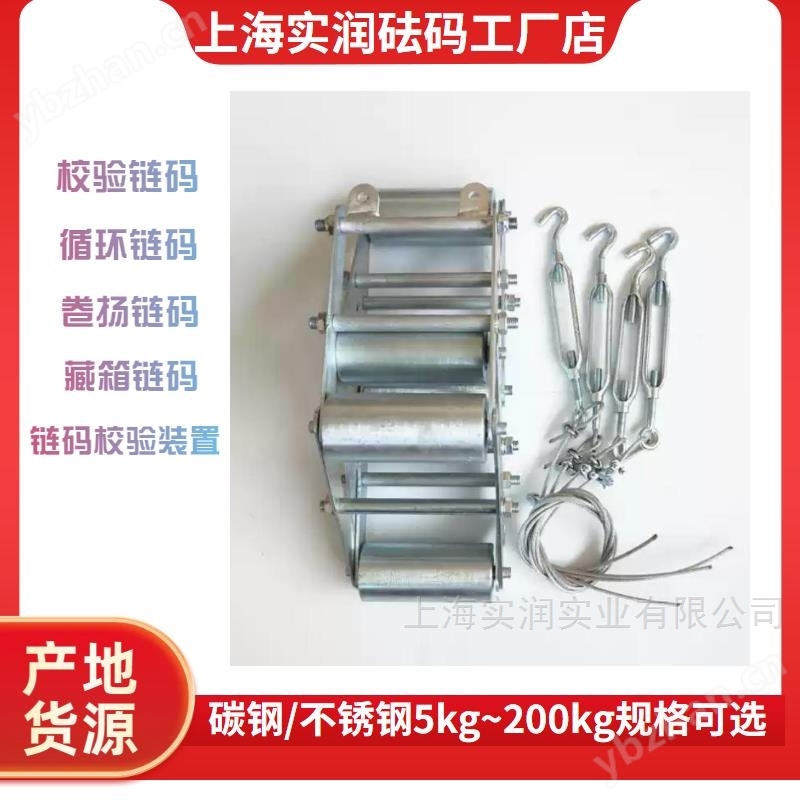
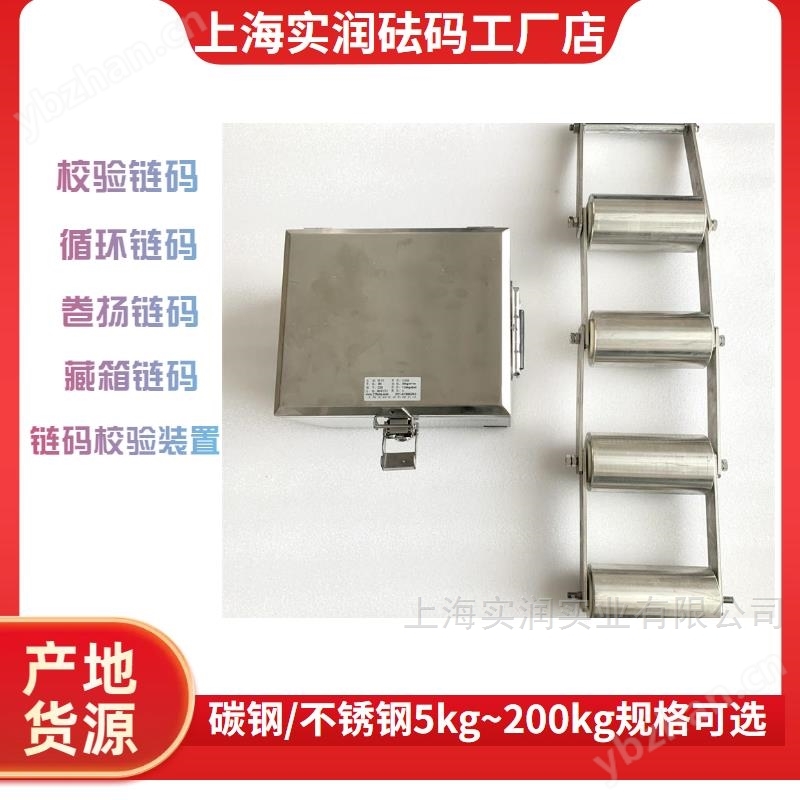


Jinzhong 304 stainless steel chain code 30kg/m origin discount
NegotiableUpdate on 11/19
- Model
- Nature of the Manufacturer
- Producers
- Product Category
- Place of Origin
Overview
Jinzhong 304 stainless steel chain code 30kg/m origin discount $r $n steps: Before installing the belt scale chain code, be sure to stop the belt conveyor. Step 2: Carefully remove the chain code from the box and connect it section by section in order. Place it flat on the tape machine and hang the hanging holes on both ends of the chain code. The head side is directly hooked onto the hanging ring, and the tail side is secured to the hanging rack with a soft rope wrapped around the tail chain bolt.
Product Details
Jinzhong 304 stainless steel chain code 30kg/m origin discount
The internationally recognized series standard chain code complies with the provisions of the National Metrology Verification Regulations of the People's Republic of China (JJG650-90). It is a simulated load standard and can be used as a calibration tool for electronic belt scales and weighing feeders. Working principle of chain code: After the electronic belt scale is zeroed, when the chain code is placed flat on the belt, the belt conveyor runs normally, causing its rollers to rotate and dynamically simulate the material state. The weight is transmitted to the weighing sensor through the scale body, and the system sets the belt running speed at a constant speed. The weighing display calculates and displays instantaneous and cumulative measurements.
Product Description
The XLM electronic belt scale international universal series standard chain code complies with the provisions of the National Metrology Verification Regulation JJG195-2002 of the People's Republic of China. It is a simulated load standard and can be used as a calibration tool for electronic belt scales and weighing feeders. If an automatic retractable winch device is selected, it can be more convenient to calibrate and correct the measurement accuracy of the electronic belt scale.
Working Principle:
After the electronic belt scale is zeroed, the standard weight weight dynamically simulates the material state while the belt is running, and the weight is transmitted to the weighing sensor through the scale body. At the same time, the system sets the belt running speed at a constant speed, and the weighing display calculates and displays the instantaneous and cumulative quantities. When the system uses an automatic winding device, the entire chain code is placed and wound up by an electric hoist, which is more convenient, simple, and labor-saving.
System composition and characteristics:
The calibration device consists of rolling balls, chain pieces, inner and outer connecting plates, and hanging rings. It can be divided into two types according to design: type A and type B (according to different pitch).
High calibration accuracy (static 0.03%, dynamic 0.1%);
Compared to physical verification, it has a simpler structure and lower cost, and is closer to reality than hanging code devices;
Reasonable structure, uniform composition, and easy operation;
Small footprint, safe and reliable system;
Save manpower and achieve high work efficiency;
Optional chain code automatic winding device, convenient and fast.
The materials of weights can be roughly classified into stainless steel, cast iron, chrome plated metal, quartz glass, etc. In terms of subdivision, stainless steel weights can also be divided into ordinary stainless steel, non-magnetic stainless steel, non-magnetic stainless steel weights, etc. Cast iron weights can be divided into ordinary cast iron, gray cast iron weights, etc. Metal chrome plating usually includes copper chrome plating, iron chrome plating, and steel chrome plating.
Weight grade
The classification of weights is mainly based on the provisions of JJG99-1990 "Weights", divided into two levels and nine levels, totaling eleven levels, including first level, second level, E1 level, E2 level, F1 level, F2 level, M1 level, M11 level, M2 level, M22 level, and 0 level. The difference between "equal" and "level" is that "equal" is classified according to uncertainty, that is, equal weights have correction values; Grade is classified according to the indication error, that is, the grade weight has no correction value, as long as its indication error is within this range, it is considered qualified.
Magnetization of weights
Metal weights may have varying degrees of magnetism due to the ratio of their materials. The magnetic nature of weights will inevitably cause certain errors in weighing, affecting the accuracy of weighing. Therefore, the lower the magnetization of the weight, the higher the accuracy of weighing
[Density of Weight Material]
Some specific weighing requires the use of the density (g/cm3) of weights. For example, to measure the density of a liquid, according to Archimedes' principle, when an object is submerged in a liquid, it is required that the volume of the object be equal to the volume of the displaced liquid. Knowing the volume of the weight, the liquid density can be easily measured based on ρ fl=(ρ s × mfl)/ms or ρ fl=mfl/Vs.
Packaging and accessories for weights
Weights are usually equipped with specialized packaging boxes, and manufacturers will provide stainless steel tweezers, gloves, and other accessories according to the shape of the weights.
[Instructions for use]
Before using the weight, use a specialized cleaning brush and wiping cloth to remove dust and other stains from the surface of the weight.
It is strictly prohibited to touch weights directly with hands.
When using weights, please wear specialized gloves and use specialized tools to clamp the weights.
(Please refer to the "Weight Attachment" for gloves and tools)
Before conducting balance testing or weight comparison, the weights need to be kept at a constant temperature to achieve the atmospheric conditions of the laboratory,
Otherwise, it will have an impact on the test results.
After use, the weights must be stored in the original packaging box.
Important statement: We conduct strict testing on the weights before shipment. When receiving the goods, please inspect them on a wooden tabletop and handle them gently, especially for sizes above 2kg, 5kg, 10kg, and 20kg. They are relatively heavy and cannot be moved by a single hand, making them easy to slip and damage the weights!
Jinzhong 304 stainless steel chain code 30kg/m origin discount
Similar Product Recommend